

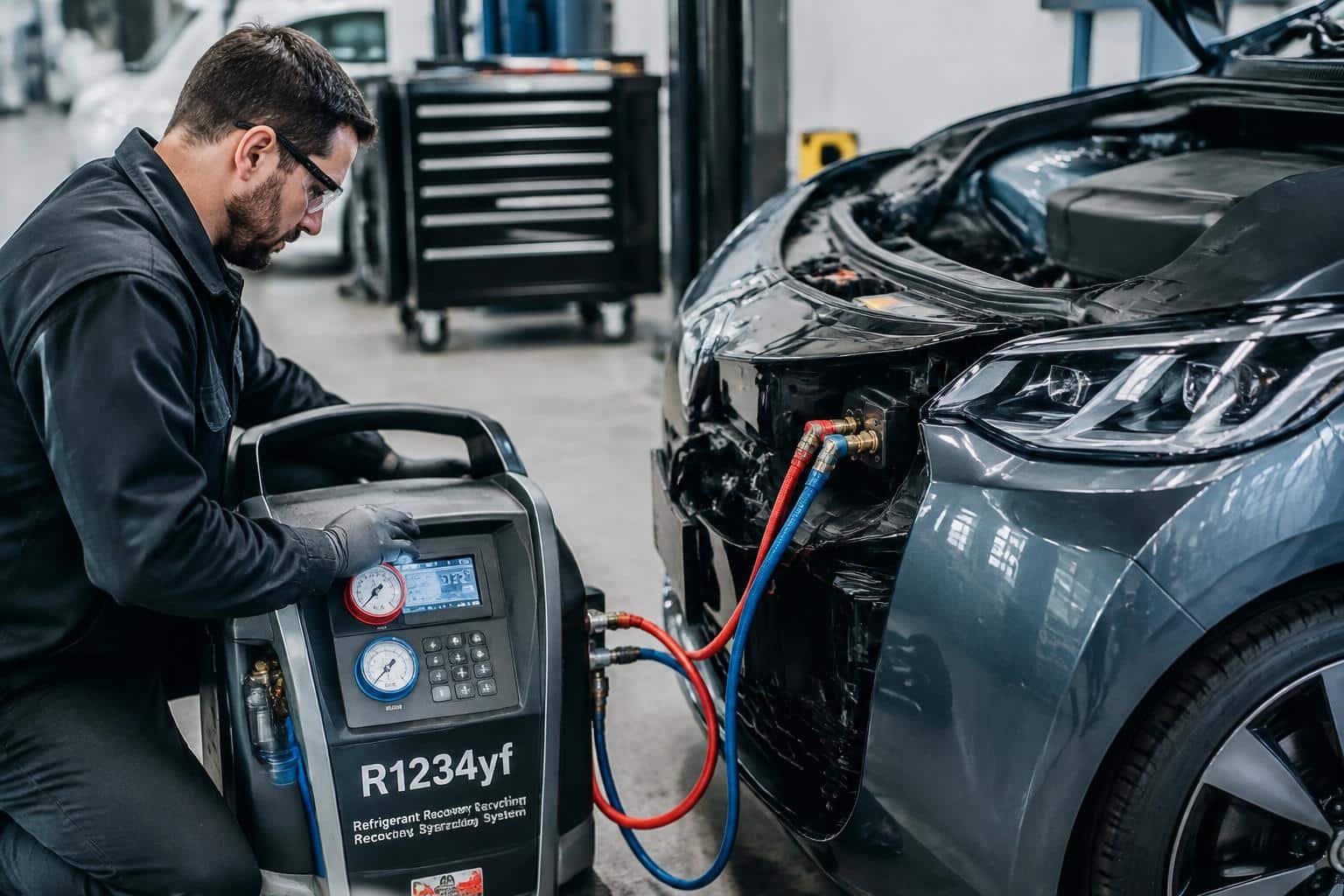
As electric vehicles replace engine-driven compressors with high-voltage electric units, refrigerant recovery depends on more than connecting a service machine. You need equipment compatible with the vehicle’s refrigerant and procedures that protect both the system and its electrical components. Green HVAC designs can reduce some recovery complications, but refrigerant type, service-port access, and compressor oil still shape the job.
Key Takeaways:
- Green vehicle HVAC does not automatically make refrigerant recovery easier. Electric and hybrid vehicles may use different refrigerants, high-voltage compressors, and heat-pump circuits, so the technician needs equipment rated for the refrigerant in the vehicle.
- A dedicated recovery machine, compatible service hoses, and the correct vehicle service procedure are central to safe recovery. Before connecting equipment, technicians identify the refrigerant and isolate high-voltage components as required by the manufacturer.
- Heat-pump systems can contain multiple refrigerant paths and valves, making the vehicle’s service information essential. Following the specified recovery procedure reduces the risk of leaving refrigerant trapped in a circuit.
Why Refrigerant Recovery Matters in Green Vehicle HVAC
Recovering refrigerant before opening an HVAC circuit protects you, the vehicle, and the surrounding environment. A certified recovery machine captures the charge instead of releasing it during service, while proper handling limits contact with pressurized refrigerant and reduces the risk of damaging system components. Whether you are servicing an electric car or a hybrid, follow the refrigerant and service procedures specified for that vehicle, and keep recovered material contained in an approved cylinder.
Environmental and regulatory considerations
Refrigerants released during vehicle service can contribute to atmospheric harm, so you must recover and contain the charge rather than vent it. Applicable rules govern refrigerant handling, recovery equipment, and cylinder management; requirements vary by location and refrigerant type. Identify the refrigerant on the vehicle label, use equipment approved for it, and send recovered material for reclaim or disposal through an authorized channel. A clearly labeled recovery cylinder keeps the contents traceable from the service bay.
Risks of improper recovery
Opening a charged line without recovery equipment can expose you to cold refrigerant, which may injure skin or eyes, while escaping gas can displace air in a poorly ventilated work area. Uncontrolled release also risks contaminating the shop and wasting refrigerant. Leaving air or moisture in the circuit during careless service can impair HVAC operation after repair. Before disconnecting a line, connect the recovery machine and confirm that the system pressure has been reduced according to service procedures.
Green Vehicle HVAC Designs and Refrigerant Requirements
Electrification changes how you diagnose and service cabin climate systems because the air-conditioning circuit also supports battery and power-electronics temperature control in many vehicles. Heat-pump layouts add reversing valves and operating modes that differ from conventional engine-driven systems, while refrigerant choice determines the specified pressure range and service procedure. You need to identify the vehicle’s exact HVAC configuration and refrigerant before opening the circuit, using the under-hood label and manufacturer service information.
Heat pumps and integrated thermal management
In an electric vehicle, you may find the heat pump connected to coolant loops that regulate the cabin, battery pack, and power electronics. A reversing valve changes refrigerant flow so the system can transfer heat into the cabin during cold conditions, rather than relying only on resistance heating. Before service, identify the circuit boundaries and isolation points in the manufacturer’s diagram; a shared thermal system can include refrigerant-to-coolant heat exchangers and multiple control valves.
Refrigerants, pressures, and service specifications
Refrigerant requirements vary by vehicle, so you should confirm the designation on the system label rather than infer it from the model year. Many newer vehicles use R-1234yf, while some electric models specify R-744, or carbon dioxide, which operates at substantially higher pressures than common automotive refrigerants. Follow the manufacturer’s charge mass, pressure limits, and connection specifications, and use fittings and service procedures intended for that refrigerant. A label identifying R-744 signals a high-pressure circuit.
Equipment for Safe, Effective Refrigerant Recovery
Reliable recovery starts with equipment rated for the refrigerant and service conditions in the vehicle. Before opening a system, you need to confirm that the recovery machine, cylinder, and service connections are compatible with the specified refrigerant and pressure range. Follow the equipment manufacturer’s instructions, use approved cylinders, and keep recovered refrigerant segregated by type. A clear equipment match reduces the risk of cross-contamination and gives you a controlled setup for handling refrigerant from hybrid and electric vehicle HVAC systems.
Recovery machines and refrigerant identification
Choose a recovery machine approved for the vehicle’s refrigerant, such as R-1234yf or R-134a, and verify the label before connecting it. A refrigerant identifier can test the sample and flag contamination that could damage recovery equipment or compromise stored refrigerant. Use a dedicated machine or the manufacturer-approved changeover procedure when servicing different refrigerants. If you are asking how to recover refrigerant without a recovery pump, use approved recovery equipment rather than venting refrigerant.
Hoses, couplers, and contamination control
Use refrigerant-rated hoses and vehicle-specific low- and high-side couplers, which limit accidental connection to the wrong port. Inspect hose seals, fittings, and coupler valves for wear before service, since damaged seals can leak or admit air and moisture. Keep caps on disconnected lines, purge hoses as directed by the machine manufacturer, and use separate or properly cleaned equipment for different refrigerants. Dedicated hoses labeled for R-1234yf, for example, reduce the chance of mixing residues during shop work.
A Step-by-Step Recovery Process
Work through recovery in a consistent sequence, beginning with vehicle and equipment identification before connecting service hoses. Confirm that the recovery machine is compatible with the refrigerant specified on the vehicle label, then follow its operating instructions and the service procedure for that model. Record the system’s starting condition and monitor the machine throughout the task, rather than relying on a single reading. For practical context on DIY recovery, see Freon DIY Recovery Without Guilt.
Vehicle preparation and system verification
Before connecting equipment, park the vehicle on a level surface, switch off the HVAC system, and identify the refrigerant and charge information on the under-hood label or service data. Verify that the recovery machine, hoses, and couplers are designated for that refrigerant, and inspect the fittings for damage or residue. Use the vehicle service manual to locate the correct high- and low-side ports, then confirm the ports are accessible and clearly identified before attaching hoses.
Recovery, measurement, and recordkeeping
Start the recovery machine according to its instructions and watch its pressure and status indicators as refrigerant enters the recovery cylinder. Use a scale to track cylinder weight, and stop only when the equipment’s procedure indicates recovery is complete. Record the refrigerant type, recovered mass, machine identification, and any unusual pressure behavior in the service record. A measured difference between the recovered amount and the vehicle’s specified charge gives you a useful baseline for diagnosis.
Safety Challenges in Electrified Vehicles
Electrified vehicles combine refrigerant circuits with high-voltage components, so a recovery job involves hazards beyond those found in many conventional cars. Compressor wiring, battery enclosures, and refrigerant service ports can sit close together, with layouts varying by make and model. Before connecting recovery equipment, you need to identify the vehicle’s system design and the service procedure specified for it. An incorrect assumption about component location or isolation status can expose you to electrical injury or an uncontrolled refrigerant release.
High-voltage isolation and personal protective equipment
Before opening the HVAC circuit, you need to follow the manufacturer’s shutdown and high-voltage isolation procedure, including removing the service disconnect where specified and observing the prescribed wait time. Verify the de-energized state with an appropriately rated meter, rather than relying on dashboard status or an ignition switch. Wear voltage-rated gloves with leather protectors and inspect them for damage before use. Keep insulated tools available when work occurs near orange high-voltage cables or compressor terminals.
Preventing refrigerant release and cross-contamination
Refrigerant handling requires a machine and hoses approved for the refrigerant installed in the vehicle, since incompatible equipment can contaminate a system or release refrigerant. Identify the refrigerant from the under-hood label, then use dedicated, clearly marked service fittings and recovery equipment. Before disconnecting a hose, follow the machine’s instructions for clearing trapped refrigerant. Avoid mixing recovered refrigerant in a shared cylinder, and cap open connections promptly to limit moisture entry and leaks at the service port.
Improving Recovery Through Training and Technology
Recovery results depend on how accurately you identify the refrigerant, connect service equipment, and monitor the cycle. In green vehicles, model-specific procedures matter because access points and HVAC configurations differ, while incorrect handling can contaminate refrigerant or damage equipment. Skilled technicians pair hands-on practice with tools designed for the refrigerant and vehicle being serviced. Understanding the working principle of a car AC refrigerant recovery machine gives you a sound basis for consistent service decisions.
Training and manufacturer service information
Manufacturer service information gives you the vehicle-specific details that general recovery training cannot supply, including approved refrigerant type, service-port locations, and isolation steps. Before connecting a recovery machine, use the service manual to confirm the system configuration and required procedure. Practical training should also cover hose handling, cylinder limits, and how to recognize abnormal pressure behavior. For a heat-pump-equipped model, verify the prescribed service mode before opening the refrigerant circuit.
Automation, diagnostics, and recovery tracking
Automated recovery units guide you through evacuation and refrigerant transfer while monitoring pressure and recording recovered mass. Pair those readings with scan-tool diagnostics, which can identify HVAC faults or control states that affect service access. A clear record of refrigerant type, machine cycle, and measured quantity makes discrepancies easier to investigate, especially when a vehicle has a leak or prior repair history. Keep the machine’s service log linked to the vehicle work order.
To wrap up
Green vehicle HVAC design can make refrigerant recovery more controlled through accessible service ports, clear refrigerant identification, and compatible recovery equipment. You still need to follow the manufacturer’s procedure, use a machine rated for the specified refrigerant, and isolate high-voltage components as directed before servicing an electrified vehicle. Recovering refrigerant before opening the circuit protects technicians and limits emissions; accurate labeling and a dedicated recovery cylinder keep refrigerants such as R-1234yf separate from other recovered material.