
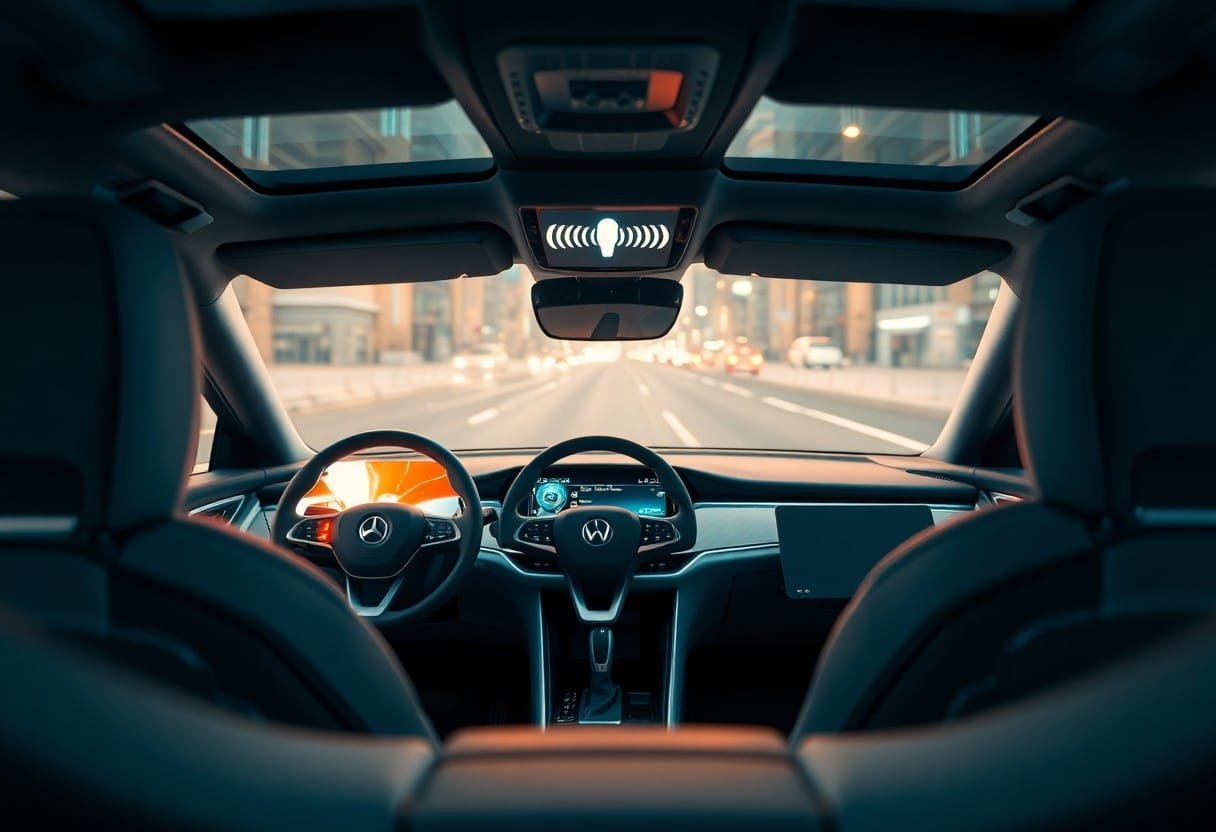

You are on the brink of vehicles that learn your preferences and transform driving into a seamless, immersive experience through conversational virtual assistants. This post explains how AI-driven assistants can reshape automotive UI with hands-free control, contextual personalization, multimodal interaction and integrated entertainment, and what that means for your safety, convenience and engagement.
Key Takeaways:
- Virtual assistants enable context-aware, multimodal vehicle interfaces (voice, gesture, gaze, biometrics) that personalize controls and HUD content to driver and passenger needs.
- Hands-free, predictive assistance and prioritized notifications can streamline tasks and reduce distraction, improving safety and usability while driving.
- Integration with AR/VR, spatial audio, and connected devices transforms the cabin into an immersive entertainment environment and opens new content and monetization opportunities.
The Role of Virtual Assistants in Automotive UI
You see virtual assistants weaving together cluster, HUD, center-stack and mobile ecosystems to give your car a consistent, hands-free command layer; Mercedes’ MBUX and BMW’s Intelligent Personal Assistant are examples that route navigation, climate and media through voice and context-aware prompts, while OTA updates and profile syncing let your preferences follow you across vehicles, reducing manual setup and enabling situational suggestions during driving.
Enhancing User Experience
You gain faster, safer interactions as assistants collapse deep menu trees into single utterances, surface contextually relevant options-like suggesting alternate routes when congestion appears-and learn your habits via machine learning so common actions (favorite playlists, preferred cabin temp) require fewer inputs, improving task completion rates and lowering distraction during critical driving moments.
Voice Recognition and Natural Language Processing
You rely on a stack of far-field microphones, beamforming, noise suppression and ASR/NLP pipelines that convert speech into intents; modern systems balance on-device ASR for low-latency wake-word handling with cloud NLP for complex queries, enabling robust understanding across accents, short commands and multi-turn dialogues even in noisy cabins.
You should expect ongoing advances: acoustic models use neural architectures (RNN-T, transformer variants) tuned for cabin noise, while intent models are fine-tuned on automotive utterances (navigation, HVAC, safety). Federated or incremental learning adapts personalization without transferring raw voice data, and multimodal fusion-combining gesture, glance and voice-resolves ambiguous commands to improve reliability in real-world driving conditions.
Immersive Entertainment in Vehicles
You’ll see entertainment shift from passive screens to personalized, voice-driven experiences; Garmin introduces Unified Cabin 2026, headlined by an AI LLM-based conversational multi-intent virtual assistant showcases in-cabin translation, multi-language dialogs and seat-specific content control. Expect 5G-enabled streaming and adaptive codecs delivering 4K HDR to rear-seat displays with sub-20 ms latency for interactive AR overlays and synchronized multi-zone audio.
Integrating Multimedia Systems
You’ll integrate infotainment, rear-seat screens, headsets and your phone via standards like Wi‑Fi 6 and low-latency casting, enabling 4K60 HDR streams and per-seat DRM-controlled playlists. Automakers are deploying centralized media hubs to synchronize subtitles, multi-zone audio and seat-based preferences; OTA updates plus cloud analytics let you tune codecs and QoS, reducing buffering during a 90‑minute trip.
AR and VR Opportunities
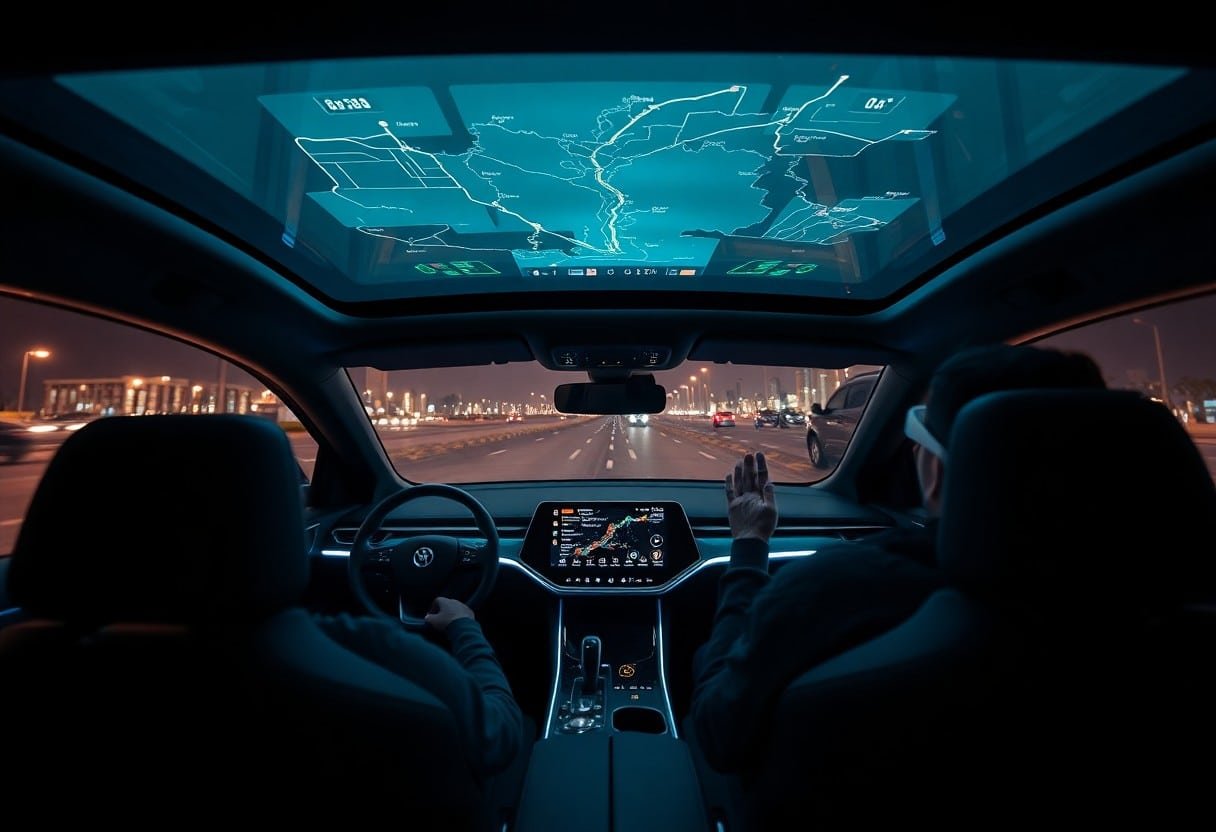
You can leverage AR HUDs to layer turn-by-turn directions, POIs and contextual media onto the windshield, while VR headsets turn parked or autonomous-mode cabins into immersive theaters. Trials indicate spatial audio plus 6DoF head tracking markedly increase immersion; maintain latency under ~20 ms and use predictive rendering to avoid motion mismatch for passenger comfort.
You should design AR/VR systems to meet concrete performance and safety thresholds: target VR refresh rates of ≥90 Hz and >100° FOV, apply foveated rendering with eye-tracking to cut GPU load, and keep AR end-to-end latency below 20 ms for stable overlays. Enforce lockouts when the vehicle is under manual control, integrate driver-monitoring and ISO-aligned safety practices, and provision DRM and OTA workflows so content, control and privacy scale across vehicle generations.
Safety and Accessibility Considerations
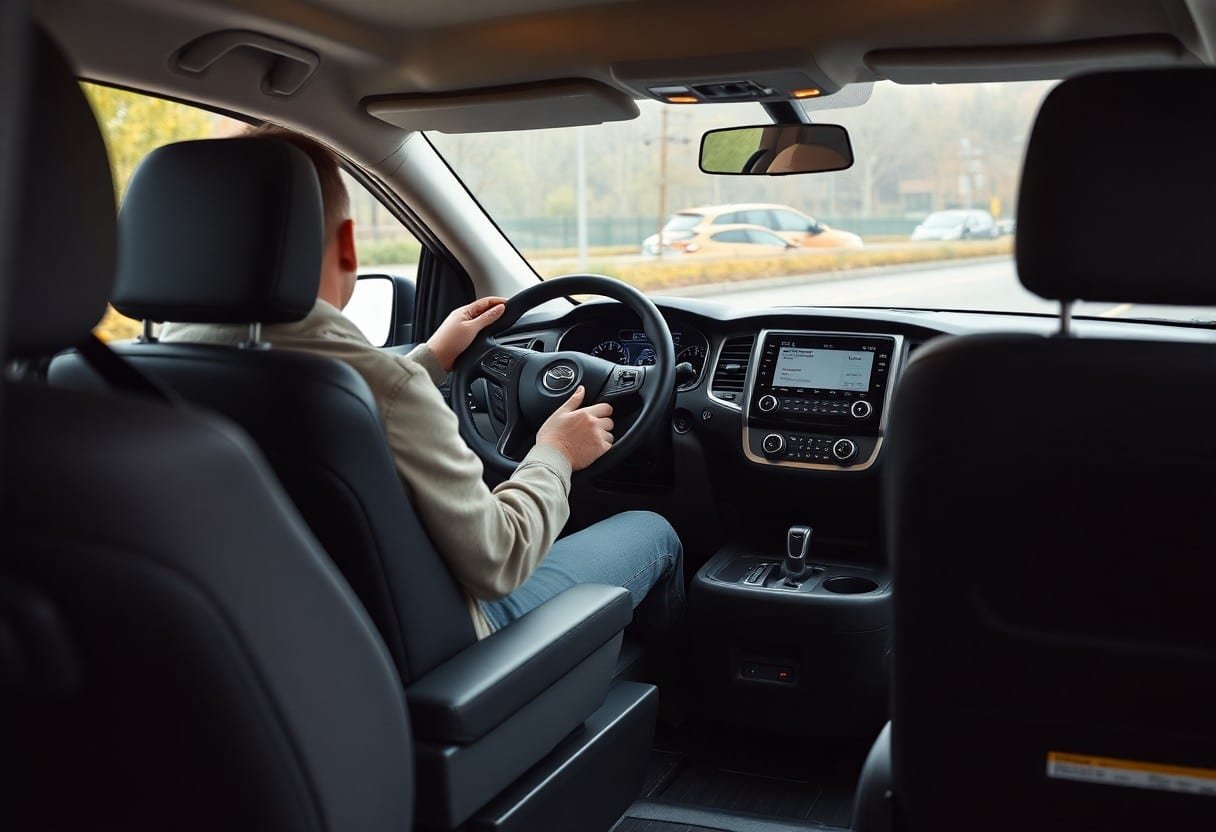
You must align immersive assistants with measurable safety metrics and regulatory mandates: NHTSA reported 3,142 distraction-related deaths in 2019, and UNECE R155/R156 now require cybersecurity and update management for connected vehicles, affecting how voice UIs access vehicle controls. Prioritize gating non-vital visual tasks at speed, layered haptic and auditory alerts, and validation through driving-simulator trials and in-cabin eye-tracking to quantify glance behavior and intervention effectiveness.
Driver Distraction and Regulations
You should design voice and visual flows that respect hands‑free and distraction limits set by regulators; many jurisdictions restrict handheld device use and agencies like NHTSA publish driver distraction guidelines. Implement speed-based UI locking, limit on-screen interactions to brief, single-step tasks, and adopt glance-time thresholds (commonly 1-2 seconds in human‑factors research) to gate content while driving, verifying compliance with simulated and on-road evaluation protocols.
Catering to Diverse User Needs
You need adaptive interfaces for older adults, non-native speakers, and drivers with disabilities: provide adjustable speech rate, simplified dialog modes, larger touch targets, high-contrast themes, and multimodal confirmations (voice+haptic). Leverage platforms like Google Assistant (supports 30+ languages) and compatibility with CarPlay/Android Auto to broaden language and accessibility coverage while testing with representative user groups.
You can go further by implementing personalized profiles that auto-adjust to ability and preference: use biometric or key‑fob profiles to load preferred speech rate, verbosity level, text size, and haptic intensity when a driver enters the car. Combine on-device speech models to preserve latency and privacy, and incorporate real-time captioning and language switching for multilingual households. Follow WCAG contrast and touch-target guidance (typically 7-10 mm targets) and run iterative usability tests with seniors and users with motor or visual impairments to measure task completion, error rates, and perceived workload before wide deployment.
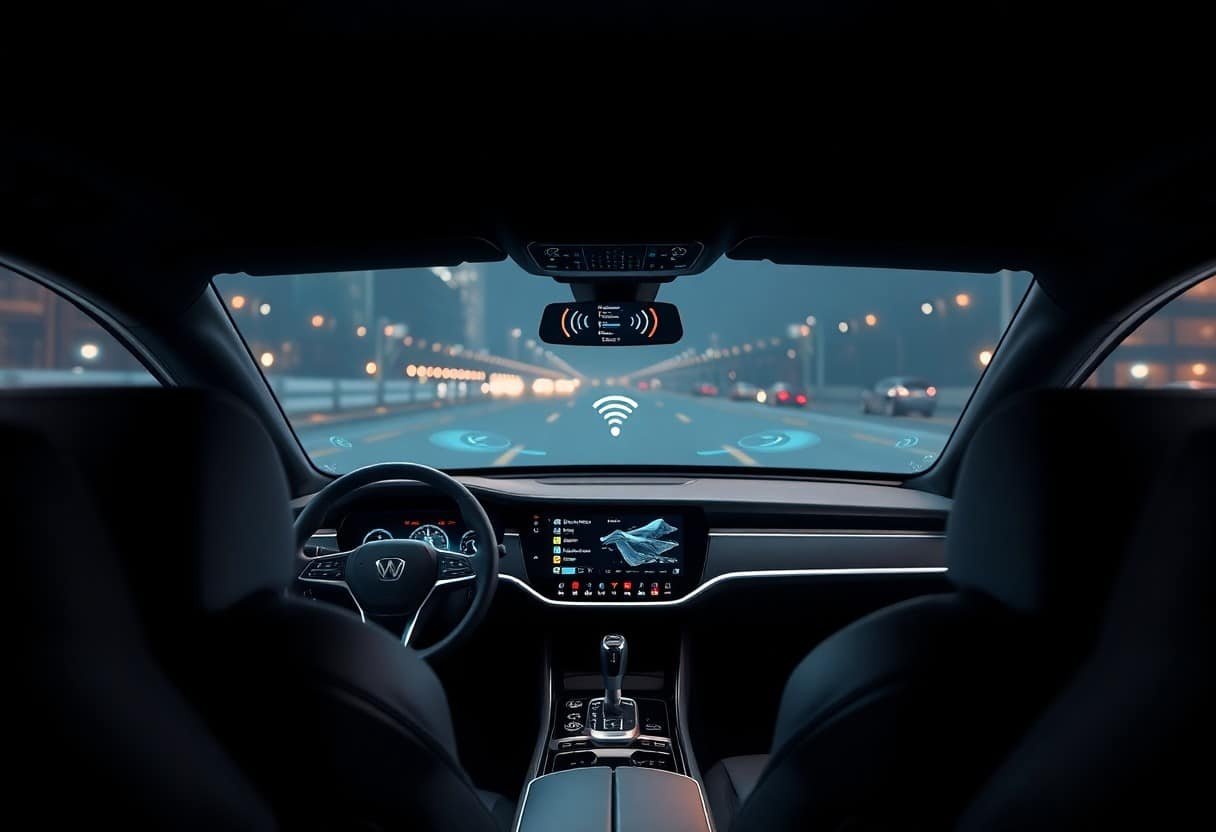
Technological Advances Driving Change
5G connectivity, powerful GPUs and edge computing let you stream high-res maps, process voice commands locally in under 50 ms and run real-time gesture recognition, enabling seamless in-cabin experiences; automakers and suppliers are already integrating these capabilities – see How AI Virtual Assistants Are Transforming the Road Ahead – and fleets report reduced latency and higher user engagement as systems move from cloud-only to hybrid architectures.
AI and Machine Learning in Design
You rely on transformer and convolutional models for speech, vision and behavior prediction; modern ASR can achieve word-error rates below 5% in controlled conditions, while generative design has cut component weight by up to 30% in some projects. You deploy on-device models to keep latency under 50 ms for voice and gesture, and use cloud training to refine personalization across fleets via continuous learning pipelines such as NVIDIA DRIVE and other automotive AI stacks.
Data Analytics for Personalized Experiences
You ingest telematics, sensor and infotainment logs-vehicles can produce up to 25 GB of data per hour-to build driver profiles that tailor routes, playlists and climate settings and surface proactive maintenance alerts; stream-processing stacks like Kafka with Spark convert raw telemetry into features so you can A/B test interventions and measure improvements in retention and safety metrics.
You combine edge preprocessing with cloud model training to balance latency and privacy: onboard ECUs anonymize events and emit feature vectors rather than raw trip data, streaming them to centralized systems for model updates while federated learning aggregates weight updates from millions of vehicles without centralizing personal data. You implement consent management, differential privacy and encryption-at-rest to meet GDPR-like rules; the operational payoff includes predictive maintenance that can cut unscheduled downtime by roughly 30%, more relevant in-cabin recommendations, and lower fleet operating costs through optimized routing and adaptive servicing.
Case Studies of Leading Automotive Brands
You can trace concrete UI and entertainment shifts through recent brand rollouts: scalable displays, voice agents and AR pilots show measurable change in driver interaction and cabin engagement across model years and markets.
- 1. Tesla – Model S introduced a 17″ centre display (2012) and a touchscreen-first UI; OTA updates since launch let Tesla iterate UI/UX across global fleets without dealer visits.
- 2. Audi Virtual Cockpit – Debuted in 2014 with a 12.3″ fully digital instrument cluster, replacing analog gauges and enabling customizable layouts that reduce glance shifts for drivers.
- 3. Mercedes‑Benz MBUX – Launched 2018 with “Hey Mercedes” voice control and dual-screen options (10.25″ to 12.3″), scaling conversational UX into mass production models.
- 4. BMW iDrive 8 – Rolled out in 2021 with a curved display architecture on flagship models, combining 12.3″+14.9″ panel formats and gesture/voice layers to minimize menu depth.
- 5. AR and gamified UX pilots – Multiple OEMs are testing heads‑up AR overlays and in-cabin gamification; see industry exploration in Is Gamified Augmented Reality the Future of Automotive UX?
Innovations from Major Manufacturers
When you compare manufacturers, Mercedes expanded natural language across millions of units since 2018, Audi standardized digital clusters from 2014 onward, and BMW narrowed interaction paths with touch-plus-voice in 2021-these moves give you clearer, model-year-based evidence of how legacy OEMs prioritize hands-free, display-driven experiences.
Startups Disrupting the Automotive Space
You’ll see startups accelerate new UX models: Rivian (IPO 2021) emphasizes over-the-air content and lifestyle apps, Zoox (acquired by Amazon 2020) prototypes bidirectional human-machine interactions, and autonomous teams have logged millions of test miles to refine in-cabin flows.
Digging deeper, startups push bold experiments you can test in pilot fleets: modular infotainment stacks, cloud-streamed gaming sessions using partner GPUs, and subscription-based content ecosystems-these firms often iterate product-market fit faster than OEMs, raise strategic capital, and sign platform deals that bring novel entertainment and assistant features to your next vehicle.
Future Trends in Automotive UI and Entertainment
Advances such as AR head‑up displays, seat‑level haptics, and multimodal assistants are converging: Mercedes’ MBUX voice model and BMW iDrive 8 show how natural language and large curved displays change interaction, while NVIDIA Drive and Qualcomm Snapdragon platforms enable in‑car AI and edge processing. You’ll see more OTA feature rollouts and content partnerships that let automakers iterate like software firms, shifting release cadence from yearly firmware to monthly UX updates.
Predictions for Next-Gen Features
Multimodal assistants combining voice, gesture and gaze will guide you through 3D AR navigation overlays and context‑aware media suggestions; expect cloud‑rendered gaming from services like NVIDIA GeForce NOW and Xbox Cloud Gaming inside rear seats, supported by 5G and edge servers for low latency. Automakers will offer per‑user profiles with biometric preferences (seat, lighting, audio) and object‑based audio that places sounds in the cabin for immersive storytelling.
The Role of User Feedback in Evolution
Telemetric metrics-glance duration, task completion time, NPS and in‑app ratings-drive iterative UI changes, and you’ll participate via opt‑in beta programs and short in‑car surveys; Tesla’s OTA experiments and Android Automotive deployments illustrate how fleets become living labs for usability data. Design choices increasingly hinge on measurable safety and engagement KPIs rather than designer intuition alone.
In practice you’ll see A/B tests rolled to small cohorts (for example, 5-15% of a fleet) to compare menu layouts or voice prompts while anonymized logs, touch heatmaps and session traces quantify changes; GDPR and similar rules require consent and data minimization, so OEMs combine aggregated analytics with voluntary user panels to validate emotional responses and long‑term retention before full rollouts.
To wrap up
To wrap up, virtual assistants will transform automotive UI and immersive entertainment by learning your preferences, streamlining interactions, and enabling hands-free, context-aware content delivery that keeps you focused on driving while enriching passenger experiences. As voice, gesture, and AR converge, you’ll get more intuitive controls, personalized media, and safer, more engaging journeys-making virtual assistants a defining element of next-generation mobility and in-car leisure.