

Ecology explains how solar PV plants help you cut greenhouse gas emissions, conserve freshwater, reduce air and noise pollution, and protect biodiversity while generating renewable electricity with lower life-cycle environmental impacts.
Key Takeaways:
- Solar PV plants cut greenhouse gas emissions by replacing fossil-fuel generation, reducing CO2 and other air pollutants and helping mitigate climate change.
- Solar PV systems use minimal water compared with thermal power plants, lowering freshwater withdrawals and reducing thermal and chemical impacts on aquatic ecosystems.
- Distributed and rooftop PV reduce transmission losses and enable generation on degraded, built, or dual-use areas (e.g., rooftops, agrovoltaics), decreasing pressure on natural habitats and supporting biodiversity.
Mitigation of Greenhouse Gas Emissions
Solar PV systems cut greenhouse gas outputs by producing low-carbon electricity over their lifetime, letting you replace high-emission generation and lower your carbon footprint while supporting cleaner grids.
Displacement of Carbon-Intensive Fossil Fuels
Replacing coal and gas plants with PV arrays reduces the need for carbon-intensive generation, so you cut operational emissions immediately as solar supplies daytime demand.
Contribution to Global Decarbonization Targets
Scaling solar PV deployment helps countries meet emissions pledges, allowing you to support national and corporate decarbonization pathways through measurable reductions in grid carbon intensity.
Through coordinated policy, investment, and grid integration, you enable rapid PV scaling that displaces high-emission generation and lowers sectoral lifecycle emissions. You can pair solar with storage and demand response to firm supply, reduce peak fossil fuel use, and generate verifiable emissions reductions aligned with NDCs and corporate net-zero plans while improving local air quality.
Preservation of Freshwater Resources
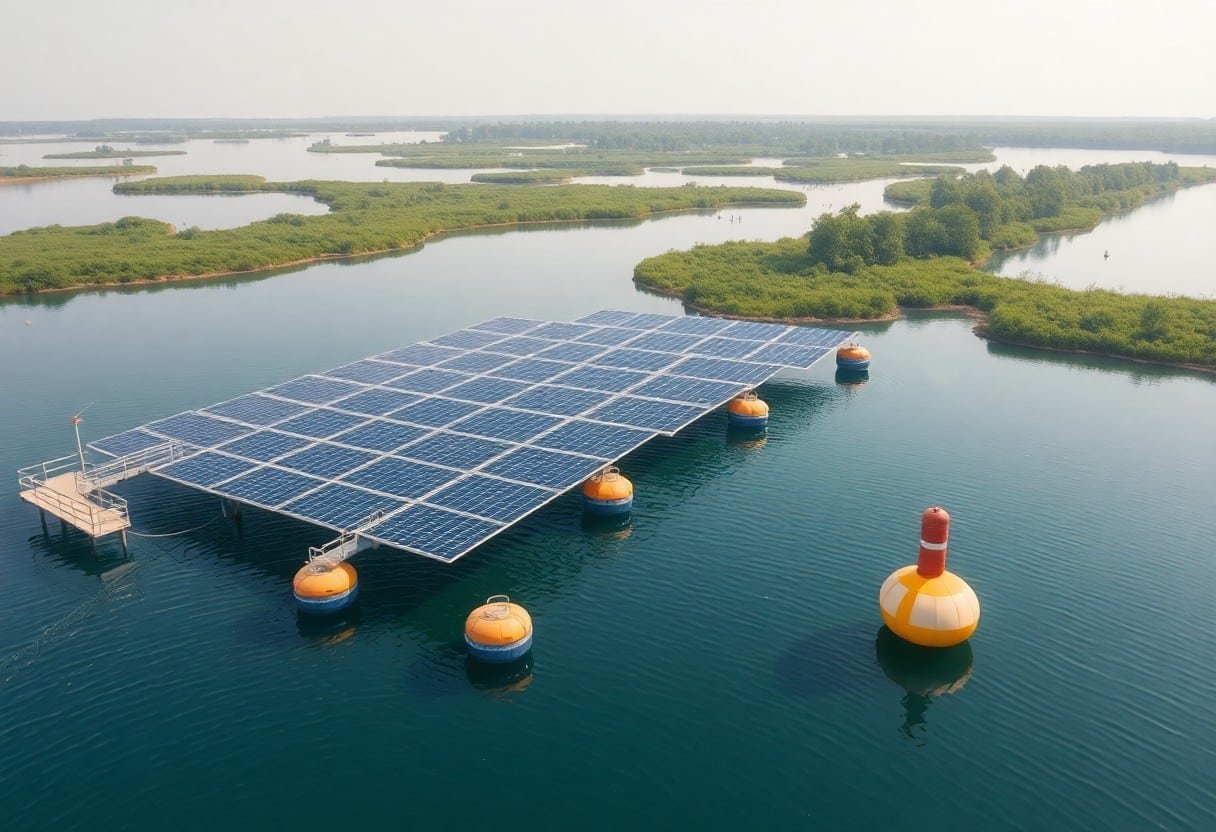
You reduce pressure on local water supplies because solar PV requires little to no operational freshwater, lowering withdrawals and protecting aquatic ecosystems while supporting more sustainable water-energy management.
Minimal Operational Water Consumption
Panels require minimal water during operation, so you typically only need occasional cleaning, preserving freshwater for communities and agriculture and avoiding continuous withdrawals tied to cooling systems.
Comparison to Thermoelectric Cooling Requirements
Thermoelectric plants demand continuous cooling water, so you cut routine withdrawals dramatically by choosing PV, easing stress on rivers, reservoirs, and groundwater sources.
Key differences show PV’s near-zero cooling needs versus thermoelectric plants’ sustained intake and consumptive losses, meaning you face lower operational water costs and fewer ecological impacts on aquatic habitats.
Preservation Summary
| Aspect | Effect for You |
|---|---|
| Operational water use | Minimal, mostly for cleaning |
| Ecosystem impact | Reduced withdrawals and thermal stress |
Cooling Comparison
| Type | Water Use Pattern |
|---|---|
| Solar PV | Near-zero cooling needs; occasional cleaning |
| Thermoelectric | Continuous large withdrawals for cooling; significant consumptive losses |
Promotion of Biodiversity and Habitat Integration
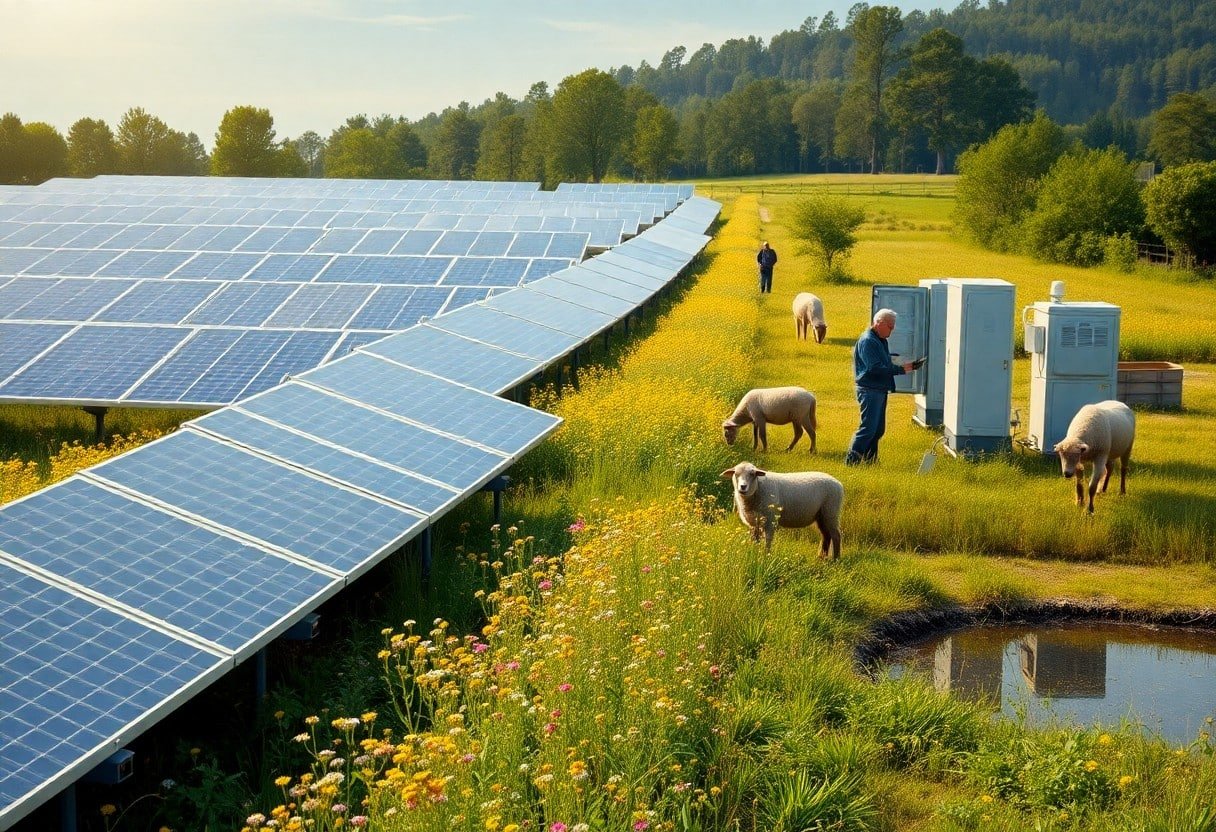
Biodiversity increases when you integrate native plantings and microhabitats beneath and between arrays, creating corridors for pollinators, birds and small mammals while improving soil structure and water retention.
Implementation of Pollinator-Friendly Ground Cover
Planting native, low-growing flowering species under panels gives you continuous forage and nesting habitat for bees and butterflies, enhances pollination of adjacent crops, and reduces mowing needs.
Synergies in Agrivoltaic Land Management
Combining PV with managed grazing or specialty crops lets you maintain energy yield while you optimize land use, improve soil fertility, and provide additional income streams.
When you design agrivoltaic systems with adjustable row spacing, panel height and rotational grazing plans, you create cooler microclimates that lower evapotranspiration and support shade-tolerant vegetables or forage. Managed grazing with sheep or goats controls vegetation without heavy machinery, while integrating beekeeping and targeted crop choices diversifies revenue and strengthens on-site ecological networks; monitoring soil moisture and shade patterns helps you sustain both yields and panel performance.
Improvement of Ambient Air Quality
Solar PV reduces emissions of SO2, NOx and particulates from power generation, improving ambient air and easing urban smog; you also gain awareness via Top 10 Benefits of Solar Power Plants | Sustainable Energy ….
Elimination of Particulate Matter and Noxious Gases
Switching to solar cuts particulate emissions and NOx output from fossil plants, so you breathe cleaner air and face fewer long-term cardiovascular and lung hazards.
Reduction in Respiratory-Related Environmental Health Risks
You see fewer asthma attacks and hospital visits as local PM2.5 and ozone levels fall, improving daily respiratory health for sensitive groups.
Studies associate declines in PM2.5 and NOx with measurable drops in respiratory morbidity; when you support sizable solar deployment, community exposure decreases, lowering pediatric asthma ER visits, COPD exacerbations, and respiratory hospitalizations, while reducing treatment costs and improving overall quality of life, especially for children, the elderly, and those with chronic lung disease.
Land Rehabilitation and Soil Conservation
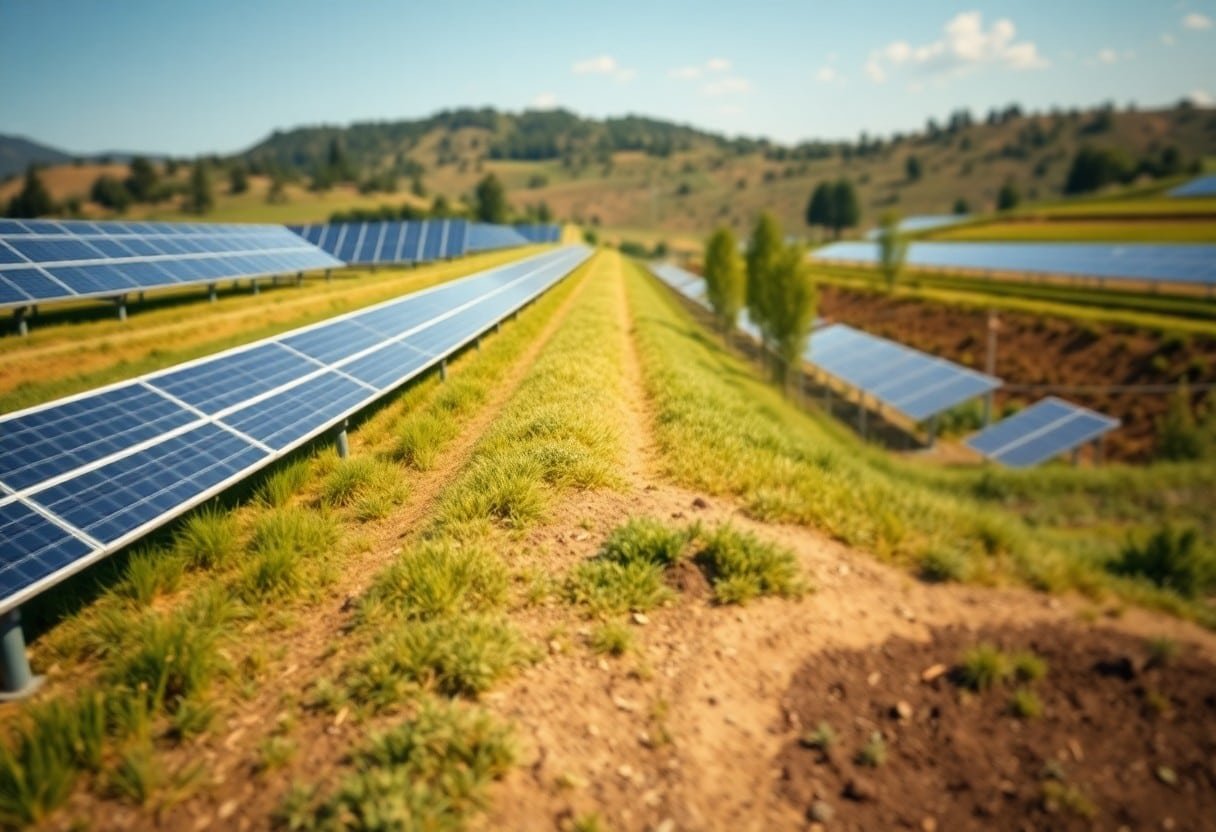
You can restore degraded sites by siting solar PV to stabilize soil, encourage native vegetation, and reduce runoff; see 5 Ways Solar Energy Benefits the Environment for related examples and methods.
Recovery of Marginal or Contaminated Brownfields
Siting PV on marginal or contaminated brownfields lets you cap pollutants, reduce leaching, and reclaim productive ground while avoiding new disturbance.
Reduction in Soil Erosion Through Managed Vegetation
Managed plantings beneath arrays help you anchor topsoil, slow water flow, and increase infiltration to cut erosion around panels.
Careful vegetation choices let you balance native species, maintenance needs, and pollinator habitat while minimizing runoff and compaction beneath arrays.
Lifecycle Sustainability and Circular Economy
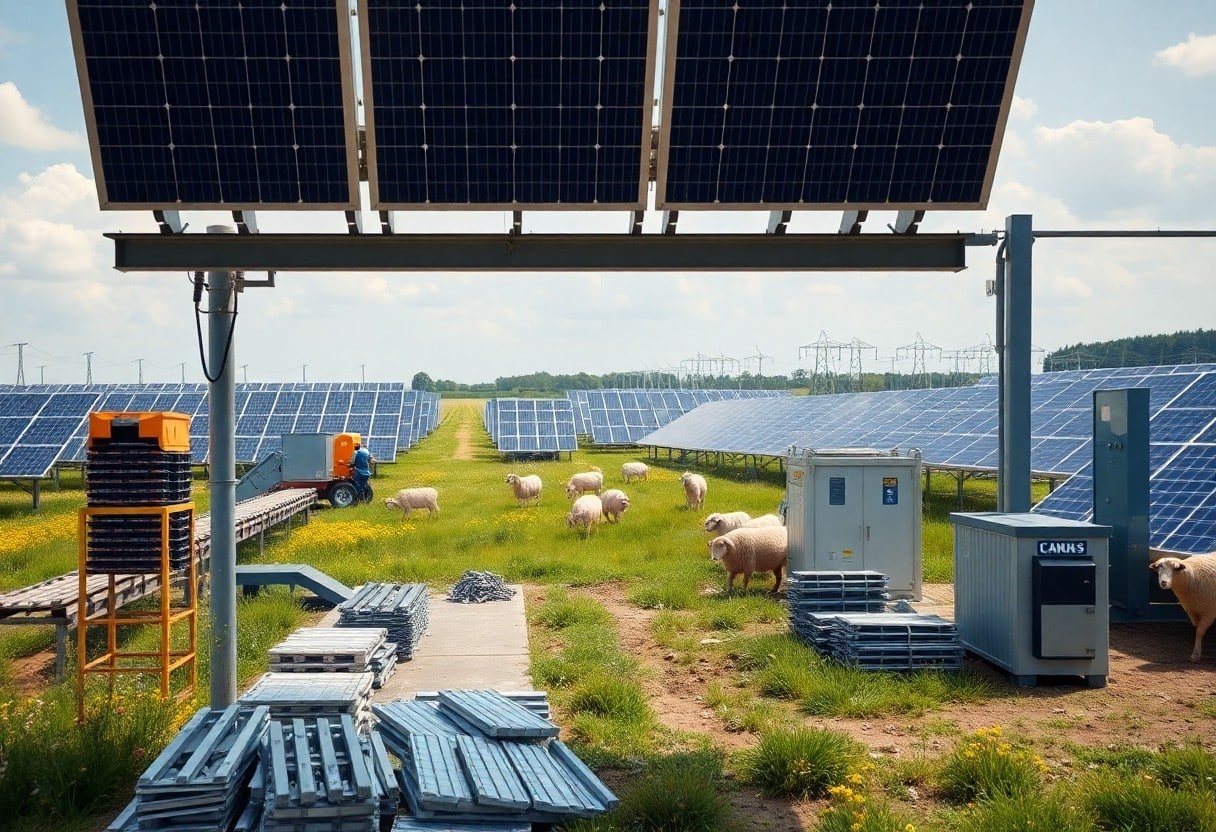
Lifecycle planning shows you how solar PV plants reduce waste through long service lives, repairable components, and designed recycling pathways; learn more in The Advantages and Disadvantages of Solar Energy.
Advances in Photovoltaic Module Recyclability
Recycling improvements let you reclaim silicon, glass, and metals from end-of-life modules, cutting raw material demand and landfill volumes while supporting circular supply chains.
Low Energy Payback Time (EPBT) Metrics
Payback metrics help you assess how quickly a PV plant generates the energy used in its manufacture, informing procurement and system design decisions.
Calculating EPBT involves dividing a system’s embodied energy by its annual energy output, giving you a clear timeframe for energy amortization. EPBT shortens with higher module efficiency, cleaner manufacturing, and better site irradiance. It correlates with lifecycle emissions, so faster payback means quicker carbon savings. You can lower EPBT by choosing efficient modules, sourcing low‑carbon components, siting systems optimally, and planning end‑of‑life recycling.
Summing up
Following this you see that solar PV plants cut greenhouse gas emissions, lower air and water pollution, and use minimal water compared with thermal power; you can site panels on rooftops or degraded land to preserve habitats, reduce fossil-fuel dependence, and support local energy resilience.