
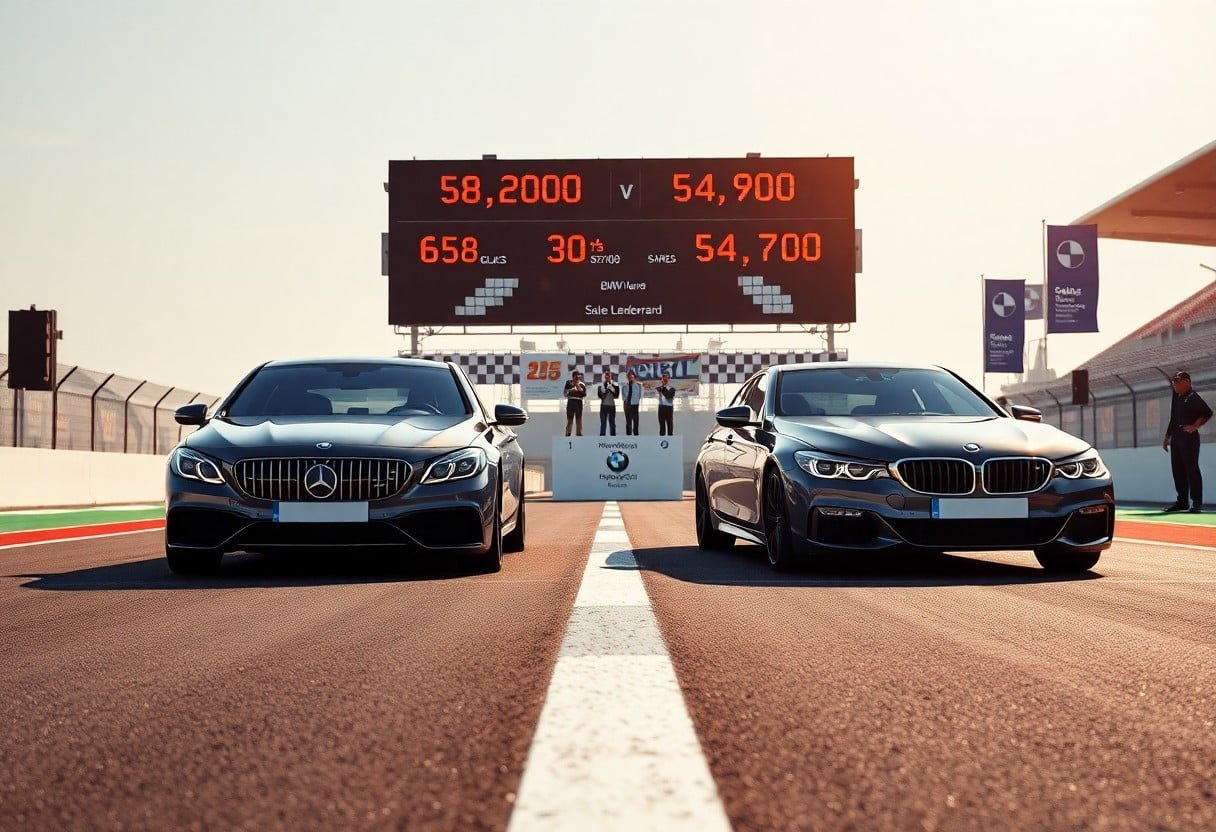
Just explore recent sales figures and model lineups to see whether Mercedes-Benz or BMW leads, and you’ll get clear insights into market trends, electrification, and consumer preferences.
Key Takeaways:
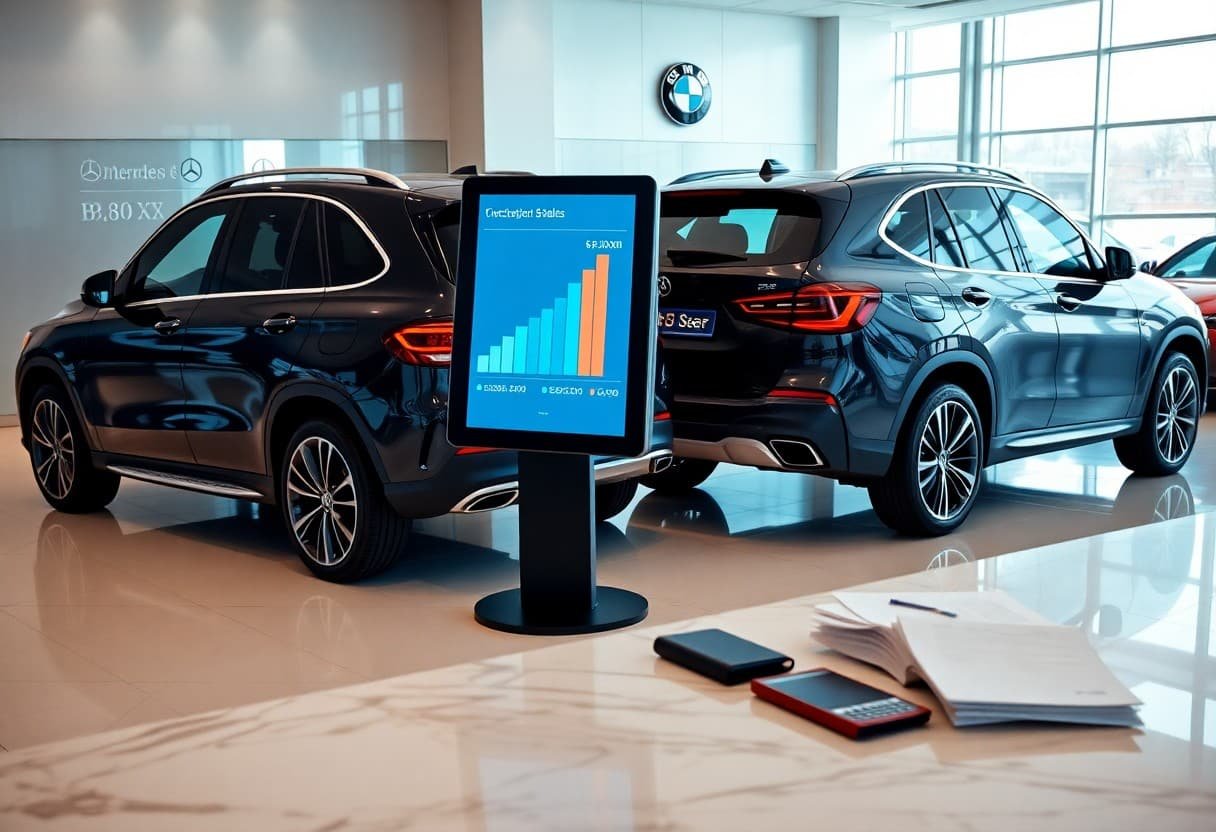
- Sales data from recent reporting periods show Mercedes‑Benz slightly ahead of BMW in global deliveries, propelled by strong SUV sales and a broader EV lineup.
- BMW posts faster growth in premium pricing and margin performance, supported by higher average selling prices and a profitable model mix despite trailing in unit volume.
- Regional trends favor Mercedes in China and North America while BMW remains strong in Europe; short-term leadership will hinge on EV rollout speed and new model introductions.

A Look at the Global Scoreboard
You can spot regional patterns: Mercedes leads in Europe and premium sedans, while BMW grows faster in China and SUVs, keeping the global race tight.
Who is currently wearing the crown?
Mercedes holds a slim edge in total deliveries this year, but you’ll notice BMW outpacing growth and electric adoption in several key markets.
Key sales milestones for both giants
Milestones include Mercedes surpassing annual seven-figure deliveries in recent years and BMW hitting record EV sales, which you can compare across quarterly reports.
BMW’s rapid China expansion and Mercedes’ sustained strength in Europe give you clear checkpoints: crossover growth, luxury EV milestones, and annual delivery records to watch when you track market shifts.
The Mercedes-Benz Strategy
Mercedes-Benz sharpens its premium pitch with new EVs, updated tech, and targeted marketing, so you often see steady demand and higher margins from flagship models.
Spotlight on top-selling luxury sedans
Look at the C-Class and S-Class variants: you choose comfort, tech, and brand prestige that keep them atop luxury sedan sales charts in many markets.
The focus on high-end exclusivity
You find Maybach and AMG editions positioned as status purchases, helping you accept premium pricing for rarity and performance.
Options like factory personalization, concierge services, and exclusive events mean you experience ownership as a curated privilege, which strengthens resale appeal and long-term loyalty.
BMW’s Winning Momentum
BMW’s winning momentum shows you why sportier design and tech-rich cabins are pushing its sales, narrowing Mercedes-Benz’s lead and reshaping buyers’ priorities in the luxury segment.
How the “Ultimate Driving Machine” reached new heights
You have seen how performance tuning, software updates, and targeted marketing helped BMW convert enthusiasts into repeat buyers, fueling consistent quarter-over-quarter gains.
The massive popularity of the X-series SUVs
Drivers like you have flocked to X-series models for the higher seating, tech features, and perceived value, making them a top sales driver for BMW globally.
Inside the cabin you’ll find flexible cargo, advanced driver aids, and engine options that match diverse tastes, which keeps X-series demand strong across markets.
The High-Voltage Race: Electric Vehicles
You see Mercedes and BMW racing into EVs with different approaches: Mercedes favors quiet range and plush comfort, while BMW sharpens steering and sportier handling, so you choose by driving priorities.
Mercedes EQ vs. BMW i-Series performance
Mercedes EQ often delivers silky torque, generous range and cushioned ride, while BMW i-Series tunes for tight handling and brisk acceleration, helping you decide whether comfort or engagement matters more.
Who is winning the hearts of EV buyers?
Buyers split between serene Mercedes cabins and BMW’s driver-focused excitement, so you weigh service, styling and charging ease when picking the brand that feels like yours.
Surveys show purchase intent tracks test drives and after-sales care; you care about software updates, charging maps and dealer responsiveness. Mercedes scores on perceived luxury and owner comfort, BMW attracts you with sportier tech and younger appeal, so resale outlook and community buzz often tip your final decision.
Winning Over the World’s Markets
You see Mercedes and BMW tweaking models, pricing and EV rollouts to capture regional demand, so leadership shifts with local incentives, dealer depth and charging availability.
Dominating the roads in China
Across China you notice Mercedes pushing luxury EVs while BMW courts urban buyers with sporty SUVs, and you watch sales pivot around local partnerships and subsidies.
Performance trends in the US and Europe
US buyers favor large SUVs and long-range crossovers, while European buyers lean toward efficient compacts and premium hybrids, so you observe different product mixes and marketing priorities.
European pricing rules, dense cities and fast-charging rollouts nudge you toward compact electrified cars and subscription options, whereas US incentives, highway miles and leasing habits steer you to roomier electric SUVs; you can track how inventory, financing and feature packages shift to match each market’s preferences.
What Keeps Drivers Coming Back?
Comfort keeps you coming back: attentive service, predictable performance, and tailored ownership perks turn test drives into repeat purchases.
Tech features that define the modern luxury experience
Connectivity and intuitive displays let you control navigation, voice assistants, and over-the-air updates, making each drive feel modern and personalized.
Brand loyalty and the power of prestige
Prestige keeps you loyal: heritage, resale value, and dealership relationships create pride and repeat purchases.
Loyalty often deepens when you feel recognized: personalized finance options, exclusive owner events, and active communities make the badge part of your identity. Manufacturer-backed warranties, certified pre-owned programs, and steady resale values reduce ownership risk, while signature design and driving character reinforce emotional attachment, so you choose the same marque again and again.
Summing up
Summing up, you’ll notice Mercedes often leads in global sales while BMW excels in tech and profitability; your choice depends on which strengths you value most.