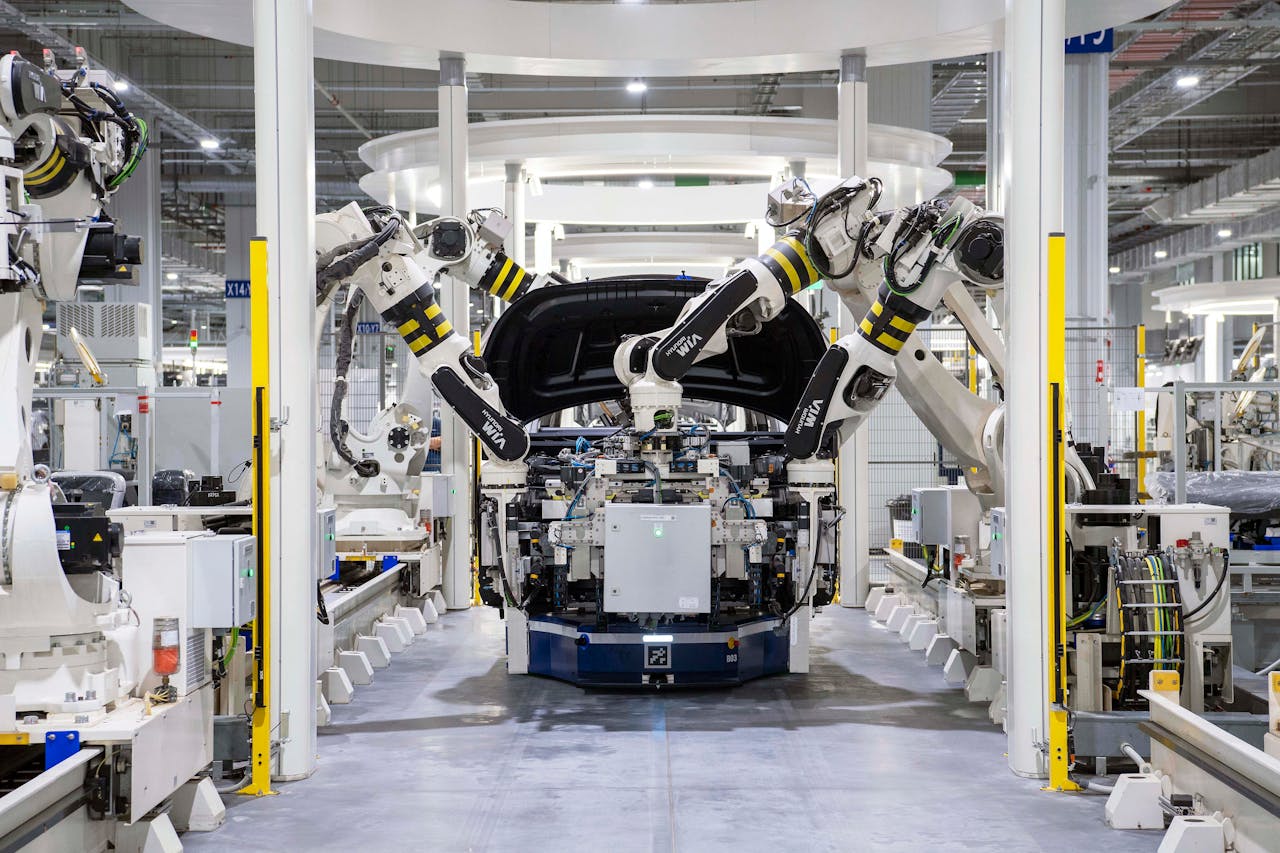


Over the next few minutes, you will learn six imperative steps to harness packaging automation with artificial intelligence that will help you assess use cases, align your data and infrastructure, design scalable AI models, integrate with existing systems, train your staff, and establish measurement and continuous improvement processes.
Key Takeaways:
- Define clear packaging goals and map current workflows to identify high-value automation use cases, KPIs, and integration points.
- Assemble high-quality labeled datasets, select appropriate AI models (vision, predictive, reinforcement), and run controlled pilots with robotics/PLC integration.
- Implement real-time monitoring and human-in-the-loop handling for exceptions, iterate on models and processes, and scale deployments based on measured ROI and compliance.
Step 1 – Define objectives & map processes
Define measurable goals and create a live map of your packaging flow so you can target automation where it delivers the biggest ROI; aim for specific, time-bound improvements such as a 15% throughput increase or a 30% reduction in changeover time within six months, and link those targets to data sources (PLC logs, MES, quality inspection) so progress is visible and auditable.
Set clear business objectives and KPIs
Anchor automation efforts to KPIs like throughput (units/min), OEE (%), defect rate (%), changeover time (minutes), MTTR/MTBF, and cost per package ($); set numerical targets (for example, cut scrap rate to <1% or raise OEE by 10 points) and assign owners, reporting cadence, and data sources so you can track progress weekly and close gaps quickly.
Process mapping and pain-point identification
Map the end-to-end packaging process with value-stream maps, SIPOC, and swimlane diagrams, then overlay timestamped PLC/MES logs and video-based time-motion studies to quantify where delays, defects, and handoffs occur most often; prioritize issues that drive 70-80% of cost or downtime and mark them for automation pilots.
Use Pareto analysis to rank root causes (e.g., jams, misfeeds, manual labeling errors) and verify with field measurements: if sensor logs show jams cause 25% of downtime, instrument that station with edge analytics and test simple interventions (adjust feeder angles, add a vision check) before full automation; combine 5 Whys, FMEA, and a 30-day pilot to validate improvements and refine KPIs.
Step 2 – Build a robust data strategy
You must define what data matters, how you’ll collect it, and the KPI uplift you expect-pilot projects often show 10-30% efficiency gains when data is handled end-to-end. Start with high-frequency camera feeds, sensor logs and ERP records, tag them with consistent schemas and version everything for audits. If you want industry context, see AI and packaging: the future of packaging for examples of deployed systems and ROI metrics.
Data collection, labeling and quality controls
You should instrument lines with 60-120 FPS cameras for defect detection, sample at manufacturer-recommended intervals and capture metadata (batch, SKU, line speed). Use active learning to cut labeling costs by 30-50% and enforce schema validation and label consensus thresholds (e.g., 95% agreement) to keep noise low. Track provenance so every model input maps back to its source and timestamp.
Infrastructure, integration and governance
You need a hybrid architecture: edge inference for sub-100 ms decisions and cloud for model training, storage and analytics. Implement MLOps pipelines with CI/CD, model registries and drift monitoring; apply role-based access, data retention rules and encryption in transit at ≥ TLS 1.2. Plan for throughput-lines often process 500-2,000 units/min-when sizing hardware and bandwidth.
For integration, adopt standard industrial protocols (OPC-UA, MQTT) and RESTful APIs to plug AI services into MES/ERP. Use containerized inference (Docker, Kubernetes at the edge or cloud) to simplify updates, and measure end-to-end latency, throughput and failure rates in staging; target <1% false positives for downstream rejection systems and automate rollback for models that degrade performance.

Step 3 – Select AI models and deployment approach
You must balance latency, throughput, accuracy and cost when choosing models and deployment paths: object detectors like YOLOv5 or Faster R-CNN handle defect detection at 30-60 FPS on modern edge GPUs, classification backbones such as ResNet50 or EfficientNet give high accuracy for label verification, and RL policies (PPO or SAC) can cut robotic cycle time by 10-30% in pilot runs; pair those choices with a deployment plan (edge, cloud, hybrid) that maps to your SLAs and monthly runtime budget.
Model choice (computer vision, ML, RL) and validation
For vision tasks, pick detectors/segmenters (YOLOv5, Detectron2) for pick-and-place, and lightweight classifiers (MobileNet, EfficientNet-Lite) for on-device checks; use XGBoost or LightGBM for tabular predictions like demand forecasting. Validate with k-fold CV, mAP/IoU thresholds (target mAP ≥0.9 for critical defects), shadow mode A/B tests on the line, and hardware-in-the-loop trials to quantify accuracy drift under real lighting and packaging variability.
Edge vs. cloud deployment and training workflows
Edge gives sub-10 ms inference and avoids 50-200 ms round-trip cloud latency, so deploy low-latency vision on Jetson Xavier, Coral TPU, or Intel Movidius when cycle time matters; cloud (SageMaker, Vertex AI) suits heavy model training, large-batch inference, and centralized monitoring. Hybrid setups let you run fast inference at the edge while aggregating samples to the cloud for nightly retraining and model versioning.
Train large models in the cloud using GPU instances (V100/A100) with datasets of 10k-100k labeled images, then optimize for edge via quantization (4x model size reduction) and pruning (30-70% compute reduction). Implement CI/CD for models: shadow deployments, metric-based rollbacks, and weekly or monthly retrains depending on concept drift; automate OTA updates so you can push validated, quantized models to edge nodes without halting production.
Step 4 – Integrate AI with packaging automation hardware
System architecture: PLCs, robots, sensors and middleware
Map your PLCs (Siemens S7‑1500, Rockwell ControlLogix) to robots (ABB, FANUC, KUKA) and sensors (Cognex vision, SICK lasers) through middleware like OPC UA, MQTT or ROS‑Industrial. Use deterministic buses (EtherCAT, PROFINET) for motion cycles and edge gateways for AI inferencing to keep closed‑loop latencies under 50 ms. For example, vision‑guided pick‑and‑place systems reduced mispicks below 0.5% in FMCG lines when paired with PLC‑based motion control and buffered AI inference at the line edge.
Safety, standards compliance and interoperability
Ensure your safety architecture meets ISO 13849 (PLd/PLr) or IEC 61508 (SIL2) as applicable, and follow EN 60204 plus UL standards for North American markets. Implement safety PLCs, light curtains, and certified collaborative‑robot modes (safety‑rated monitored stop or speed & separation) with verified stop times. Certify interoperability using OPC UA companion specs and vendor certifications so modules can be hot‑swapped without breaking safety chains or line validation.
Perform a hazard and risk assessment (HARA) that maps failure modes to required safety levels, then produce a safety concept and validation plan. Run FAT and SAT with traceable test cases at expected throughput (e.g., 60-120 packages/min), include endurance and fault‑injection tests, and keep logs for audits. Maintain firmware patches and apply IEC 62443 cybersecurity measures so safety controllers and AI edge nodes remain functionally safe and protected from network threats.
Step 5 – Pilot, validate and scale
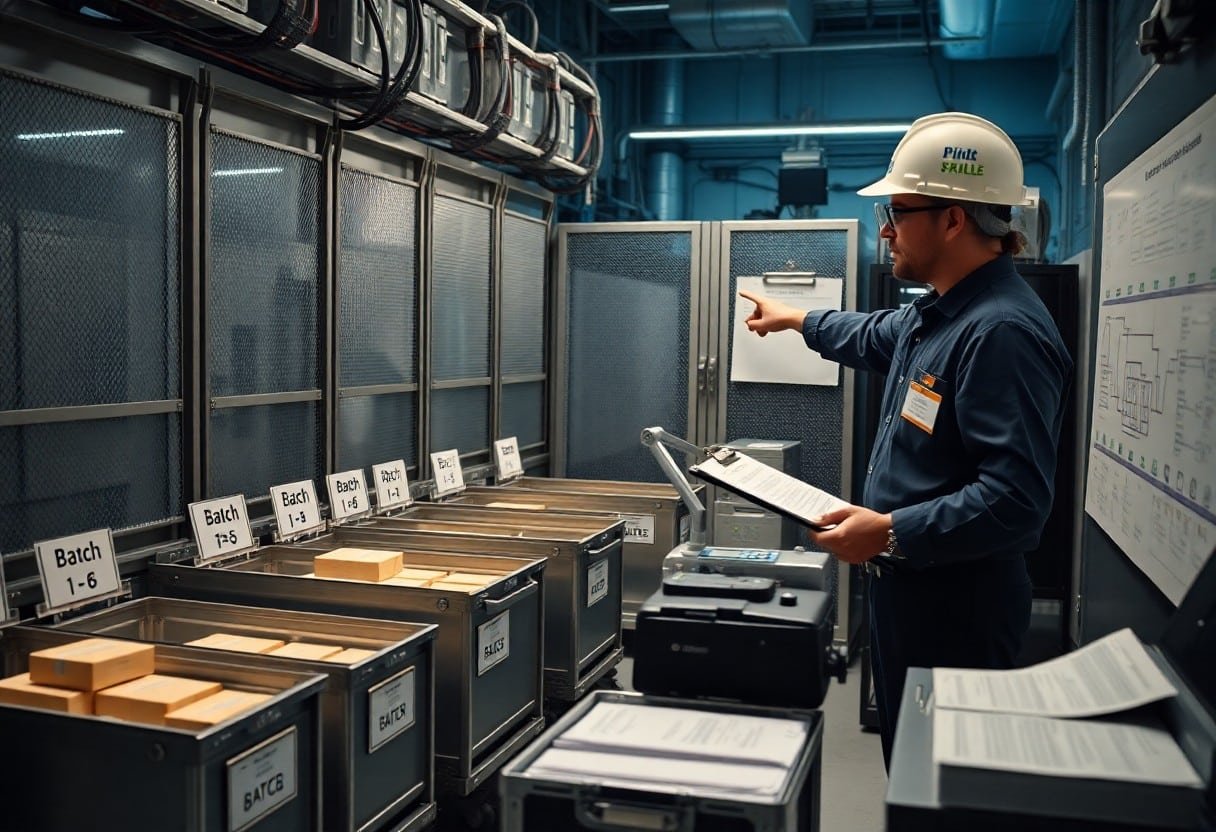
Run pilots on 2-3 packaging lines for 4-8 weeks to validate throughput, OEE and defect-rate improvements; you should aim for 5-15% defect reduction or 3-8% throughput gain to justify scaling. Use controlled experiments, clear rollback criteria and cross-functional reviews to capture operational impacts. For implementation patterns and industry cases see Integrating AI in Manufacturing to Unlock Efficiency and …
Pilot design, A/B testing and KPI validation
Randomize by shift or line and run A/B cohorts with at least 10,000 units per group to detect a 2% change in defect rate at p<0.05; collect 50-100 Hz telemetry for vision and PLC signals. You must define a single primary KPI (e.g., OEE or scrap rate), set measurement windows, automate labeling and implement logging to analyze edge-case failures and statistical significance before any expansion.
Scaling strategy, operations readiness and training
Phase rollouts by adding 20-30% of lines per quarter, prioritize high-volume SKUs, and ensure stable network and spare compute capacity. You should prepare operator checklists, deliver 12-16 hours of hands-on training per role, set SLAs for model retraining, and deploy dashboards tracking OEE, false positives and inference latency to detect regressions fast.
Example: a food-packaging firm moved from pilot to 60 lines across three plants in 9 months, achieving OEE +8% and scrap −12% after instituting MLOps pipelines, weekly data-drift checks, automated rollback, a change-control board and a 24/7 incident hotline. You should replicate phased staging, versioned models, production monitoring, and incentive-linked KPIs to lock in performance and drive continuous improvement.
Step 6 – Monitor, optimize and measure ROI
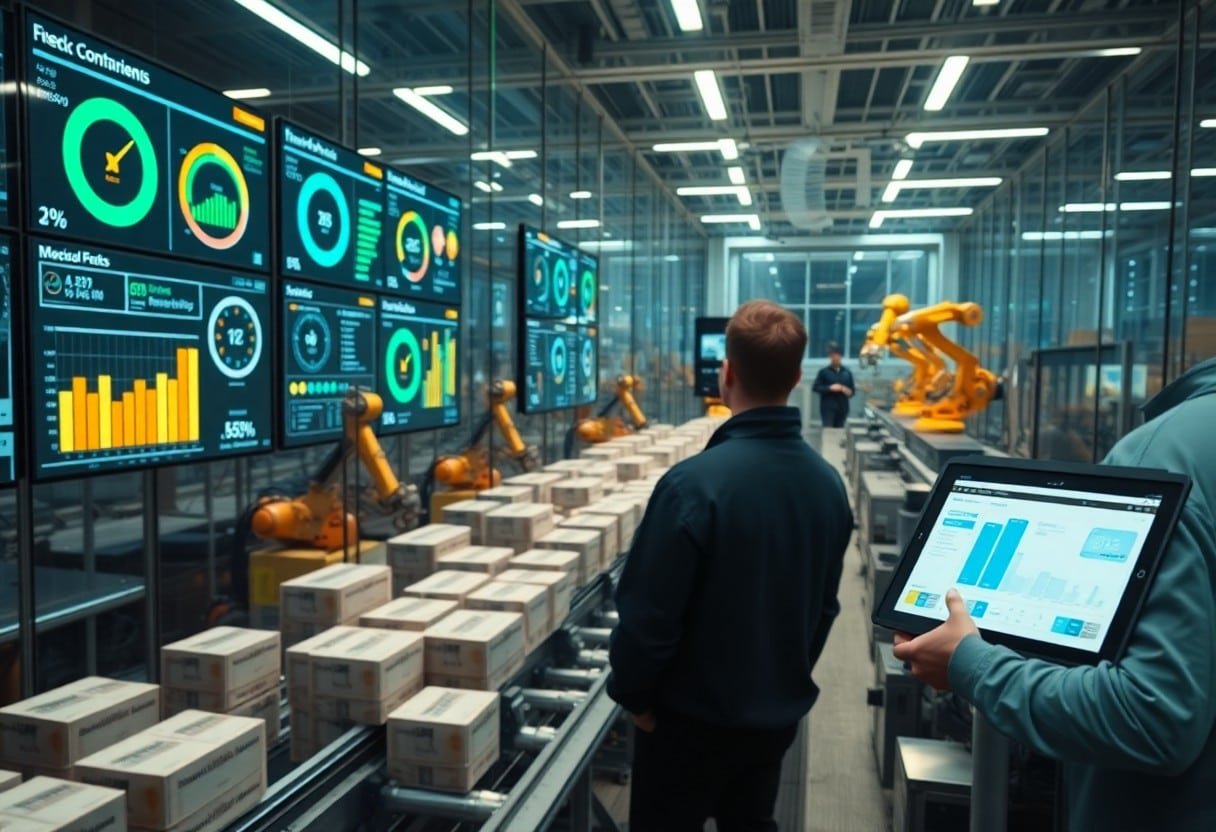
You must instrument every packaging line with KPIs (OEE, mispack rate, throughput) and A/B tests to validate gains; many manufacturers report OEE uplifts of 5-15% and mispack reductions near 30% after AI rollout. Tie results to financial metrics and follow practical deployment steps from Six Steps to Implementing AI in Manufacturing.
Real-time monitoring, maintenance and model retraining
Stream sensor telemetry and camera frames into a real-time platform so you can trigger alerts and corrective workflows within minutes; for example, combining vibration analytics with scheduled model retraining every 2 weeks helped one beverage packager cut unplanned downtime by 30%. Retrain on new SKUs and label drift to keep detection precision above 95%.
Continuous improvement, analytics and ROI tracking
Build dashboards that map AI outputs to cost-per-pack, scrap rate and labor minutes, and run monthly cohort analyses so you can prioritize model fixes that move the needle; tracking per-SKU scrap drops of 2-5% after AI interventions often shortens payback to 6-12 months.
You should instrument both leading and lagging metrics-throughput (packs/hr), mispack %, scrap kg, energy kWh, labor minutes per 1,000 packs and OEE-and use A/B tests or uplift modeling to attribute gains. For a concrete example: a 4% scrap reduction on 500,000 monthly packs at $0.08 scrap cost saves $1,600/month; if integration and models cost $20,000, that implies a 12-15 month payback. Apply rolling 90-day baselines and confidence intervals to filter noise, then prioritize models and SKUs that deliver the highest cost-per-impact improvements.
Conclusion
From above, you can implement the six necessary steps to harness packaging automation with artificial intelligence to streamline operations, reduce errors, and scale intelligently; by assessing needs, integrating AI systems, training staff, monitoring performance, iterating models, and ensuring compliance, you position your operations for measurable efficiency gains and sustained competitive advantage.