
Wind power offers a proven pathway to bolster your energy security and lower emissions; this post outlines six practical steps you can take-from deploying community-scale turbines and improving grid integration to diversifying supply chains, investing in storage and maintenance, ensuring supportive policy, and fostering local workforce development-to strengthen your resilience, reduce costs, and accelerate the transition to a greener energy future.
Key Takeaways:
- Expand and diversify wind deployment (onshore, offshore, distributed) to increase clean capacity and reduce dependence on fossil fuels.
- Modernize the grid and pair wind with energy storage, demand response, and transmission upgrades to manage variability and improve reliability.
- Implement stable policies, streamlined permitting, targeted financing, and community workforce strategies to accelerate deployment and share economic benefits.
Understanding Wind Power
You can think of wind power as a mature, scalable tool in your energy toolbox: turbines capture kinetic energy from moving air and convert it to electricity with modern machines ranging from 2-5 MW onshore to 8-14 MW offshore, hub heights above 100 m, and capacity factors that commonly reach 25-50% depending on site. Grid integration relies on improved forecasting, transmission upgrades, and hybridizing with storage to smooth variability and keep your system reliable.
The Basics of Wind Energy
You need to focus on physics and siting: available power scales with the cube of wind speed and the swept area (πR²), while the Betz limit caps extractable energy at 59.3%. Turbine selection, hub height, and local wind shear determine output; onshore projects often use 2-5 MW turbines with 20-45% capacity factors, whereas offshore machines deliver higher, more consistent yields, boosting your per-turbine annual generation.
Benefits of Wind Power for Energy Security
You gain fuel-diversified, domestically produced electricity that reduces dependence on imported fossil fuels and exposure to volatile global fuel prices. For example, Denmark often meets around half its electricity demand with wind, and Texas routinely generates over 20% from wind, demonstrating how high penetration can lower import risk and stabilize local wholesale markets while supplying resilience during supply disruptions.
You also improve operational resilience: wind’s near-zero marginal cost lowers overall system fuel needs, and better short-term forecasting (now often within a few percent error up to 48 hours) allows grid operators to plan reserves more efficiently. Pairing wind with batteries or demand response creates firm, dispatchable blocks of clean capacity that you can call on during peaks or outages, directly strengthening your energy security profile.
Step 1: Assessing Wind Resources
You map mesoscale resources, run mesoscale-to-microscale models, and compare site-level measurements to public datasets-use the DOE guide Advantages and Challenges of Wind Energy to check policy and technical trade-offs; aim for mean annual wind speeds above ~6.5 m/s at hub height for competitive capacity factors (25-45%), and quantify turbulence, shear, and seasonal variability to inform turbine selection and layout.
Site Evaluation
You assess terrain, land use, and grid access, measuring setbacks, road access, and environmental constraints; prioritize sites with simple topography to limit turbulence, class 3+ winds (≥6.5 m/s at 50-80 m), and proximity to substations-projects with under 20 km of new transmission typically see substantially lower interconnection costs.
Data Collection and Analysis
You deploy cup/sonic anemometers, LiDAR/SoDAR and record at hub height for at least 12 months (2-3 years preferred), then apply IEC-standard power curve and uncertainty methods; analyze Weibull parameters, shear exponent, and turbulence intensity to produce AEP estimates and site-specific turbine selection.
You should design campaigns with at least one instrument string at projected hub height and a collocated met mast or LiDAR for calibration; use measure-correlate-predict with reanalysis datasets (ERA5/MERRA-2) to extend records, and run uncertainty analysis-typical AEP uncertainty falls from ~10-15% after one year to ~5-8% with a two-year hub-height LiDAR campaign; model wake losses (5-20%) with tools like FLORIS or WAsP and include availability, electrical losses, and terrain corrections in the final energy-yield report.
Step 2: Investing in Infrastructure
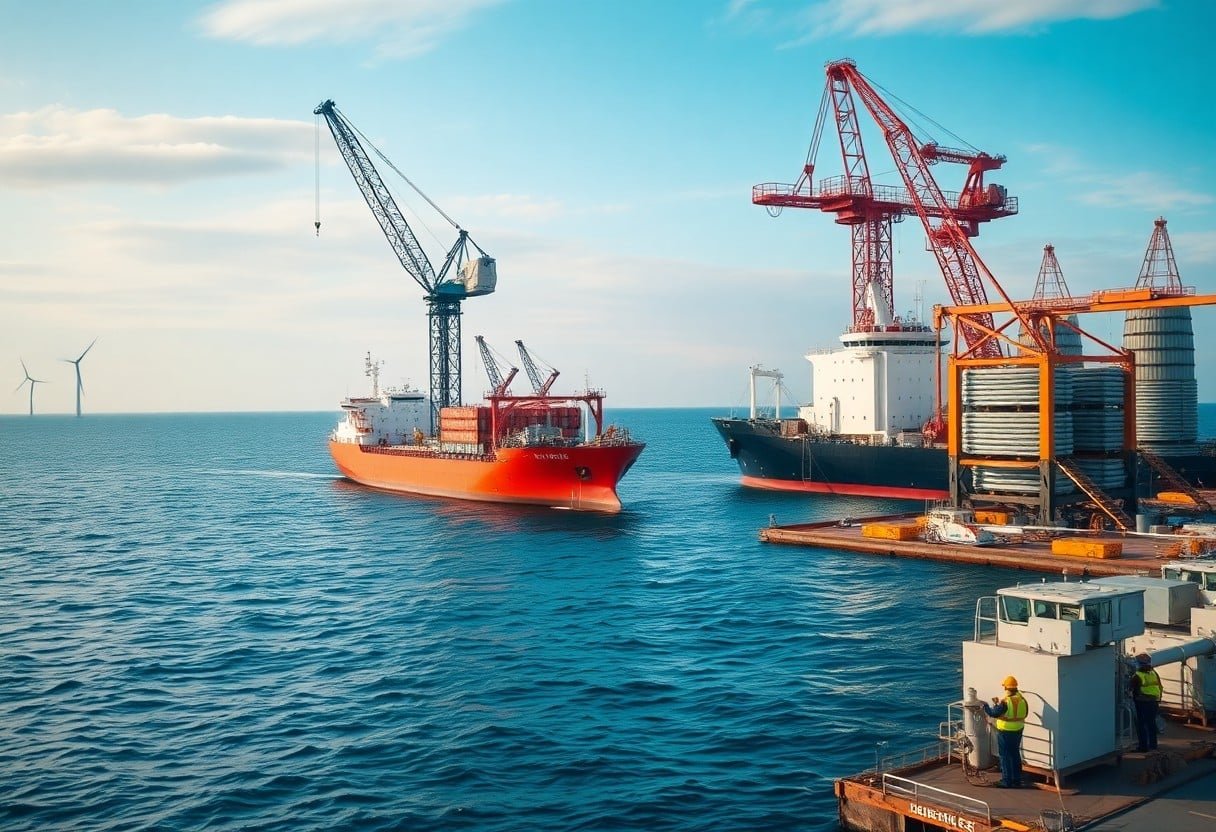
You should prioritize grid modernization, ports, and manufacturing to turn projects into deliverable capacity; Dogger Bank (3.6 GW) shows the scale achievable with coordinated investment. Upgrading transmission, adding 1-2 GW interconnectors and storage reduces curtailment and system stress. Policies listed in Six ways that governments can drive the green transition help de-risk financing and accelerate timelines.
Development of Wind Farms
Site selection, seabed and meteorological surveys, and consenting dictate project viability; permitting often spans 3-7 years but streamlined processes can cut that to 2-3. You should size turbines to match site winds (offshore turbines now commonly 8-14 MW with rotors >150 m) and plan foundations, cable routes, and port upgrades to reduce logistics costs and shorten the 18-36 month construction window.
Integration with Existing Energy Systems
Integrating wind demands transmission upgrades, flexibility resources, and improved forecasting-onshore capacity factors typically 25-45% and offshore 40-60% so you must provision backup and storage. Batteries, pumped hydro and interconnectors like the 1.4 GW North Sea Link smooth variability, while smart inverters and grid-forming controls cut curtailment and support voltage and frequency stability as you add wind capacity.
Deploy HVDC export corridors and multi-GW hub concepts to reduce losses and seabed footprint for clustered offshore arrays; the North Sea hub models bundle exports to optimize cable use. You should invest in synchronous services (synchronous condensers or virtual inertia) and market mechanisms that value fast response and reserves, and coordinate TSOs and DSOs on planning to unlock higher shares of wind with minimal reliability risk.
Step 3: Policy Support and Incentives
Targeted policy tools-competitive auctions, production or investment tax credits, guaranteed grid access, and streamlined permitting-drive cost reductions and bankability. You should prioritize sites in jurisdictions offering long-term revenue certainty, like stable PPA markets or jurisdictions with proven auction track records, because those mechanisms cut financing costs and accelerate deployment; auctions in Spain and Germany have repeatedly pushed down prices for onshore and offshore bids by 20-40% over a decade.
Government Initiatives
The Inflation Reduction Act and EU auction programs illustrate active government roles: you can access long-duration tax credits, domestic-content bonuses, or priority grid connections that materially improve project returns. Denmark’s community-ownership models and Germany’s EEG auctions show how local engagement plus guaranteed offtake spurred rapid uptake-policy design that ties revenue stability to social acceptance lowers risk for lenders and shortens permitting timelines.
Financing Options for Wind Projects
You can combine tools-long-term PPAs (10-25 years), project finance (60-80% debt), tax-equity structures in the U.S., green bonds, and concessional loans-to lower your weighted average cost of capital. Institutional investors increasingly buy operational assets, offering attractive exit routes; blended finance and guarantees from development banks reduce perceived sovereign or offtaker risk in emerging markets.
Drilling into terms, onshore projects typically secure 12-15 year debt tenors with debt service cover ratios lenders expect around 1.3-1.5x, while large offshore schemes often need 15-20 year facilities and higher equity cushions. You should evaluate interest-rate sensitivity-rates of 3-8% common in developed markets-and consider export-credit agency support when turbines are procured from major OEMs to access longer tenors. Finally, structuring layered revenue (PPA + merchant hedge + ancillary services) and using EBRD/World Bank guarantees or ECAs can lower required equity IRR and make marginal sites bankable.
Step 4: Community Engagement
Engage early and transparently: set up a local advisory group, publish permitting timelines (often 12-24 months), and offer clear benefit mechanisms so your neighbors see tangible returns. Use case studies such as Samsø (Denmark), where island residents led wind and heat projects to reach near-100% renewables, to show what community ownership and long-term local income can look like in practice.
Involving Local Stakeholders
Map landowners, schools, businesses, and local government, then run 3-6 targeted workshops to align interests. Offer co‑ownership, lease agreements, or community equity shares so your municipality keeps value locally; examples from European co‑ops show early equity offers dramatically reduce opposition. Ensure permit and benefit terms are written into the municipal agreement.
Public Education and Awareness
Address top concerns with data: present measured noise levels (modern turbines typically ≤45 dB at 300 m), visual and shadow‑flicker mitigation plans, and a live output dashboard that converts MW into households served (a 2 MW turbine often supplies ~1,000-1,500 homes annually). Use town halls, FAQs, and factual comparators to build trust.
Go beyond talks: run school STEM modules, arrange monthly site‑visit open days for 50-200 residents, and publish quarterly monitoring (noise, wildlife, output) so your community sees independent results. Pair a six‑month preconstruction outreach calendar with ongoing online dashboards and a newsletter to keep engagement measurable and continuous.
Step 5: Implementing Technology and Innovation
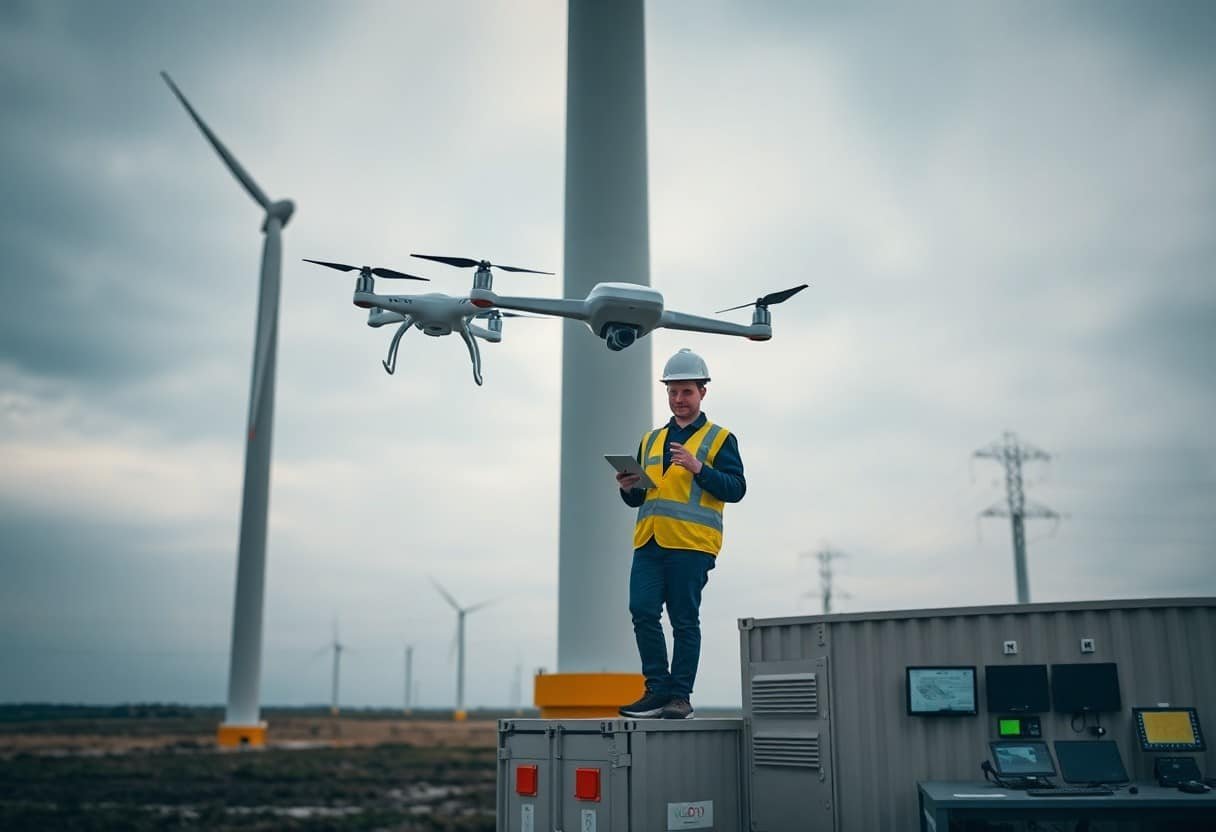
You accelerate deployment by pairing larger, smarter turbines with grid-focused controls and community engagement best practices-see strategies like public consultation and visual impact mitigation in Six Ways To Strengthen The Acceptance Of Wind Power. You should also pilot digital-twin operations, predictive maintenance, and standardized interconnection protocols to reduce downtime and speed permitting.
Advancements in Wind Turbine Design
You benefit from turbines with rotor diameters over 200 m and nameplate ratings rising to 10-14 MW offshore-examples include Siemens Gamesa’s 14‑222 and GE’s Haliade‑X series-raising capacity per foundation and cutting levelized costs by up to 20% versus older models; higher hub heights and segmented blades let you tap steadier winds and boost annual energy production per turbine by 30-40% in many sites.
Energy Storage Solutions
You stabilize output by pairing wind with batteries, pumped hydro, or hydrogen: lithium‑ion battery costs plunged from roughly $1,100/kWh in 2010 to under $150/kWh by 2020, enabling projects like the 150 MW / 193.5 MWh Hornsdale Power Reserve to provide fast frequency response and firming; pumped hydro still supplies about 95% of global electricity storage capacity, so you choose technology by timescale and site.
You design hybrid systems by matching storage duration to the grid need: batteries deliver seconds-to-hours response with ~85-95% round‑trip efficiency for frequency and ramping, pumped hydro gives multi‑hour to seasonal bulk capacity where geography allows, and long‑duration options-redox flow, compressed air, green hydrogen-cover days to months despite lower round‑trip efficiency; you can co‑locate storage with wind to reduce curtailment, lower balancing costs, and provide ancillary revenues.
Final Words
Presently you can advance energy security and sustainability by implementing the six practical steps for wind power: prioritize strategic siting and robust grid integration, streamline permitting and financing, invest in modern turbines and maintenance, build skilled local workforces, and foster community and policy support-so your energy system becomes more resilient, affordable, and low-carbon.