

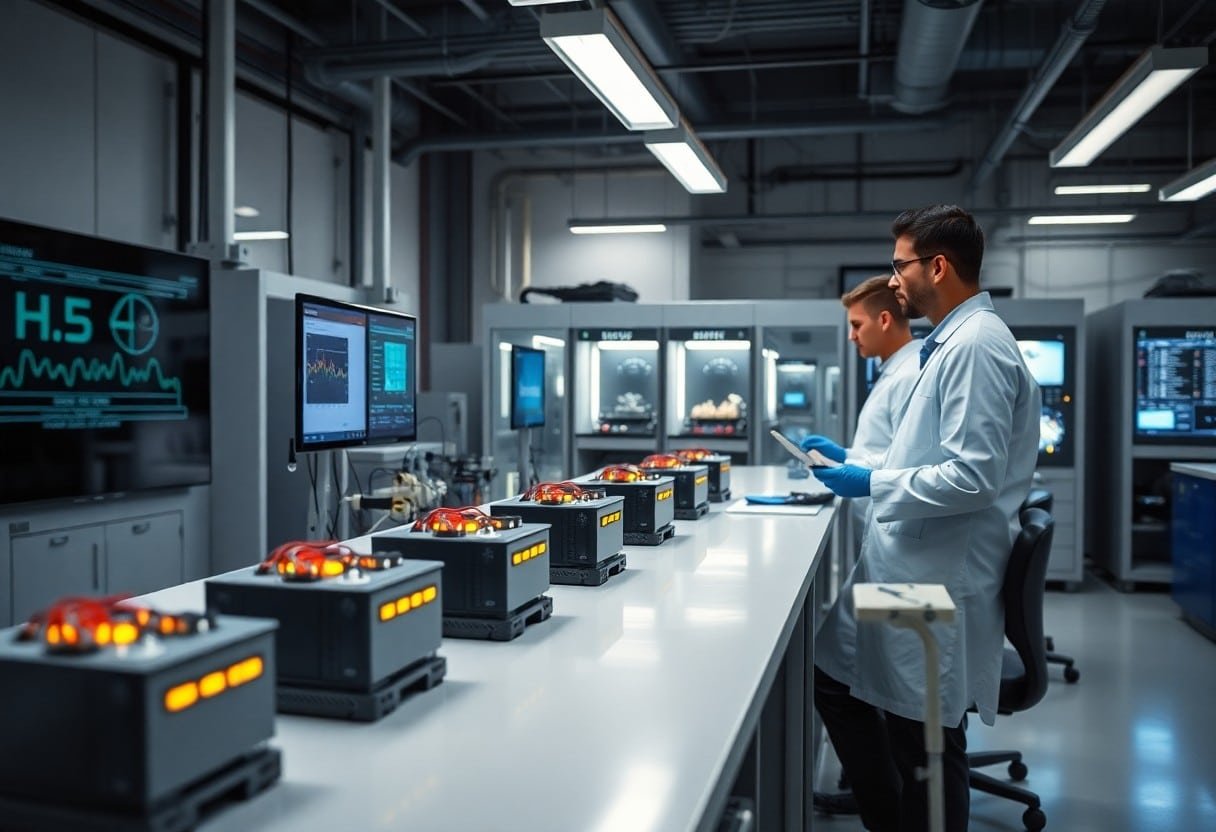
With the rapid advancement in battery technology, you stand on the brink of a revolution that promises to reshape how you use energy. This blog post outlines ten imperative steps that will guide you through the innovations and breakthroughs poised to transform your everyday life, enhancing efficiency and sustainability. Understanding these steps will empower you to engage with the future of energy storage, whether for personal use or professional applications.
Key Takeaways:
- Advancements in materials science are driving innovations in battery performance and longevity.
- Integration of solid-state technology promises enhanced safety and energy density compared to traditional lithium-ion batteries.
- Collaboration between industry and academia is imperative for accelerating the development and commercialization of next-generation battery technologies.

Research into Materials
Your understanding of next-generation battery technology should include ongoing research into innovative materials. These materials can significantly enhance the performance, efficiency, and sustainability of batteries. Areas of research focus on identifying more efficient conductors, lightweight substrates, and sustainable resources that minimize environmental impact. This exploration is imperative for pushing the boundaries of battery capabilities and addressing pressing needs in energy storage.
Advanced Composites Exploration
You may find that advanced composites are paving the way for better battery performance. By integrating different materials, researchers aim to create composites that offer superior electrochemical properties, increased durability, and reduced weight. These materials stand to enhance the dynamics and lifespan of batteries, making them more suitable for various applications.
|
Novel Electrolyte Formulations
Exploring novel electrolyte formulations is vital for the evolution of battery technologies. Customizing electrolytes can lead to improved ion conductivity, greater safety, and wider operating temperature ranges. Your knowledge of these formulations can help you understand how they impact overall battery performance.
Current research examines into hybrid and solid-state electrolytes designed to minimize flammability risks while maximizing efficiency. Innovations in polymer-based and ionic liquid electrolytes promise to deliver better stability and energy density. By focusing on these advancements, you’ll be equipped to appreciate how they contribute to the longevity and safety of future battery systems.
Scale Production Techniques
As you explore into next-generation battery technologies, understanding scale production techniques becomes vital. Efficient scaling not only enhances output but also ensures that innovations can be translated into commercially viable products. You must explore how modern production methods can meet growing consumer demand while maintaining quality and performance standards.
Efficient Manufacturing Processes
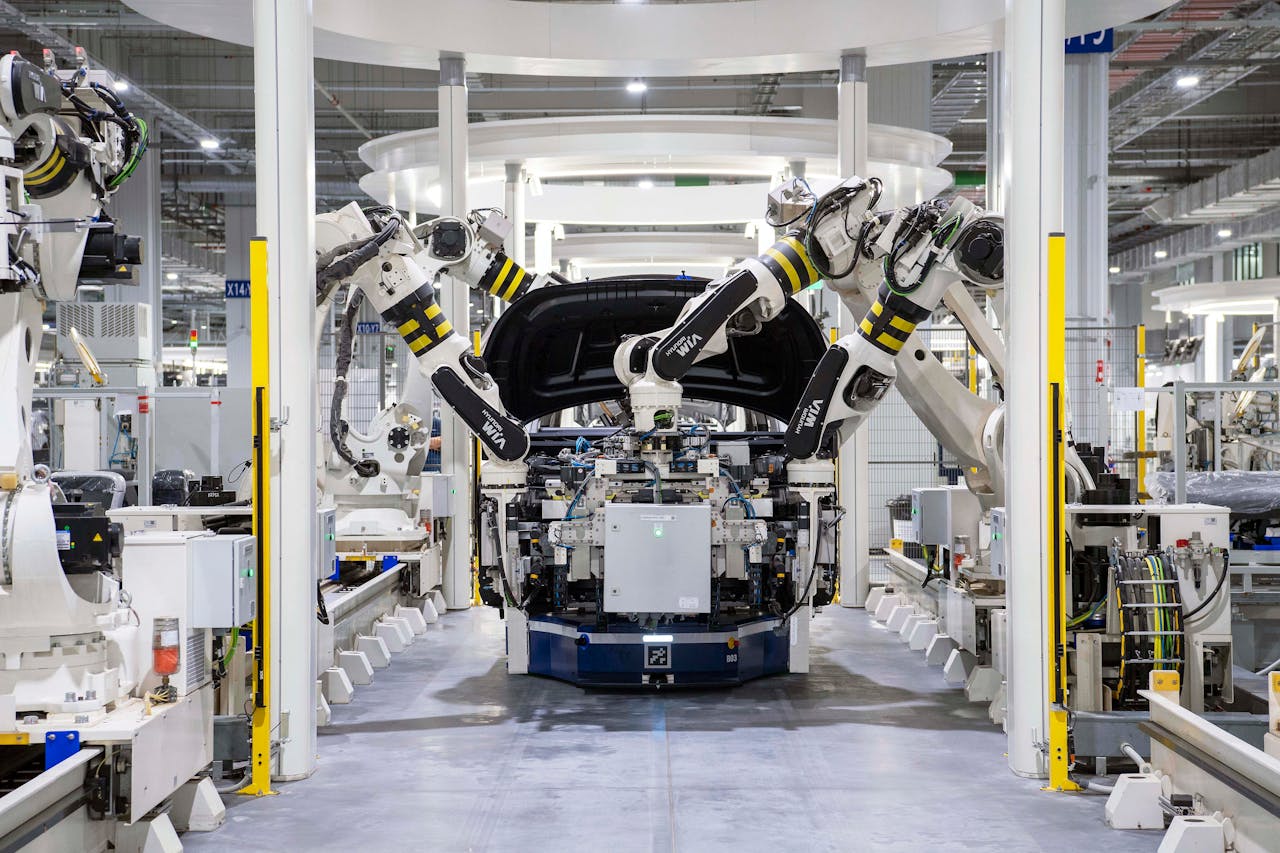
Implementing efficient manufacturing processes is vital for optimizing battery production. You can adopt advanced automation and robotics to streamline operations, reduce human error, and speed up production times. By integrating lean manufacturing principles, you improve waste management and resource utilization, ultimately leading to higher productivity and consistent product quality.
Cost Reduction Strategies
To ensure long-term success in battery technology, you need to incorporate effective cost reduction strategies. Analyzing every aspect of production, from raw materials to processing techniques, enables you to identify savings opportunities. Collaborating with suppliers for better pricing and investing in energy-efficient machinery can significantly lower overhead costs while enhancing output quality.
When focusing on cost reduction strategies, it’s beneficial to evaluate alternative materials and processes that can be sourced for less. You might consider bulk purchasing agreements with suppliers or exploring local sourcing options to minimize transportation costs. Additionally, investing in research and development can lead to innovative production techniques that lower manufacturing costs over time, creating a sustainable competitive advantage in the market.
Improve Energy Density
Advancing energy density is imperative for the next generation of battery technologies, enabling longer-lasting power in smaller formats. To gain insights into upcoming innovations, refer to the BATTERY 2030+ Roadmap 1. Enhancing energy storage not only boosts performance but also minimizes the environmental impact of battery technologies.
Higher Capacity Cells
Focusing on higher capacity cells enhances overall battery performance, allowing for more energy storage without increasing size. This results in devices that can operate longer between charges, meeting the growing demands for energy in various applications.
Optimized Electrode Configurations
Optimized electrode configurations play a significant role in maximizing energy density. By carefully designing the arrangement and materials used in electrodes, you can improve charge capacity and reduce energy losses, leading to more efficient battery systems.
When optimizing electrode configurations, consider the balance between surface area, thickness, and material composition. A well-designed electrode can significantly enhance the interaction between the electrolyte and active materials, promoting higher charge and discharge rates. This can not only improve performance but also extend the lifespan of your batteries, resulting in reduced waste and greater sustainability in energy storage solutions.
Enhance Charging Speed
Improving charging speed is imperative for user satisfaction and broader adoption of next-generation battery technology. Innovations in battery chemistry and design can significantly reduce the time it takes to recharge, allowing you to quickly power up your devices and electric vehicles. As demand for faster charging increases, manufacturers are racing to develop solutions that not only enhance speed but also maintain battery health and longevity.
Fast-Charging Solutions
Your charging experience can be transformed by adopting fast-charging solutions. These technologies, including higher voltage and current protocols, enable rapid energy transfer, reducing the time required for a full charge. By integrating these solutions into your devices, you can enjoy increased convenience and efficiency, allowing for seamless usage without long interruptions for charging.
Thermal Management Systems
Effective thermal management systems are imperative for safe and efficient charging. You may not realize that managing heat generated during charging directly influences a battery’s performance and lifespan. Advanced thermal techniques help to dissipate excess heat, ensuring that your batteries maintain optimal operating temperatures, thereby enhancing both charge speed and overall battery health.
Implementing robust thermal management systems involves a variety of strategies, such as the use of liquid cooling, phase change materials, and specially designed heat sinks. By controlling temperature during the charging process, these systems prevent overheating, which can lead to reduced battery efficiency and shorter life cycles. Investing in effective thermal management not only enhances your charging speed but also protects your battery investment for the long run, ensuring you get the most from your charging sessions.
Battery Life Extension
Your focus on battery life extension can significantly impact the longevity and usability of your devices. By implementing advanced technologies, such as improved materials and charge-discharge cycle management, you can increase the lifespan of your batteries. Methods like optimizing temperature control and energy density not only enhance performance but also diminish the frequency of replacements, allowing you to maximize your investments.
Cycling Stability Improvements
You can achieve cycling stability improvements by selecting high-performance materials that resist wear during repeated charge and discharge cycles. Innovations in electrode design and electrolyte composition are crucial in minimizing capacity loss over time. Such enhancements ensure that your batteries maintain reliability and efficiency throughout their lifecycle.
Degradation Prevention Methods
To prevent degradation, you should adopt techniques that minimize wear and tear on battery components. These methods include employing protective coatings, utilizing solid-state electrolytes, and integrating advanced battery management systems. By focusing on these strategies, you can significantly extend your battery’s operational life.
Implementing effective degradation prevention methods is crucial for maintaining your battery’s performance over time. Protective coatings can shield electrodes from harmful reactions, while solid-state electrolytes reduce the risk of leaks and short circuits. Advanced battery management systems can optimize charging cycles and monitor health indicators, allowing you to address issues before they escalate. By integrating these approaches, you ensure that your batteries operate efficiently longer, ultimately saving you time and resources.
Safety Enhancements
In your pursuit of next-generation battery technology, prioritizing safety enhancements is vital to ensure reliability and consumer trust. These advancements help mitigate risks associated with battery failures, ultimately enabling wider adoption of innovative battery solutions.
Thermal Runaway Prevention
To protect your devices from potential hazards, implementing thermal runaway prevention strategies is vital. This includes integrating advanced materials and monitoring systems that can detect and manage heat fluctuations before they escalate into safety issues.
Robust Structural Designs
Robust structural designs play a significant role in enhancing battery safety. By employing strong, durable materials and innovative engineering techniques, you can ensure your battery withstands physical stresses and protects against punctures and impacts.
Investing in robust structural designs means considering factors such as material strength and impact resistance. By utilizing high-performance composites and fault-tolerant designs, you can significantly decrease the chance of structural failure under stress. Additionally, implementing advanced design simulations during the development process allows you to identify weaknesses and optimize the construction before production, resulting in a safer battery that you can rely on for demanding applications.

Recycling Methodologies
In your quest for the next generation of battery technology, understanding recycling methodologies is necessary. These practices not only reduce waste but also ensure valuable materials are recovered and reused, contributing to a circular economy. By embracing innovative recycling techniques, you can enhance sustainability and minimize the environmental impact of battery disposal.
Sustainable Recovery Processes
Sustainable recovery processes focus on extracting valuable materials from used batteries through environmentally friendly methods. You can leverage advancements in hydrometallurgy and biotechnological approaches that minimize harmful emissions and reduce energy consumption, ensuring efficient recovery while preserving ecological integrity.
Material Reuse Strategies
Material reuse strategies involve repurposing components from old batteries for new applications. This method minimizes the need for raw materials and reduces overall production costs. By implementing effective reuse strategies, you can extend the lifecycle of battery materials and contribute to resource conservation.
Exploring material reuse strategies allows you to prioritize sustainability in battery production. You can integrate components such as lithium and nickel from decommissioned batteries into new designs, effectively reducing extraction of virgin resources. This not only conserves natural materials but also cuts down on the energy and emissions associated with mining and processing. By opting for these strategies, you enhance the economic viability of battery systems and contribute to a greener future.
Industry Collaboration
To propel the next generation of battery technology, industry collaboration is necessary. By uniting various players-from manufacturers to researchers-you can establish a robust ecosystem that fosters innovation and accelerates development. Collaboration allows for shared resources, expertise, and insights, leading to advancements that would be challenging to achieve in isolation.
Partnerships with Startups
Engaging with startups can infuse fresh ideas and agile solutions into your projects. These smaller companies often bring unconventional approaches and cutting-edge technologies that can complement established practices. By fostering partnerships with startups, you can leverage their innovative spirit to enhance your battery technology initiatives.
Research Consortiums Establishment
Establishing research consortiums enables collaboration between industry, academia, and government entities to address common challenges. You can pool resources and knowledge to tackle complex issues in battery technology, ensuring a more comprehensive understanding of emerging trends and development pathways.
Research consortiums serve as collaborative platforms that bring together industry leaders, academic experts, and governmental organizations to focus on shared battery technology objectives. By joining these consortiums, you can access a wealth of knowledge and resources, aiding in the solution of industry-wide challenges. This collective effort promotes innovation through shared research activities, ensuring that breakthroughs are achieved more efficiently. Additionally, consortiums often attract funding opportunities that support large-scale projects aimed at revolutionizing battery technology, giving you the competitive advantage needed in today’s rapidly evolving market.
Consumer Adoption Strategies
To successfully implement next-generation battery technology, you need to develop tailored consumer adoption strategies that address potential barriers and enhance user experience. These strategies can shape public perception and foster acceptance, making it important for stakeholders to engage directly with consumers through innovative approaches that highlight the benefits of new technologies.
Awareness Campaigns
Effective awareness campaigns play a vital role in education, enabling you to inform consumers about the advantages of next-generation battery technologies. By leveraging multiple platforms and channels, you can maximize reach and engagement, ensuring that potential users understand how these innovations can benefit their everyday lives.
Incentive Programs Development
Creating well-structured incentive programs can motivate you to adopt new battery technologies by lowering financial barriers. These programs may include discounts, rebates, or financing options that make the integration of advanced batteries more accessible and appealing for various consumer demographics.
Incentive programs should be carefully designed to align with your needs and desires. Offering financial benefits, such as trade-in bonuses for older battery systems or reduced prices for early adopters, can significantly influence your purchasing decisions. Additionally, integrating partnerships with retailers or service providers enhances incentives, showcasing a commitment to sustainability while making the transition more appealing. By ensuring these programs are straightforward and attractive, you can feel confident in your investment in next-generation battery technology.
Summing up
Conclusively, implementing these 10 steps will guide you toward understanding and contributing to the next generation of battery technology. By embracing innovative materials, enhancing efficiency, and prioritizing sustainability, you can position yourself at the forefront of this technological revolution. These advancements not only hold the potential to transform energy storage but also impact the broader landscape of renewable solutions. Your engagement in this transformative journey is crucial for fostering a sustainable future.

hi!,I like your writing so much! share we communicate more about your article on AOL? I require a specialist on this area to solve my problem. May be that’s you! Looking forward to see you.