

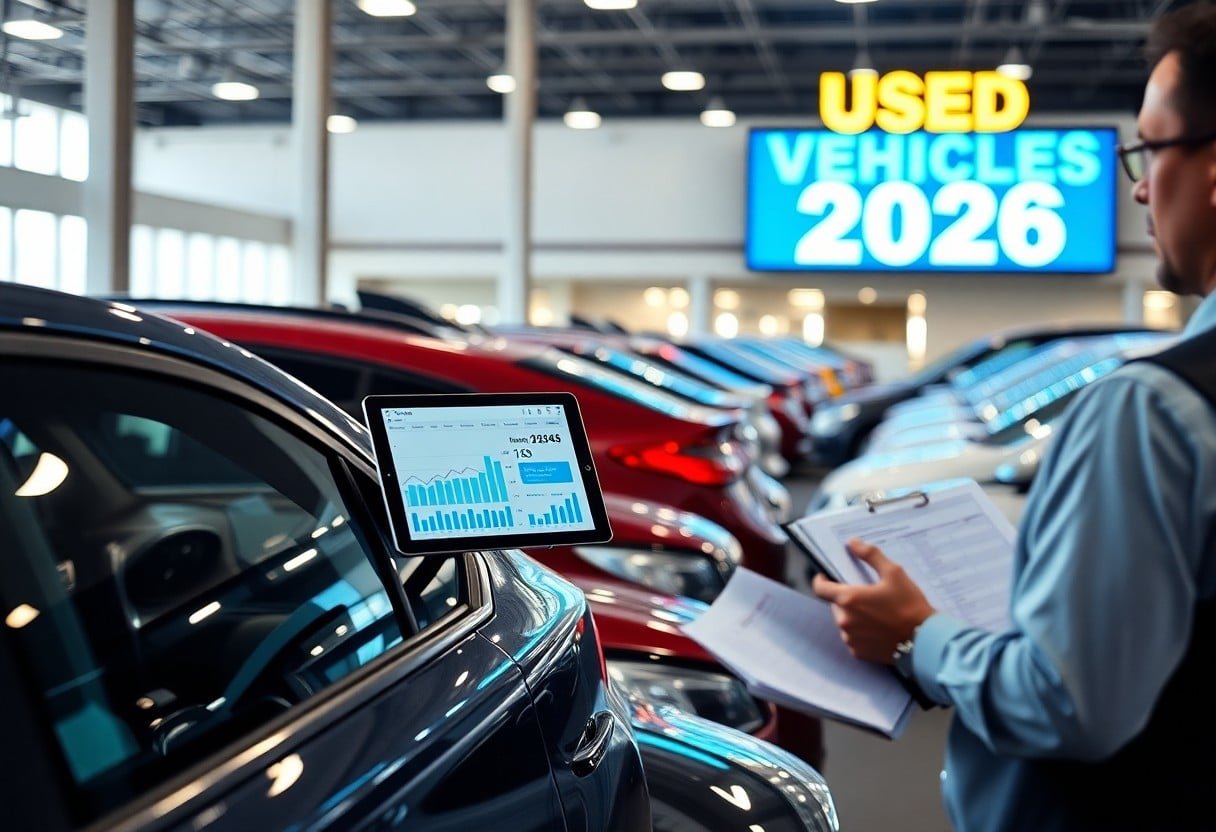
Forecast data points to shifting pricing, supply cycles and consumer preferences that will shape how you source, price and market used vehicles through 2026; this guide shows which segments will gain value, when to adjust your inventory turns, and practical steps you can take to protect margins and meet evolving buyer expectations.
Key Takeaways:
- Prices are expected to moderate toward pre‑pandemic norms by 2026 as off‑lease returns and fleet turnover increase supply, putting pressure on per‑unit gross and shifting focus to volume and CPO strategies.
- Demand will favor affordable SUVs and growing interest in used EVs, so dealers should prioritize targeted acquisitions, EV inspection/servicing capabilities, and faster reconditioning to turn inventory profitably.
- Digital retailing, real‑time pricing tools, and diversified F&I and service revenue will separate winners from laggards as higher financing costs make affordability solutions and aftersales income more important.
Market Snapshot
Wholesale values have cooled from the 2021-22 spike, with the Manheim index down roughly 20-30% from its peak, while average retail asking prices settled near $25,000 in 2024. Inventory is slowly rebuilding toward pre-pandemic norms, and you’re seeing turnover stabilize as dealer acquisition shifts back toward trade-ins and controlled fleet buys; annual used-unit volumes are trending back toward the pre-COVID ~40 million range.
Current used-vehicle trends
Inventory composition is shifting: more late-model, low-mileage trade-ins from shorter leases and a growing share of EVs and hybrids, which now make up low-double-digit percentages of listings in major markets. You’ll notice certified pre-owned programs expanding-OEMs like Toyota and Ford extended warranties and incentives-helping move higher-mileage units faster while average vehicle age in the U.S. remains near 12-13 years.
Key demand drivers through 2026
Interest rates and credit access will dictate buyer affordability, with used-auto loan rates hovering near or in the high single to low double digits by 2024-25, shaping monthly-payment-driven demand. Supply-side shifts-lease returns, dealer de-fleeting, and OEM trade-in programs-will alter mix and age; urbanization and younger buyers’ preference for tech-equipped late-model vehicles will push you to stock well-equipped CPO and certified EV options.
For example, should OEM leasing increase for EVs, you can expect a wave of 2-4 year EV trade-ins by 2025-26, potentially expanding EV inventory from single digits to 10-15% of your lot in some metros. Meanwhile, fleet disposals (rental and subscription) tend to introduce high-turn, low-margin units that you can flip quickly, whereas private-party demand will favor longer-warranty, lower-mileage models-plan acquisitions and pricing accordingly.

Price Outlook
Short-term price forecast
Over the next 12 months you should expect modest downward pressure on average used prices-industry consensus points to a 2-5% softening as off-lease volumes normalize and financing costs stay elevated. Regional pockets will outperform: Sun Belt and suburban truck markets often stay resilient, and certified pre-owned programs can sustain premiums of $1,000-$2,500 over non-CPO units.
Segment-specific projections (cars, trucks, EVs)
Coterminous trends split by segment: compact and midsize cars may decline 5-8% as new supply improves, full‑size trucks could hold steady or rise 1-3% where inventory is tight, and EVs remain bifurcated-early models face steep depreciation while newer, high-range EVs preserve 50-70% of original value depending on battery health and incentives.
For practical sourcing and pricing you’ll want segment-level granularity: expect Honda Civic and Toyota Corolla 3‑year residuals to slip toward the lower end of their historical ranges (roughly 6-8% off current comps) as rental and fleet returns increase; conversely, popular truck trims like Ford F‑150 XLT and Ram 1500 Laramie often trade at a premium in markets with limited new-unit availability, sometimes appreciating 1-2% year-over-year for clean, low-mileage examples. On EVs, reference case studies show 2018-2020 Nissan Leaf and early Chevy Bolt values dropped sharply post‑battery concerns (20-40% lower than comparable ICE models), while Tesla Model 3 cohorts from 2019-2021 retained closer to 60-70% of original MSRP in high-demand regions. Layer in battery state‑of‑health, warranty status, and regional incentives when pricing EVs, and adjust your floor pricing for likely reconditioning and range‑loss contingencies.
Inventory & Sourcing
You should expect inventory to broaden as off-lease returns and trade-ins increase, with industry estimates projecting a 10-25% rise in available used units by 2026; that shift means you’ll need sharper merchandising and reconditioning plans to protect margins. For pricing context and regional variance, consult Will used car prices fall in 2026? A look at the numbers to align sourcing decisions with projected price trends.
Trade-ins, leases, and off-lease supply
You’ll see more young, low-mileage trade-ins as 2019-2021 leases roll off-estimates point to a ~20-30% jump in off-lease volume by 2026-so adjust appraisal lanes and remarketing timelines; for example, prioritizing 36-48 month lease returns for quick turn sales and earmarking higher-demand trims (SUVs, hybrids) for retail rather than auction will boost your gross per unit.
Wholesale channels and auction dynamics
You should expect auction dynamics to stay volatile, with digital-first platforms taking larger share and compressing time-to-sale; wholesale price swings of 5-12% seasonally affect how you set floor prices, and pairing physical auction buys with targeted online bidding often lowers acquisition cost by several hundred dollars per unit.
Digging deeper, you’ll benefit from using lane-by-lane analytics and floor-price alerts: dealers using real-time market tools report faster turn and tighter margins, and combining consignment buys with spot-market purchases helps you smooth inventory age-aim to keep average used days on lot under 30 to avoid markdown pressure as wholesale volatility persists.
Dealer Strategies
Sourcing, pricing, and reconditioning tips
You should prioritize 3-6 year-old SUVs and compact trucks with 30-70k miles, sourcing at auctions when buyer fees are under $200 or via local trade-ins to protect margin. Use VIN history, wholesale-index alerts, and lane-buy thresholds to set buy limits; cap reconditioning at $500-$1,200 unless CPO qualifies; price within 2-4% of local comps and monitor days-to-turn to avoid markdowns.
- Track days-to-turn and compare to a 20-35 day target by segment.
- Use dynamic pricing tools (Black Book, vAuto) to update prices daily.
- Knowing local seasonality-convertibility demand or winter AWD needs-guides acquisition and pricing.
Sales, financing, and digital retailing approaches
You should integrate full digital retailing so shoppers can get pre-approval, trade estimates, and monthly-payment quotes online; dealers using end-to-end tools report 15-25% faster closings and higher lead-to-sale conversion. Offer term flexibility (36-72 months) and partnerships for subprime to widen buyer pools, while publishing transparent fees and buy-now options to reduce showroom friction.
Implement virtual walkarounds, e-signing, and contactless delivery to convert remote buyers; tie your DMS to RouteOne or Dealertrack for instant credit decisions and use digital F&I presentations to boost add-on attach rates-many dealers see $500-$1,000 more gross per unit when protection products and warranties are offered pre-sale online.
Technology & EV Impact
Technology is reshaping how you price, source and remarket vehicles: EV adoption, OTA software updates and advanced ADAS now drive valuation swings and stocking decisions. Battery warranties and charging access influence demand while software-enabled features-premium driver assist, remote updates-can add 5-15% to resale for some models. Track shifting patterns in the Used Car Market Trends for 2026 to align your buys and pricing with where buyers are headed.
How EVs and software affect valuations
When you evaluate EVs, battery health and warranty drive price: degradation of roughly 5-15% over several years can shave resale value, and lack of fast-charging access reduces demand for city buyers. Software matters too-vehicles with frequent OTA updates or paid feature unlocks (think advanced ADAS) often command higher trade-in values because they stay feature-relevant; Tesla models have tended to retain value better than many legacy EVs due to continuous software support and charging networks.
Data, pricing tools, and inventory management
You should use real-time data and algorithmic repricers that ingest auction sales, VIN-level warranty and regional demand to price confidently. Dealers using market-data tools can spot windows to buy or discount – for example, adjusting price by $200-$800 often shifts buyer activity – and segment EVs by battery SOH and software package to protect gross per unit and avoid stocking vehicles that erode margins.
Push deeper by combining auction lane feeds, OEM recall and warranty records, market heatmaps and competitor listings to set target days-to-turn (many dealers aim for 30-45 days). You can automate reconditioning thresholds-capping at, say, $1,200 for economy cars-and flag EVs with state-of-health under 85% for conservative pricing. Integrate DMS and pricing APIs so VIN-level price changes update across channels within minutes, reducing stale inventory and improving turn.
Risks & Regional Nuances
You should assess how macro pressures and local idiosyncrasies intersect; The 2026 Used Car Market Will Challenge Franchise Dealers warns of margin compression from softer residuals and shifting buyer preferences, projecting segment-specific downside in the low single digits to mid-single digits by 2026 while Sun Belt demand and EV adoption create uneven recovery paths across metros.
Macroeconomic and regulatory risks
You need to price for interest-rate and credit volatility: a 1 percentage-point rise in average used-loan rates typically raises monthly payments roughly 5-7%, shrinking affordability and extending terms. New emissions or safety mandates can add hundreds per unit in reconditioning or retrofit costs, and tighter floorplan lending will amplify holding-cost exposure if turnover slows.
Regional demand and seasonal variations
You’ll face clear regional splits: Sun Belt metros sustain stronger SUV and truck demand, California and the Northeast pay EV/hybrid premiums of roughly $1,000-$3,000, and colder Midwest states produce more late-model truck supply in winter. Seasonality matters too-spring commonly delivers a 5-12% sales uplift versus winter, so your sourcing calendar should follow local cycles.
You can exploit inter-market moves: transporting a vehicle typically costs $500-$1,200 depending on distance, and you may capture a few hundred to a few thousand dollars per unit by moving inventory from oversupplied to undersupplied regions. Use auction cadence, regional condition trends, and localized retail pricing to decide when transfer costs outweigh price gaps.
Final Words
Conclusively, the 2026 used-vehicle forecast points to steady demand, constrained supply, and more price transparency, so you should sharpen sourcing strategies, optimize pricing with data, and expand online sales. By improving reconditioning efficiency, offering flexible financing, and focusing on customer experience, your dealership can protect margins, move inventory faster, and build stronger buyer relationships through 2026.