

Reliability in electric car batteries hinges on understanding and implementing proper safety measures. You must prioritize battery maintenance, utilize quality components, and adhere to manufacturer guidelines to ensure optimal performance. By focusing on these necessary steps, you can enhance the lifespan of your battery while minimizing risks associated with mishandling or neglect. This guide will provide you with the information needed to optimize your electric vehicle’s battery safety and reliability.
Key Takeaways:
- Implementing robust thermal management systems is vital to prevent overheating and ensure optimal battery performance.
- Regular monitoring of battery health through advanced diagnostics enhances safety and reliability over the battery’s lifespan.
- Incorporating protective designs and materials can mitigate risks related to external impacts and internal short circuits.
Understanding Electric Car Battery Systems
To ensure optimal performance and safety of electric vehicles, a deep understanding of electric car battery systems is crucial. These systems consist of complex components that work together to store and deliver power efficiently. Familiarizing yourself with these elements will empower you to appreciate their contributions to reliability and longevity.
Types of Electric Car Batteries
Electric vehicles predominantly use three types of batteries: lithium-ion, nickel-metal hydride (NiMH), and lead-acid. Each type has distinct characteristics that affect performance, weight, energy density, and lifecycle.
- Lithium-ion batteries are prevalent due to their high energy density and long life span.
- NiMH batteries, commonly found in hybrids, have a lower energy density but are more tolerant to temperature variations.
- Lead-acid batteries are being phased out in most applications due to their weight and lower energy efficiency.
- Advancements in battery technology continue to evolve energy storage solutions.
- Any battery choice impacts overall vehicle performance and maintenance requirements.
| Lithium-ion | High energy density, lightweight, fast charging |
| Nickel-metal hydride | Moderate energy density, durable, good heat tolerance |
| Lead-acid | Older technology, heavier, lower efficiency |
| Solid-state | Potential for higher safety and energy density |
| Supercapacitors | Rapid charging, suitable for power bursts |
Key Components of Battery Systems
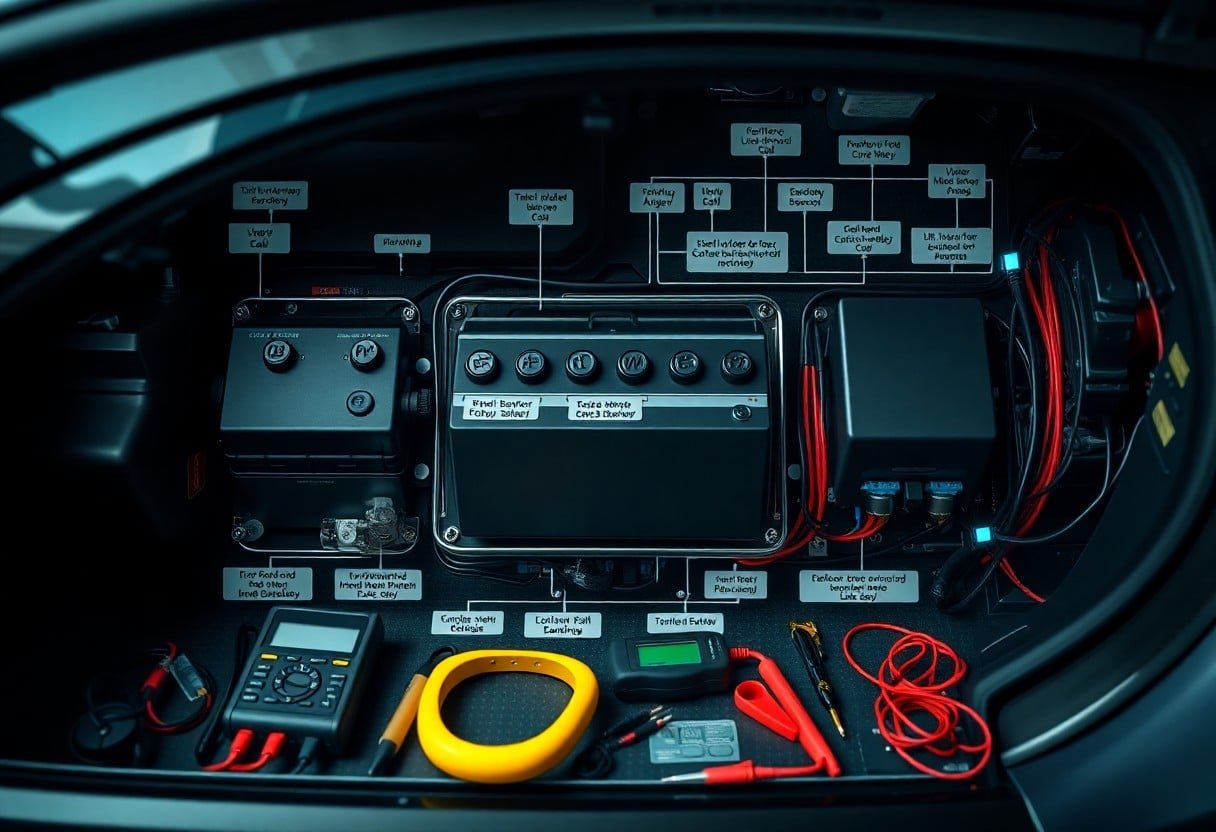
The efficiency and safety of electric car battery systems hinge on several key components. These include the battery cells, battery management system (BMS), thermal management, and charging architecture. Each plays a vital role in ensuring performance and longevity.
The battery cells serve as the primary energy storage units, where chemical reactions generate electrical energy. Coupled with the battery management system (BMS), which monitors and regulates the charging and discharging processes, these components ensure optimal performance. Effective thermal management systems maintain ideal temperature ranges, thereby preventing overheating and enhancing safety. Charging architecture determines how you connect and replenish energy, influencing overall usability. Proper integration of these components is crucial for maximizing the reliability and safety of electric car batteries.
Safety Standards and Regulations
Electric car batteries are governed by a framework of safety standards and regulations designed to minimize risks such as short circuits, overheating, and fires. Compliance with these standards ensures that manufacturers prioritize safety in battery design and production, which is crucial for consumer confidence and industry credibility. Regular updates and revisions to these regulations reflect advancements in technology and changing safety concerns, making it vital for you to stay informed about the latest requirements in the automotive landscape.
Industry Standards for Battery Safety
You should familiarize yourself with industry standards like ISO 26262 and IEC 62133, which set rigorous benchmarks for the safety and reliability of electric vehicle (EV) batteries. These standards address critical aspects such as battery design, testing procedures, and failure mode analysis. By adhering to these guidelines, manufacturers can enhance the safety profiles of their products, thus protecting both the vehicle and its occupants from potential hazards.
Regulatory Bodies and Their Roles
Key regulatory bodies, including the National Highway Traffic Safety Administration (NHTSA) and the International Electrotechnical Commission (IEC), play pivotal roles in establishing and enforcing safety regulations for electric vehicle batteries. Their guidelines help in standardizing manufacturing processes and ensure quality checks that are vital for preventing accidents and ensuring consumer safety.
The NHTSA oversees compliance with federal safety standards in the United States, focusing on vehicle safety performance, while the IEC develops international standards that facilitate consistent practices across borders. These organizations conduct research, issue recalls when necessary, and collaborate with manufacturers to enhance battery safety. Staying updated on these regulations allows you to better understand the safety landscape affecting electric vehicles, ultimately contributing to informed choices as a consumer or stakeholder in the industry.
Battery Design Considerations
Your battery design plays a vital role in ensuring safety and reliability. Modern electric car batteries must prioritize not just energy density but also resilience against various stresses. This involves employing advanced battery chemistries that minimize risks like thermal runaway and short-circuiting. Utilizing modular designs can enhance maintainability and replaceability, establishing a more reliable system. Furthermore, incorporating safety features like integrated fuses and cutoff switches will bolster the overall protective framework during operation.
Thermal Management Solutions
Effective thermal management solutions are important for maintaining optimal battery performance and longevity. Utilizing advanced cooling systems, such as liquid cooling or phase-change materials, helps regulate temperature, preventing overheating and ensuring uniform temperature distribution across the battery pack. Proper thermal management minimizes the risk of performance degradation and extends battery life, ultimately enhancing safety.
Structural Integrity and Materials
Choosing the right materials and ensuring structural integrity is key to battery safety. High-strength materials, like aluminum and composites, are often used to create protective casings that withstand impact and environmental stresses. By employing these resilient components, you can significantly reduce the risk of mechanical failures, contributing to enhanced overall safety in electric vehicles.
A comprehensive approach to structural integrity involves selecting materials that not only provide physical strength but also thermal stability. For instance, lithium-ion battery packs often use aluminum housings combined with impact-resistant plastics to protect against punctures and thermal expansion. Testing these materials under various stress conditions, such as crash simulations and thermal cycling, can provide important data on potential weaknesses. Additionally, advancements in nanotechnology are yielding new composite materials that further enhance resistance to temperature extremes and mechanical forces. Investing in such innovative solutions results in a safer, more durable battery system for your electric vehicle.
Testing and Certification Processes
Thorough testing and certification of electric car batteries are paramount for ensuring their safety and reliability. These processes are designed to simulate real-world conditions and identify potential failures before the batteries are deployed in vehicles. Both manufacturers and third-party entities conduct extensive evaluations to assess performance, durability, and safety under various scenarios.
Safety Testing Protocols
Safety testing protocols encompass a series of rigorous assessments targeting various aspects of battery performance. These protocols often include thermal, mechanical, and electrical tests to evaluate resistance to heat, shock, and short circuits. Effective testing simulates scenarios like overcharging and impacts, ensuring that batteries can withstand extreme conditions without compromising safety.
Certification Bodies and Processes
Certification bodies play a key role in validating the safety and efficacy of electric car batteries. Organizations like Underwriters Laboratories (UL) and the Society of Automotive Engineers (SAE) establish testing standards and procedures. Once a battery passes the required assessments, it receives a certification mark, ensuring compliance with industry standards and increasing consumer confidence.
Certification processes involve detailed examinations, which include documentation review, prototype testing, and follow-up audits to verify ongoing compliance with safety standards. For instance, UL 2580 focuses specifically on batteries for electric vehicle applications, outlining criteria to assess performance and safety. As a result, manufacturers must engage with these entities early in the design process to align their products with the vital safety benchmarks required for market entry, consequently fostering trust among consumers and stakeholders alike.
Maintenance and Monitoring Practices
To maintain battery safety and reliability, regular upkeep and monitoring practices are necessary. These practices ensure that potential issues are detected early, prolonging the battery’s lifespan while maximizing performance. Proactive management helps in assessing battery health, avoiding accidents, and ensuring compliance with safety standards.
Regular Maintenance Guidelines
Conducting regular maintenance on your electric vehicle’s battery includes checking for physical damage, ensuring clean contact points, and monitoring fluid levels if applicable. You should also verify that cooling systems function effectively to prevent overheating, as high temperatures can significantly degrade battery performance and longevity.
Monitoring Technologies and Tools
Utilizing advanced monitoring technologies and tools allows you to track the condition of your battery in real-time. These systems provide critical data such as temperature, voltage, and overall health, enabling you to make informed decisions about maintenance or necessary replacements. Integrating this technology enhances reliability and prevents unexpected failures.
Monitoring technologies often involve the use of Battery Management Systems (BMS), which play an integral role in analyzing battery performance. For instance, BMS can utilize algorithms to assess state-of-charge (SOC) and state-of-health (SOH), ensuring your battery operates efficiently. Additionally, software applications can alert you to anomalies before they escalate, ensuring that your battery remains within safe operating parameters. Tools such as thermal cameras can identify hotspots, while smartphone apps facilitate user-friendly access to critical battery metrics, empowering you to oversee battery health autonomously.
Emergency Response Strategies
When dealing with electric vehicle incidents, swift and effective emergency response strategies are important. Familiarize yourself with protocols that prioritize safety for both first responders and affected individuals. Resources such as Electrical Vehicle Battery Management: A Guide can enhance your preparedness by providing in-depth insights into battery incident management.
Fire and Hazard Management
Establishing clear fire and hazard management protocols is vital in mitigating risks associated with electric car battery incidents. Utilize thermal imaging to identify hot spots and allow for safer assessments. Ensure your team is trained in the latest firefighting techniques specific to lithium-ion battery fires, emphasizing cooling strategies and the use of appropriate extinguishing agents.
Best Practices for First Responders
To effectively manage incidents involving electric vehicles, first responders should adhere to specific best practices. This includes securing the scene, assessing the vehicle’s condition, and utilizing specialized equipment to handle potential battery hazards. Regular training and drills on electric vehicle fires and rescues are important for enhancing response efficacy.
First responders should constantly update their knowledge on electric vehicle technologies as they evolve. Equip yourself with tools tailored to handle electric vehicle incidents, such as insulated gloves and specialized cutting equipment. Always approach the vehicle from a safe distance, ensuring that power sources are deactivated where possible. Engaging with electric vehicle manufacturers’ resources for specific protocols can also enhance safety measures during emergencies.
Final Words
With this in mind, prioritizing electric car battery safety and reliability involves a comprehensive approach. You should regularly assess battery performance, adhere to manufacturer guidelines, and invest in high-quality components. Implementing effective cooling systems and monitoring technologies will enhance longevity and reduce risks. Engaging with established safety standards will further secure your vehicle. By consistently applying these imperative steps, you ensure not only your safety but also the overall efficiency and durability of your electric vehicle.