

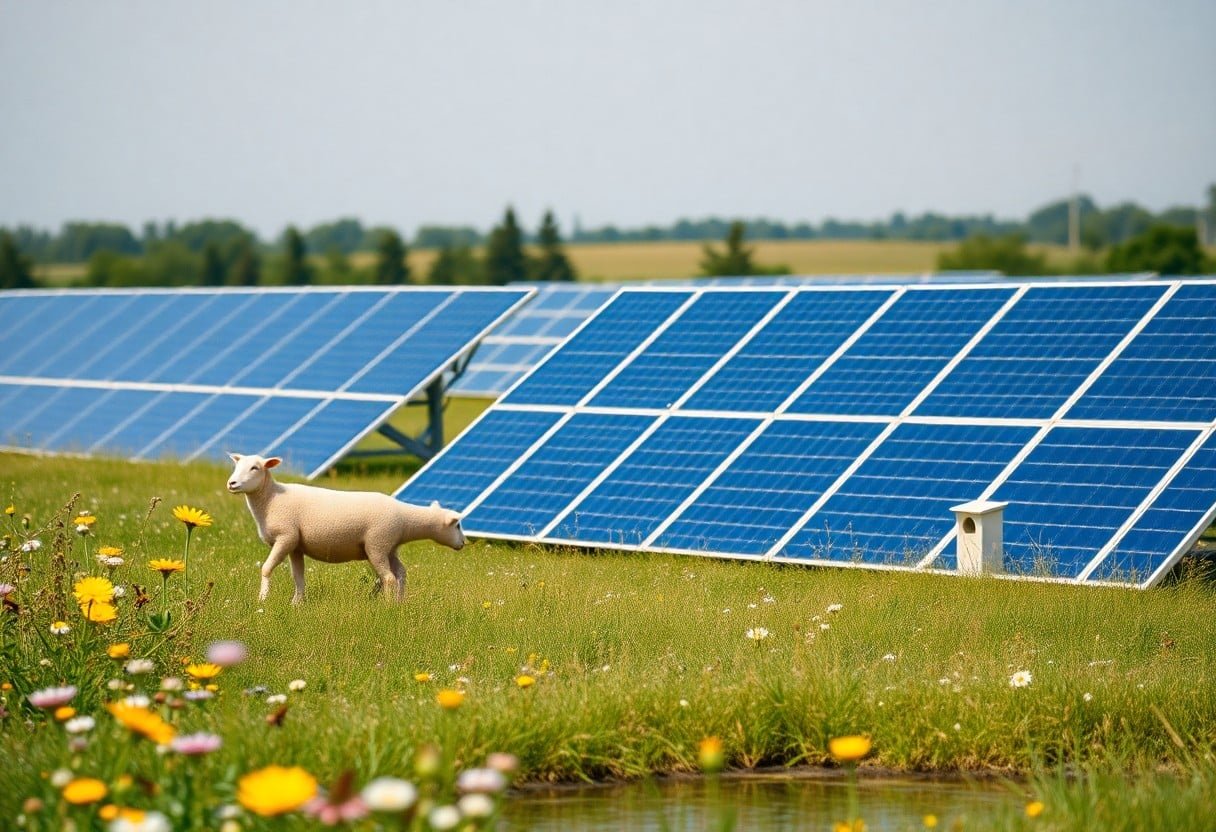
Most solar parks provide more than electricity; you gain pollinator habitats, improved soil and water retention, carbon sequestration, and opportunities for grazing and biodiversity corridors, helping you meet conservation and agricultural goals while reducing environmental impacts.
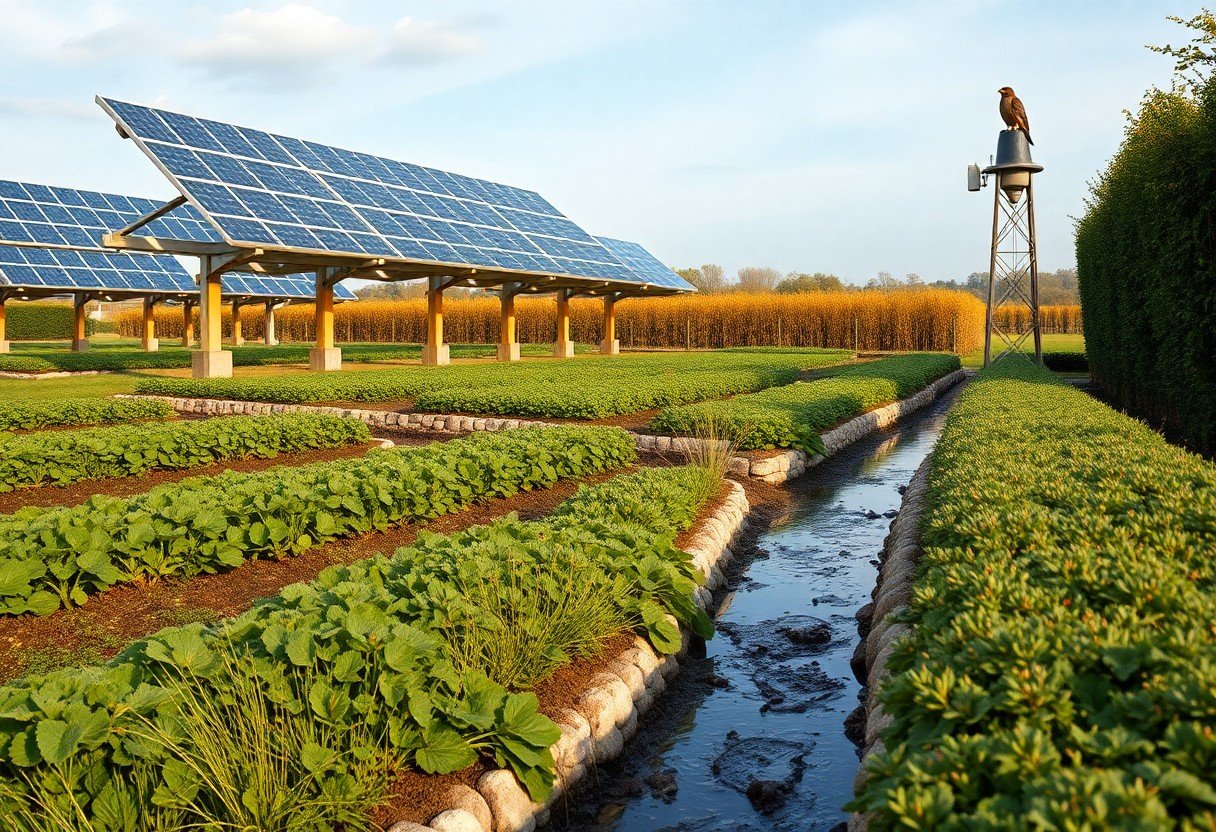
Key Takeaways:
- Solar parks with native plantings and reduced mowing provide nesting and foraging habitat for pollinators, birds, and small mammals, increasing local biodiversity and creating habitat corridors.
- Vegetation under and around panels improves soil structure and water infiltration, increases carbon storage in biomass and soil, and moderates local microclimate through shading and reduced surface temperatures.
- Agrivoltaic and low-impact designs allow grazing and crop production beneath panels, support pollinators that boost nearby crop yields, and offer educational and recreational benefits to communities.
Biodiversity Enhancement and Habitat Restoration
Sites converted to solar parks often include native plantings and adaptive mowing, so you observe improved soil health, increased insect and bird activity, and restored habitat patches that complement nearby natural areas.
Support for Pollinator Populations and Native Vegetation
You benefit from pollinator-friendly seed mixes and staggered flowering that boost bees, butterflies, and native plants while reducing maintenance and pesticide use.
Creation of Wildlife Corridors and Species Refugia
Sheltered rows and vegetated buffers within solar sites create corridors and refuges where you can find small mammals, reptiles, and ground-nesting birds moving safely through altered terrain.
Corridors lined with native grasses and scrub reduce fragmentation and allow you to track species movement, seasonal migrations, and gene flow between isolated patches. Management practices like rotational mowing and limited chemical inputs increase cover and food resources, improving population stability for sensitive species over time.
Soil Conservation and Carbon Sequestration
Solar parks reduce compaction and increase vegetation cover, so you see less runoff and greater carbon capture; learn practical methods in PV-SuCCESS to Help Communities Harness Ecosystem Benefits of Solar Deployment.
Mitigation of Soil Erosion and Land Degradation
Vegetation strips under arrays slow surface flow so you experience reduced erosion and stabilized soils, improving slope stability and decreasing sediment loss from sites.
Enhancement of Soil Organic Matter and Nutrient Cycling
Shading and managed groundcover promote organic inputs so you benefit from increased soil organic matter and more active nutrient cycling, supporting plant resilience and soil health.
You can enhance soil organic matter by establishing deep-rooted native perennials beneath arrays, which increase root turnover and surface litter, boost microbial activity, and stabilize aggregates; lower evaporation under panels raises moisture, accelerating decomposition and nutrient mineralization so plants access more nitrogen and phosphorus, while managed grazing or mowing maintains plant diversity and prevents bare soil.
Hydrological Regulation and Water Management
Hydrological designs in solar parks can reduce runoff and improve on-site infiltration; you benefit from reduced erosion and enhanced local water balance-see Solar’s synergies with nature for examples.
Stormwater Runoff Control and Groundwater Recharge
Vegetated understory and swales beneath arrays slow stormwater, increasing infiltration so you reduce peak flows and support groundwater recharge.
Microclimate Cooling and Reduced Evapotranspiration
Shaded ground under panels lowers soil temperatures and cuts evapotranspiration, helping you conserve moisture and ease irrigation demands.
Panels cast shade and alter wind patterns, which reduces incoming radiation and lowers surface temperatures so you retain soil moisture longer and cut irrigation needs; planting low-growing perennials beneath arrays amplifies cooling, aids pollinators, stabilizes soil and can even slightly improve panel efficiency by reducing local heat stress.
Agrivoltaic Synergies and Dual-Use Land Optimization
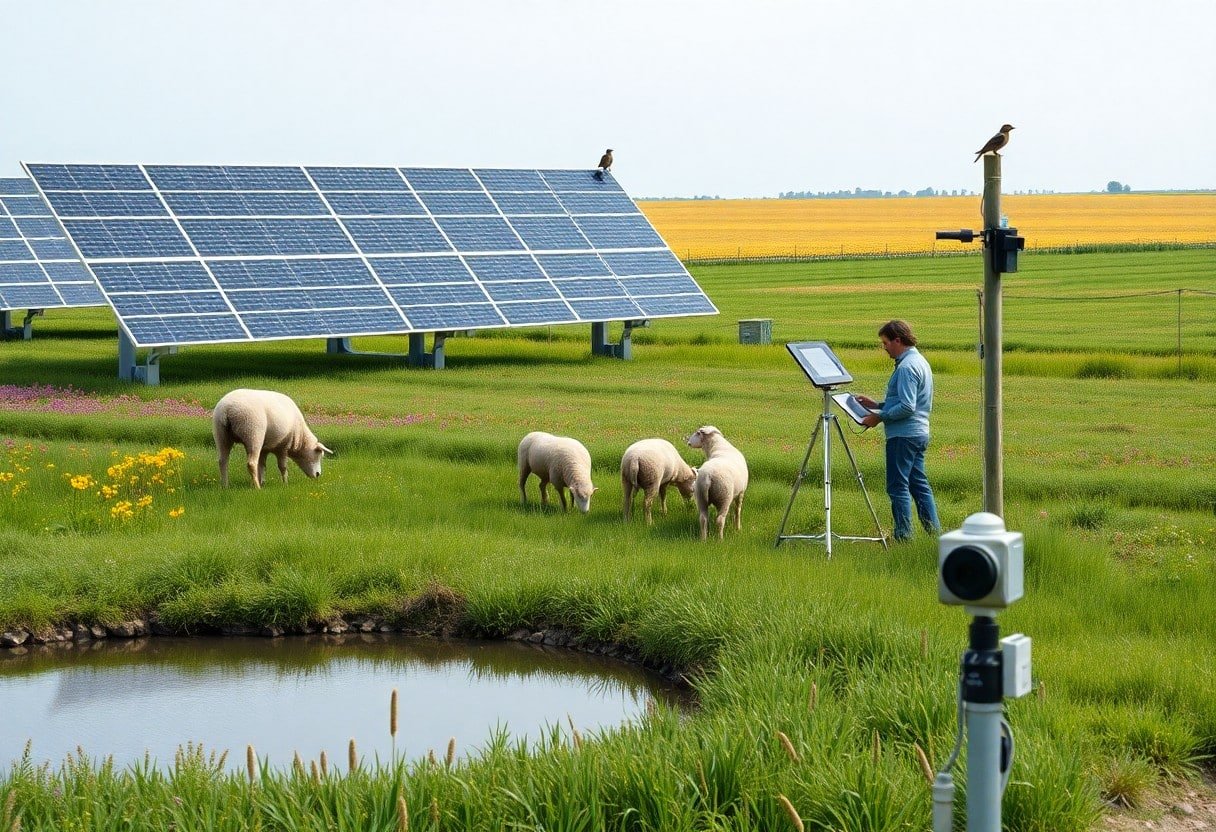
Agrivoltaics lets you combine solar arrays with crops and habitat, boosting biodiversity, soil health and diversified yields; explore case studies at Harnessing Solar Parks for Biodiversity and Habitat Enhancement.
Integrated Crop Production and Shade-Tolerant Cultivation
You can cultivate shade-tolerant herbs, lettuces and berries beneath panels, improving productivity while reducing heat stress, water use and irrigation needs.
Managed Livestock Grazing for Natural Vegetation Control
Grazing lets you keep vegetation low, cut mowing costs, and maintain pollinator corridors while meeting animal welfare and biosecurity requirements.
Implement rotational grazing schedules so you can avoid overgrazing, adjust stocking density, minimize soil compaction and synchronize grazing windows with panel maintenance and nesting seasons; use temporary fencing, mobile water systems and regular parasite monitoring, and partner with local herders to optimize vegetation control and biodiversity gains.
Air Quality Improvement and Particulate Mitigation
Solar parks reduce local airborne particulates by stabilizing soils and routing cleaner electricity to replace fossil-fuel plants, so you experience lower PM2.5 exposure and improved respiratory health in nearby communities.
Displacement of Atmospheric Pollutants and Greenhouse Gases
Shifting grid generation toward solar cuts emissions of NOx, SO2 and CO2, which means you benefit from reduced regional pollutants and slower accumulation of greenhouse gases affecting air quality.
Biological Dust Suppression through Ground Cover Management
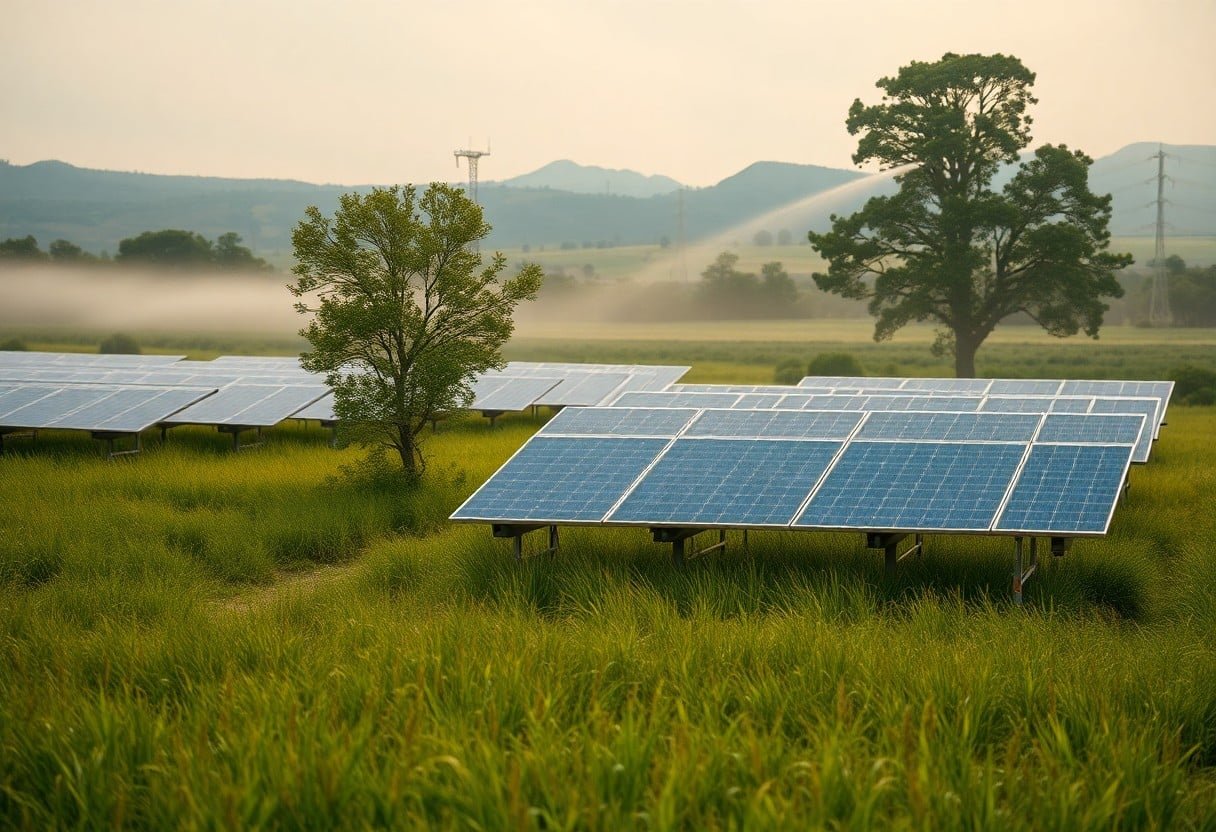
Native ground covers and managed vegetation under panels trap dust and limit wind erosion, helping you achieve cleaner air and reduced maintenance for the arrays.
You can establish perennial, low-growing native seed mixes and targeted mulch to bind soil, lower fine particulate suspension, and increase habitat for pollinators. Monitoring soil cover, limiting mechanized disturbance, and timing mowing to avoid dry, windy periods help you sustain dust suppression while preserving access and panel performance.
Socio-Cultural and Educational Ecosystem Services
You can see solar parks hosting community events, outdoor classrooms, and cultural programs that connect residents to renewable energy while promoting local stewardship and social cohesion.
Platforms for Scientific Research and Environmental Education
As an educator or researcher, you may use solar parks for field experiments, long-term biodiversity monitoring, and guided lessons that translate theory into measurable, place-based learning.
Aesthetic Landscape Integration and Community Engagement
When you visit, thoughtfully sited panels and native planting can soften visual impact, create inviting public edges, and signal environmental intent, encouraging residents to value nearby renewable infrastructure.
If you engage in design consultations or community art initiatives, you can shape screening vegetation, viewing platforms, and interpretive signage that reflect local character, support pollinators, and provide walking routes, turning energy sites into multifunctional public assets.
Conclusion
Upon reflecting, you recognize that solar parks deliver habitat for pollinators and wildlife, improve soil and water retention, sequester carbon, and offer recreational and educational spaces, making them active contributors to biodiversity, climate regulation, and local ecosystem resilience beyond electricity generation.