

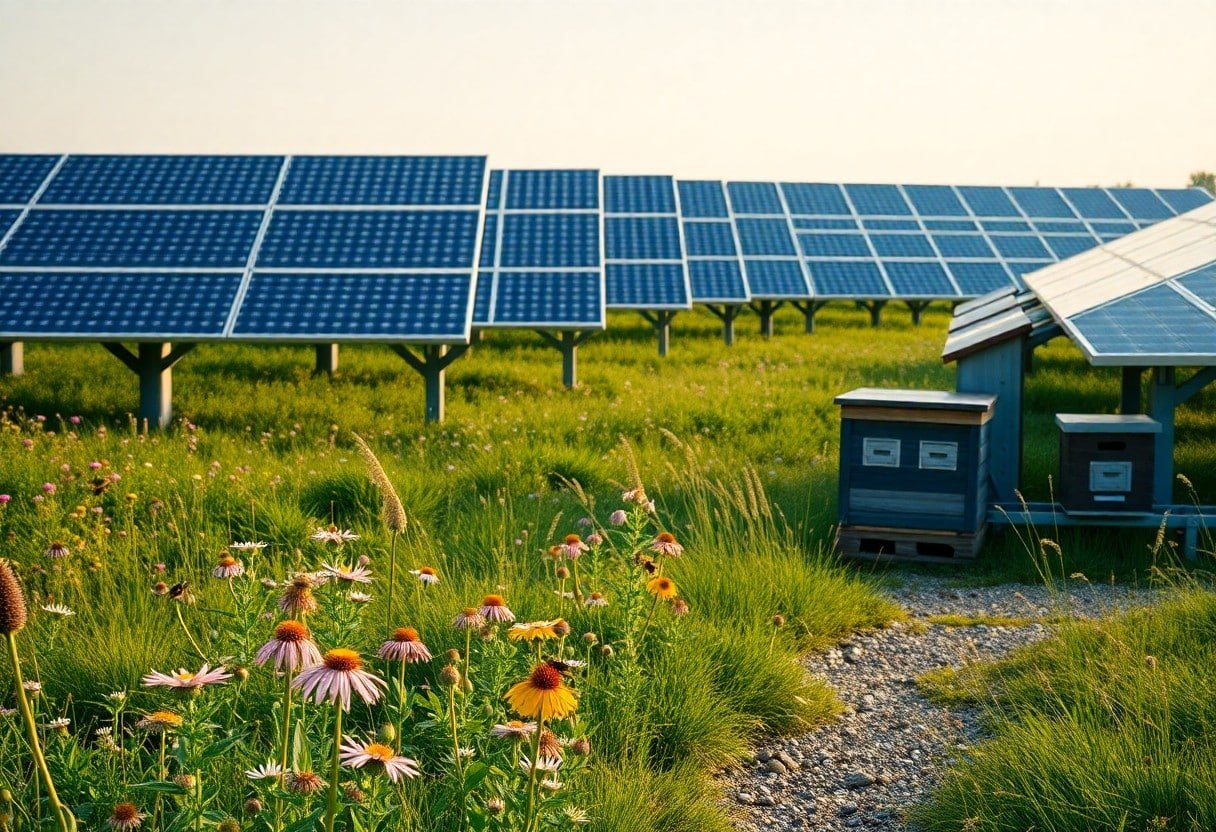
There’s clear evidence that planting pollinator habitats around solar arrays supports biodiversity, aids vegetation control, lowers cooling loads on panels, and increases community goodwill; you gain operational efficiencies, improved yields, and long-term site resilience.
Key Takeaways:
- Pollinator habitats increase on-site biodiversity by supporting bees, butterflies, and other pollinators that sustain local plant reproduction and benefit nearby crops through improved pollination services.
- Planting native flowering vegetation reduces mowing and herbicide needs, improves soil stability and stormwater infiltration, and can cool panel surroundings-potentially reducing soiling and modestly improving panel performance.
- Solar sites with pollinator habitat often gain community goodwill, access to habitat or sustainability incentives, and opportunities for research and monitoring that strengthen long-term site management.
The Mechanics of Solar-Pollinator Integration
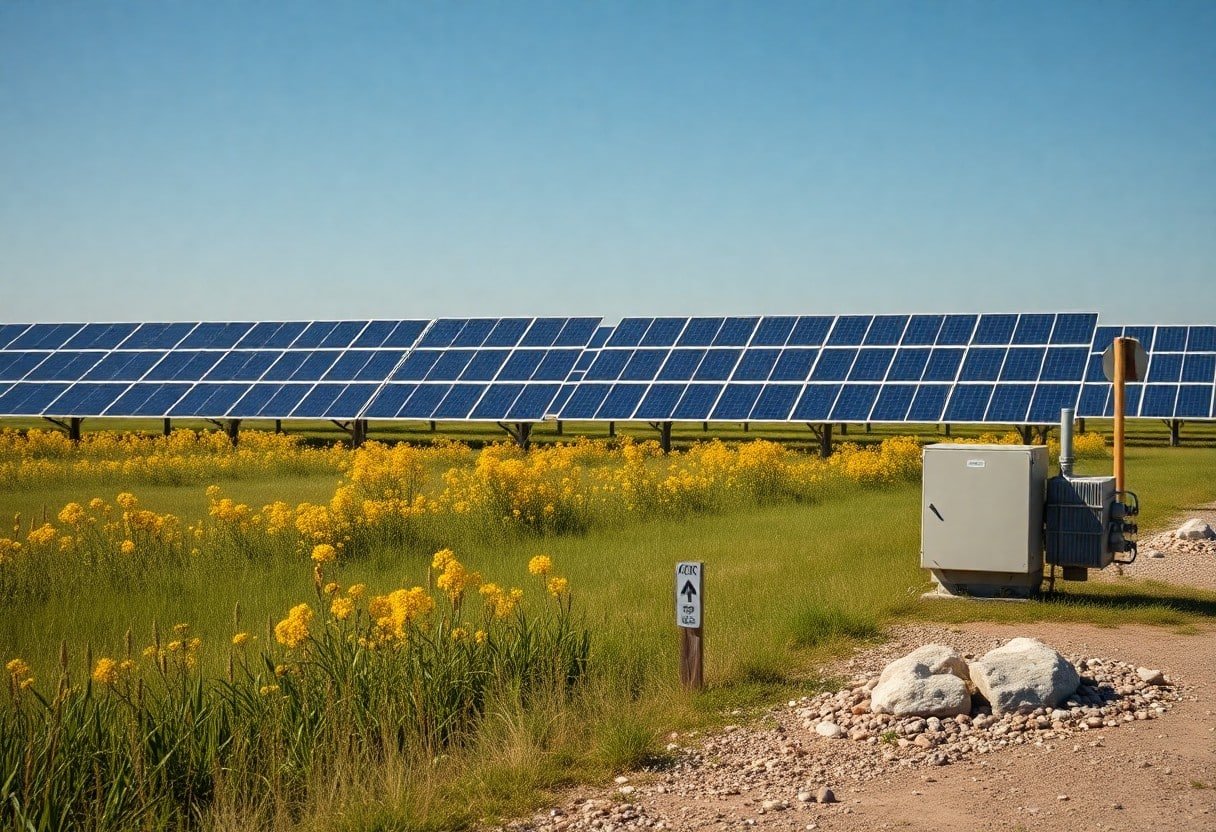
Solar arrays over pollinator habitat create cooler microclimates and reduce dust, and you support pollinators by choosing low-growing cover that limits shading; this synergy raises panel efficiency while restoring foraging resources and improving site resilience.
Defining the Symbiosis of Agrivoltaics and Ecology
You observe agrivoltaics as mutual benefit when solar canopies provide shade and you plant nectar-rich species beneath, creating continuous floral resources that sustain pollinators while maintaining energy production.
Selection Criteria for Native and Climate-Resilient Vegetation
Selecting native, drought-tolerant plants ensures you provide year-round nectar, structural diversity for nesting, and minimal irrigation, aligning vegetation choices with local climate and maintenance constraints.
Consider prioritizing local ecotypes and a diversity of bloom times so you sustain pollinators across seasons; include short-stature perennials under panels, taller forbs where clearance allows, and salt- or heat-tolerant species on marginal soils. You should test seed mixes for germination, plan low-frequency mowing, avoid aggressive exotics, and coordinate with entomologists to match plant traits to target pollinators and expected future climates.
Enhancing Photovoltaic Efficiency through Microclimate Cooling
Plant Transpiration and Its Impact on Panel Temperature
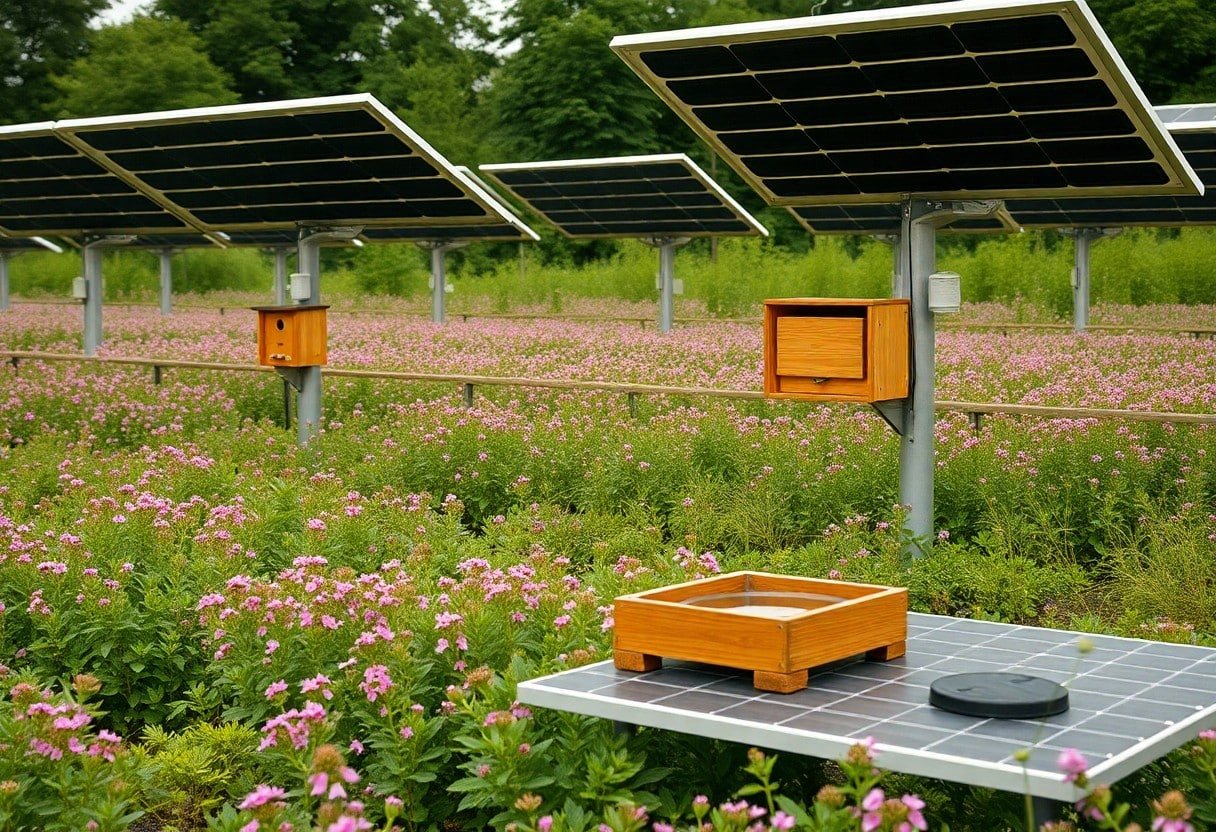
You observe plant transpiration cooling panel surfaces by releasing moisture, lowering local air temperature and reducing panel temperatures, which can raise module efficiency during peak heat.
Plant Transpiration Summary
| Mechanism | Effect on Panels |
|---|---|
| Evaporation from leaves | Local air cooling, reduced module temp |
| Shade from low vegetation | Less direct heating during midday |
Comparative Analysis of Energy Yields in Vegetated vs. Non-Vegetated Arrays
When you compare vegetated arrays to bare-ground systems, you often find modest energy gains from reduced module temperatures, though shading, soil reflectance and maintenance needs influence net yield.
Yield Comparison Overview
| Factor | Impact |
|---|---|
| Cooling (transpiration) | Increases output |
| Shading | Can decrease output if excessive |
| Maintenance | Affects net energy benefit |
Data from field trials show average annual yield improvements of 1-5% in temperate climates and up to 10% in hot, arid sites; you should assess plant selection, spacing and tilt to maximize benefits.
Study Results and Design Implications
| Finding | What you should do |
|---|---|
| 1-5% avg gain (temperate) | Use low-growing native groundcovers |
| Up to 10% (hot sites) | Prioritize high-transpiration species and spacing |
| Shading risk | Adjust row spacing and panel height |
Ecosystem Services and Biodiversity Restoration
Solar installations paired with native plantings provide pollination, soil improvement and water benefits you can measure; see the Overview of Pollinator-Friendly Solar Energy for guidance.
Mitigating Habitat Fragmentation for At-Risk Pollinator Species
You can design panel arrays and corridors to reconnect floral resources, reducing isolation for at-risk pollinators and supporting genetic exchange.
Strengthening Trophic Networks and Local Insect Populations
Native wildflowers beneath arrays increase nectar and prey you need to sustain predators, parasitoids and pollinators, creating denser trophic links across seasons.
Integrating layered plantings, bare-ground nesting patches and retained woody stems gives you continuous floral and nesting resources, boosts prey availability for insectivores and stabilizes seasonal food webs; targeted mowing schedules and reduced pesticide use maintain refugia that help rebuild insect abundance and diversity over time.
Economic Advantages of Sustainable Ground Cover
Planting pollinator habitat on-site reduces mowing and herbicide costs while improving site revenue potential; see Planting pollinators: restoring ecosystems on solar sites for practices you can adopt.
Long-term Cost Reduction in Vegetation Management and Mowing
You lower recurring mowing and herbicide expenses by establishing pollinator-friendly ground cover that matures into low-maintenance meadows, cutting annual operation costs and equipment wear.
Erosion Control and Improved Stormwater Runoff Management
Deep-rooted plantings stabilize soil, reducing erosion and improving stormwater infiltration so you face fewer compliance headaches and lower remediation costs.
Vegetation composed of diverse forbs and grasses builds root networks that increase infiltration, trap sediment, and slow flows, so you reduce peak runoff, limit channel siltation, and ease permitting burdens. You also decrease ponding that can shade panels or attract pests, preserving generation capacity and trimming long-term repair and mitigation expenses.
Agricultural Synergy and Pollinator Spillover Effects
Agriculture near solar arrays benefits when you maintain pollinator habitat; bees and native insects boost adjacent crop pollination, increasing yields and stability. Learn practical site designs and management-see how to Encourage Biodiversity with Solar Pollinator Fields.
Quantifying Yield Increases in Neighboring Specialty Crops
Studies measuring spillover show you can gain 5-20% higher yields in nearby specialty crops like berries and tree fruit, depending on habitat size, floral mix, and proximity to fields.
Collaborative Land-Use Strategies for Rural Economic Resilience
Policies that coordinate solar siting, crop placement, and pollinator habitat let you diversify income by combining lease payments, crop premiums, and conservation incentives across property networks.
Local cooperation helps you form multi‑owner agreements, share installation and maintenance costs, and structure revenue‑sharing that keeps more money in the community. You can pursue combined grant applications, adopt unified habitat standards, and set monitoring metrics to track pollinator populations and crop responses. Start with a pilot parcel, clarify contract terms, and scale based on measured yield and ecological results.

Policy and Industry Standards
Regulators are updating standards so you can align solar projects with habitat criteria, reduce permitting friction, and access incentives that reward integrated pollinator plantings at utility-scale sites.
Implementation of State Pollinator-Friendly Solar Scorecards
State scorecards give you a clear checklist to design, document, and certify habitat practices, increasing site credibility and easing developer and landowner negotiations.
Environmental, Social, and Governance (ESG) Reporting Benefits
You gain measurable ESG metrics by documenting pollinator habitat outcomes, strengthening sustainability disclosures and attracting capital focused on nature-positive energy assets.
Detailed ESG disclosures let you quantify biodiversity benefits through species inventories, floral cover percentages, and pollinator activity monitoring; these metrics support science-based targets, improve stakeholder trust, enable premium pricing or green bonds, and create verifiable narratives for corporate sustainability reports and community engagement.
Conclusion
Hence you gain pollinator habitats that boost biodiversity, reduce maintenance, cool panels, and enhance crop and habitat connectivity, improving solar panel efficiency, resilience, and community benefits.