
Most of you want quick insight into luxury vehicle market size and sales trends so you can spot growth, compare segments, and make informed buying or investment decisions.
Key Takeaways:
- Global luxury vehicle market shows steady growth, with projections indicating a mid-single-digit CAGR over the next five years driven by demand in North America and China.
- SUVs and crossovers now make up the largest share of luxury sales, while electric luxury models are the fastest-growing segment.
- Average transaction prices and dealer margins for luxury brands are rising, supported by personalization options, advanced tech packages, and limited-edition models.
A Look at the Big Picture: Global Market Size
Global market size tops $500 billion in annual luxury vehicle sales, giving you a sense of scale as premium SUVs and EVs drive revenue growth across regions while wealthy buyers and brand prestige keep demand steady.
Current valuation of the luxury car world
Today you see the luxury car market valued around $550-600 billion, driven by premium EV launches and healthy margins that let you gauge where brands are investing their R&D and sales efforts.
Predicted growth through the next decade
Analysts project a 5-7% CAGR through the next decade, giving you room to anticipate more EV luxury models, expanding markets, and higher resale values for iconic brands.
You should expect EV adoption, software-driven features, and expanding demand in China and India to push unit volumes while average transaction prices rise, so you can anticipate higher margins, more model variants, and targeted marketing that keeps top brands profitable despite shifting regulations.
Stat 1: The Electric Revolution is Here
Electric luxury vehicles are reshaping your options, with global sales growth and analyst forecasts like Luxury Car Market | Global Market Analysis Report – 2035 pointing to rapid market expansion.
Rising demand for high-end EVs
Demand from buyers like you is boosting high-end EV purchases as longer ranges, advanced tech, and premium service packages make luxury electrics more attractive.
How traditional brands are going green
Established brands are shifting portfolios toward electrified models so you can stick with trusted names while choosing electric options.
You’ll see expanded EV lineups, dealer training for battery care, strategic charging partnerships, and incentives to protect resale value as manufacturers invest in battery tech and software.
Stat 2: Where Sales are Booming
Sales are shifting: you’re seeing surging demand in Asia-Pacific while North America keeps steady luxury purchases, prompting makers to rebalance supply chains and marketing toward high-growth urban centers.
North America’s steady dominance
North American buyers still favor premium SUVs and EVs, and you’ll find consistent financing, dealership networks, and high per-capita spend that keep sales reliable for luxury brands.
The explosive growth in Asia-Pacific
Asia-Pacific’s rapid expansion means you encounter surging affluent populations, rising EV uptake, and intense competition as brands chase scale across China, India, and Southeast Asia.
Explore market nuance: you should watch China’s luxury EV boom, India’s expanding affluent segment, and Southeast Asia’s digitally native buyers, all pushing brands to localize models, pricing, and service to win market share.
Stat 3: Meet the New Generation of Buyers
Generation Z and younger millennials are driving luxury growth, and you’re more likely to prioritize connectivity, sustainability, and subscription services when shopping.
Why younger drivers are choosing luxury
You seek tech-filled cabins and curated brand experiences, so buying luxury reflects lifestyle choices as much as vehicle quality.
Shifting priorities from speed to tech
Performance used to matter most, yet you now focus on driver-assist systems, smartphone integration, and over-the-air software updates.
Connectivity, personalization, and subscription options let you update features without visiting a dealer, turning software and services into key buying criteria.
Stat 4: The Unstoppable Rise of Luxury SUVs
Sales of luxury SUVs have jumped, and you can see them dominating premium showrooms as buyers choose space, tech and higher resale values.
Why SUVs are outselling classic sedans
You favor SUVs for higher seating, cargo flexibility and perceived safety, pushing classic sedans into niche roles among premium buyers.
Top-selling premium utility models
Popular picks include BMW X5, Mercedes-Benz GLE, Audi Q7, Lexus RX and Range Rover, offering the tech, comfort and prestige you expect from premium utility models.
Models now span gasoline, hybrid and battery-electric variants, so you can select the balance of efficiency, performance and range that fits your driving needs.
Stat 5: Shopping from the Comfort of Home
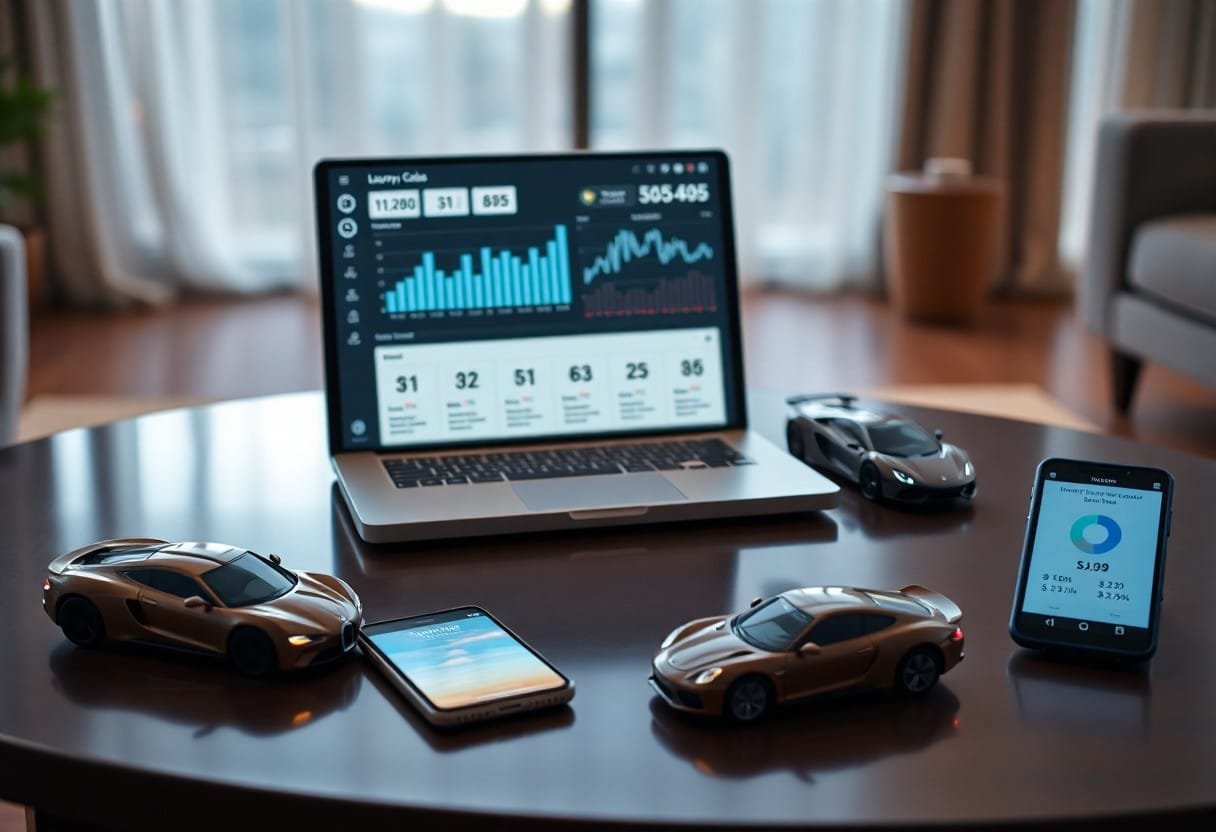
Online options let you compare models, customize features, and complete purchases without dealership visits, driving a steady shift in luxury sales toward remote buying.
The surge in online luxury purchases
You now shop high-end cars from websites and apps, and conversion rates rise as brands offer detailed specs, easy financing and doorstep delivery.
How virtual showrooms are changing the game
Virtual showrooms let you inspect interiors, toggle trims, and experience realistic drives via AR, making online buying more confident and efficient.
Beyond visuals, you can compare performance specs side-by-side, schedule virtual test drives with sales reps, and finalize custom orders from home, reducing time-to-delivery and boosting satisfaction.
To wrap up
You can use these five statistics on luxury vehicle market size and sales trends to spot growth areas, refine buying decisions, and anticipate consumer shifts, helping you stay informed and confident when exploring premium car options.