
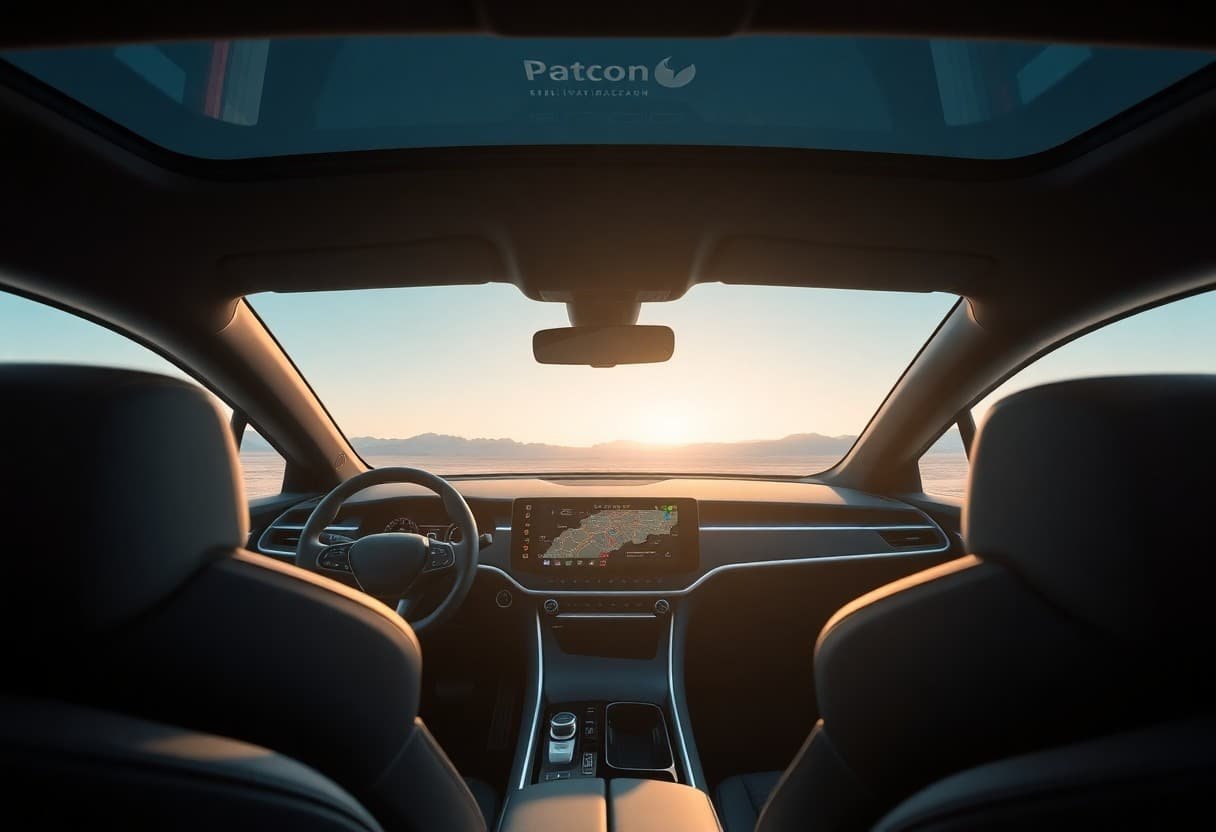
UX enhancements from OLED displays give you sharper contrast, faster response and deeper blacks that improve legibility and reduce driver distraction, while flexible and curved panels let designers place information intuitively across your dashboard and center stack; higher color fidelity and localized dimming enable personalized, glanceable visuals and immersive HUD concepts, and lower power draw supports always-on displays that adapt to your context for safer, more engaging in-car interactions.
Key Takeaways:
- Superior contrast and true blacks improve legibility and visual hierarchy, enabling clearer instrument clusters, richer graphics, and better night/day readability.
- Flexible, thin form factors allow curved, wraparound, and seamless displays that unify dashboard elements, reduce physical controls, and support highly customizable layouts.
- Low power consumption and fast refreshes enable adaptive lighting, HDR content, responsive touch/gesture interactions, and smoother animations that enhance driver focus and personalization.
Understanding OLED Technology
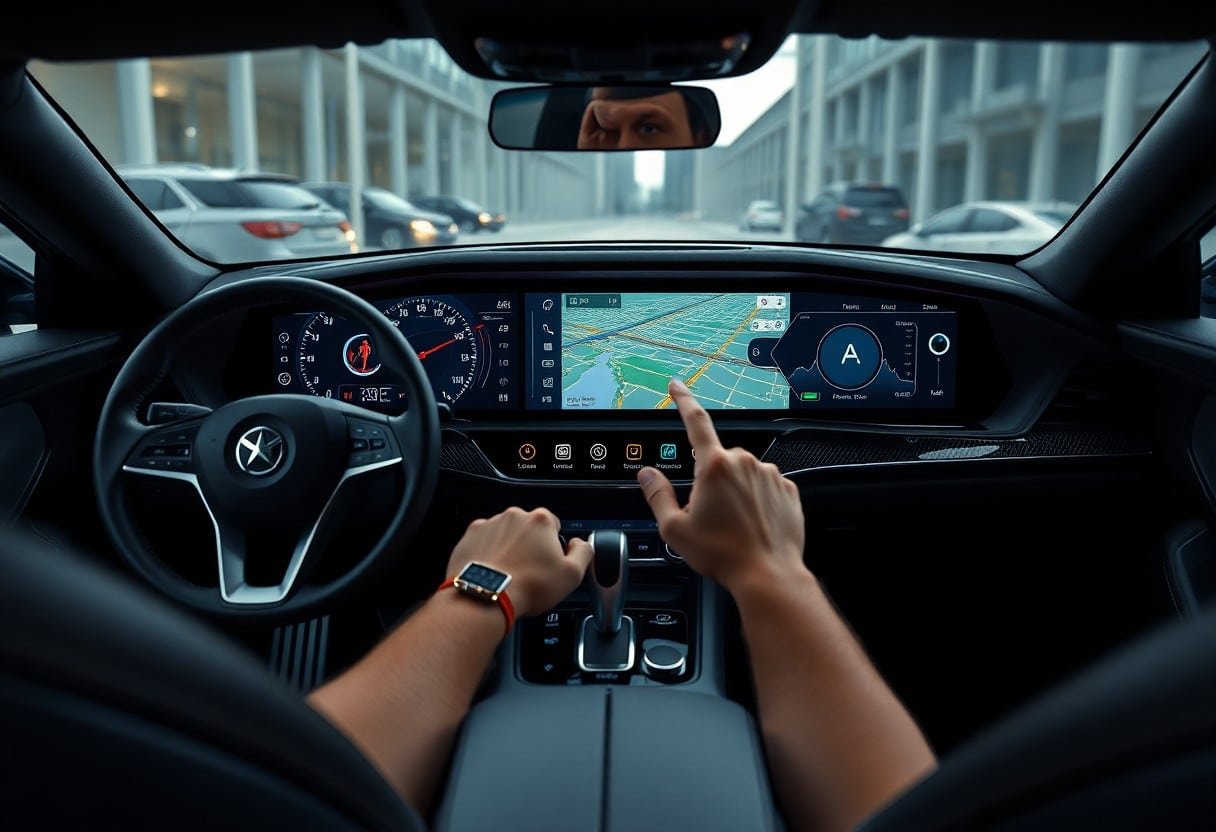
You see OLED as a self-emissive display family where each pixel produces its own light, enabling true blacks, extremely high contrast (often quoted toward 1,000,000:1), sub-millisecond response, and wide 178° viewing. Automotive-grade OLEDs hit HDR-relevant luminance (~600-1,000 nits) and come in flexible or transparent variants from suppliers like Samsung Display and LG Display, letting you integrate curved clusters and low-bezel screens without bulky backlights.
What is OLED?
You should view OLED as a sandwich of organic layers between electrodes that emit light when driven, so no backlight is required. That architecture yields thinner modules, better color gamut (DCI-P3 coverage commonly >90%), and fast refresh for smooth animations. Automotive targets focus on lifetime (typically engineered toward 60,000-100,000 hours), thermal management, and blue-emitter aging mitigation to meet vehicle durability needs.
Advantages of OLED Displays in Automotive Applications
You benefit from deep blacks and pixel-level dimming that improve night readability and perceived contrast, plus wide viewing angles that keep readouts accurate for driver and passenger. Flexible form factors let you wrap displays around the cockpit, and typical depth/weight reductions versus LCDs are around 20-35%, freeing up dash packaging and lowering center-stack bulk.
You’ll also see practical engineering responses: OEM pilots report 20-40% power savings for dark-themed UIs compared with LCDs, and manufacturers use pixel-shift, adaptive brightness, heat spreaders, and dynamic aging compensation to limit burn-in. Transparent and curved OLED prototypes enable HUD overlays and wraparound infotainment in concept and limited-production vehicles, illustrating both immediate UX gains and ongoing reliability trade-offs you must manage.
Enhancing User Interfaces with OLED
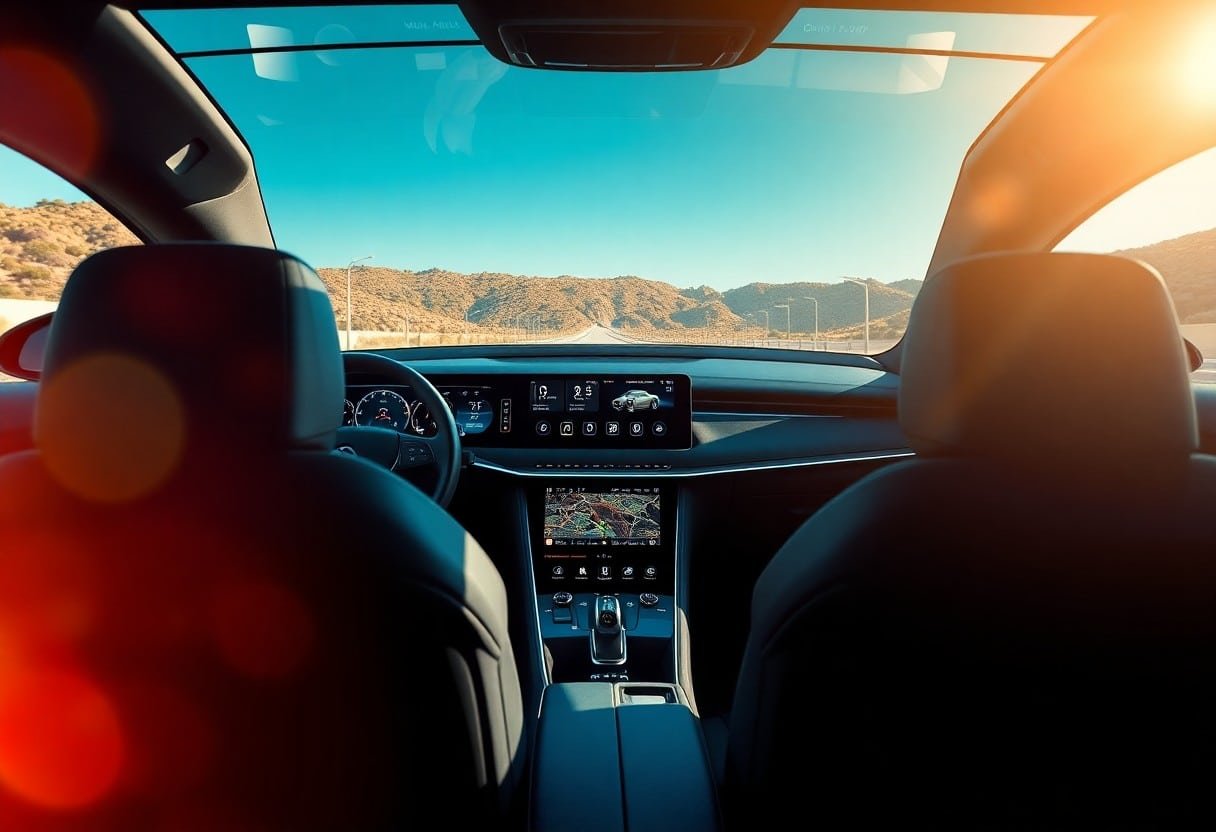
Using OLED, you get near-instantaneous response (<1 ms) and contrast ratios approaching 1,000,000:1, so interfaces present true blacks and crisp readouts even at wide 178° viewing angles. Manufacturers like Samsung Display and LG Display are shipping automotive-grade panels with peak brightnesss in the 600-1,000 nit range and measurable power savings versus LCDs (often 20-40% depending on content). In practice, that means your gauges, maps, and HUD elements remain legible in sunlight while consuming less energy and enabling flexible, wraparound dashboard layouts.
Customization and Aesthetic Appeal
Because many automotive OLEDs support 10-bit color and near-full DCI-P3 gamut, you can tailor color themes, contrast, and animation fidelity per driver profile for more distinctive branding and personalization. You’ll find dynamic ambient-light syncing, adaptive color temperatures for night driving, and floating UI elements that exploit true-black pixels to appear bezel-less. OEMs are using these capabilities to offer configurable instrument clusters and mood-driven interiors that change by user, drive mode, or even navigation context.
Touch Sensitivity and Gesture Control
OLED panels often integrate in-cell capacitive touch or on-panel sensors, delivering multi-touch responsiveness typically under 20 ms and support for 5-10 simultaneous touch points for pinch, swipe, and multi-finger shortcuts. You can pair this with localized haptic actuators to simulate mechanical clicks and with time-of-flight or camera sensors to enable air gestures for simple commands like volume or track skip, reducing the need to take your eyes off the road.
In deeper implementations you’ll see pressure-sensing (force touch) and advanced palm-edge rejection so accidental inputs are minimized; automotive-grade touch stacks are validated for wide temperature ranges (about −40°C to +85°C) and millions of actuations to meet durability targets. System-level safeguards limit complex gestures at higher speeds and blend touch, voice, and glance-based detection from driver-monitoring cameras, letting you interact reliably while maintaining safety and regulatory compliance.
Impact on User Experience
OLED integration reshapes how you interact with vehicle systems: deeper blacks and >1,000,000:1 contrast heighten legibility, higher peak brightness (up to ~1,000 nits) improves daytime visibility, and touch-enabled panels let you use gestures and direct controls – explored in detail at Touch OLED displays will redefine automotive user interfaces. You get faster feedback and contextual controls that appear only when relevant, reducing clutter and speeding common tasks like route adjustments and media selection.
Visual Clarity and Color Accuracy
You benefit from true blacks and per-pixel dimming that provide effectively infinite contrast, so fine map labels remain readable at night without blooming. Many automotive OLEDs cover >100% sRGB or ~90-100% DCI‑P3 and support 10‑bit color, enabling smooth gradients and accurate camera overlays. Wide ±80° viewing preserves color fidelity for both you and passengers watching the same content from different seats.
Responsiveness and Interaction Feedback
OLED pixel switching in microseconds plus panels running 60-120 Hz makes animations and pointer motion feel instantaneous when you swipe or scroll. Combined with low-latency touch stacks and visible micro‑animations, perceived response often drops below ~20 ms, so taps feel immediate. That speed reduces the time your eyes leave the road during quick interactions like changing a lane guidance or skipping a track.
From an engineering perspective, minimizing end‑to‑end touch latency-from sensor acquisition through MCU, GPU, compositor and panel-targets <50 ms for safe interactions and <20 ms for premium feel. You gain tactile certainty from projected‑capacitive controllers with multi‑touch and glove support, while adaptive refresh (1-120 Hz) balances smooth motion and power. Offloading compositing to the GPU and pairing local haptics (piezo or LRA) with concise visual cues lets you confirm actions without lengthy glances, lowering eyes‑off‑road time in real‑world pilots.
Integration of OLED in Vehicle Design
You’ll see OLEDs reshape cabin architecture by enabling seamless, curved displays that wrap across the dash and center stack, blending function with form; flexible panels from vendors like LG make distortion-free curves possible ([Mobility Inside] LG Revolutionizes Automotive Displays …), letting you interact with larger, contiguous surfaces without compromising sightlines or ergonomics.
Dashboard Displays and Instrument Clusters
You benefit from OLED’s near-infinite contrast and per-pixel dimming in clusters sized typically between 10-15 inches, delivering deep blacks for cleaner AR overlays, 1,000 cd/m² peak brightness for daytime legibility, and refresh rates up to 120 Hz to minimize motion blur-so gauges, adaptive speed guidance, and night maps remain readable and responsive through varied driving conditions.
Infotainment Systems and Connectivity
You get bezel-less center displays that support multi-touch, HDR content, and split-screen workflows, enabling simultaneous navigation, media, and vehicle controls; integration with smartphone ecosystems and OTA updates means your interface stays current while OLED’s high color gamut makes maps, video calls, and rich media clearer.
Going deeper, you’ll notice OLED lowers power draw on darker themes through per-pixel control, which is meaningful in EVs when many screens remain active; designers exploit curved or stacked OLEDs to create secondary control zones and status strips, and high pixel density plus wide color (often >95% DCI-P3 on premium panels) lets you render fine route details and ADAS cues with greater fidelity, improving glanceability and reducing driver distraction.
Challenges and Considerations
Cost and Production Challenges
You face higher upfront costs when integrating OLEDs: panels often run 1.5-3× the price of equivalent LCDs due to lower yields, specialized deposition equipment, and flexible-substrate handling. Suppliers such as Samsung Display and LG Display are scaling automotive fabs, but long lead times and limited capacity still inflate unit costs. Automakers either absorb expense or offer OLED as a premium option, and you must factor tooling, testing, and custom curved assemblies into total cost-of-ownership calculations.
Durability and Longevity Concerns
You must manage OLED-specific aging mechanisms like blue-emitter degradation and image retention, which can produce color shifts and burn-in on static instrument clusters. Manufacturers target vehicle lifetimes-typically aiming for 10-15 years-so panels are being engineered to meet those expectations, but warranty exposure and replacement logistics remain a design and procurement risk.
Manufacturers mitigate these issues with multi-layer encapsulation, pixel-refresh algorithms, and thermal management; suppliers report automotive OLEDs achieving peak brightness above 1,000 nits and lifetimes approaching industry targets through improved materials and deposition methods. You should validate panels with automotive stress tests (temperature cycling -40°C to +85°C, humidity, vibration) and require OEM-level burn-in and calibration strategies to ensure acceptable long-term color and luminance stability.
Future Trends in OLED and Automotive UI/UX
You’ll see transparent OLEDs move from concept to cockpit, enabling AR-style overlays on windshields and center stacks; prototypes already exceed 1,000 cd/m² peak luminance and 30,000-hour lifetimes, and suppliers are closing gaps to production-explore practical demos at Transparent Screens: Tech Revolution or Gadget for the ….
Evolving Technologies
Flexible, tandem and transparent OLED stacks are improving brightness and longevity while reducing burn-in, and you’ll find automotive panels now engineered for IP6x sealing, wide temperature ranges (-40°C to +85°C) and vibration resilience; manufacturers like LG Display and Samsung Display are developing curved, segmented and rollable modules for panoramic dashboards and rear-seat systems.
Potential for AI and Adaptive Interfaces
AI-driven UIs will let you interact less and achieve more: driver profiles, gaze-driven menus, predictive routing and context-aware brightness mean the display surfaces adapt to who you are and what you need, surfacing relevant controls first and minimizing distraction.
More technically, you’ll see sensor fusion (eye tracking, cabin cameras, seat sensors, vehicle CAN data) feed on-device ML models with sub-100 ms response to adjust layouts and alerts; manufacturers must balance latency, OTA model updates, ISO 26262 functional-safety constraints and UNECE R155 cybersecurity rules, while implementing privacy-first storage and federated learning to keep your biometric and preference data protected.
Final Words
From above, you can appreciate how OLED displays reshape your automotive UI and UX: their deep blacks, high contrast and wide viewing angles make information more legible at a glance; flexible, thin panels enable integrated, curved instrument clusters and immersive dashboards; faster refresh and HDR improve animations and head-up overlays; lower power for dark themes extends efficiency; and adaptive, personalized layouts reduce distraction while enhancing engagement and safety.