
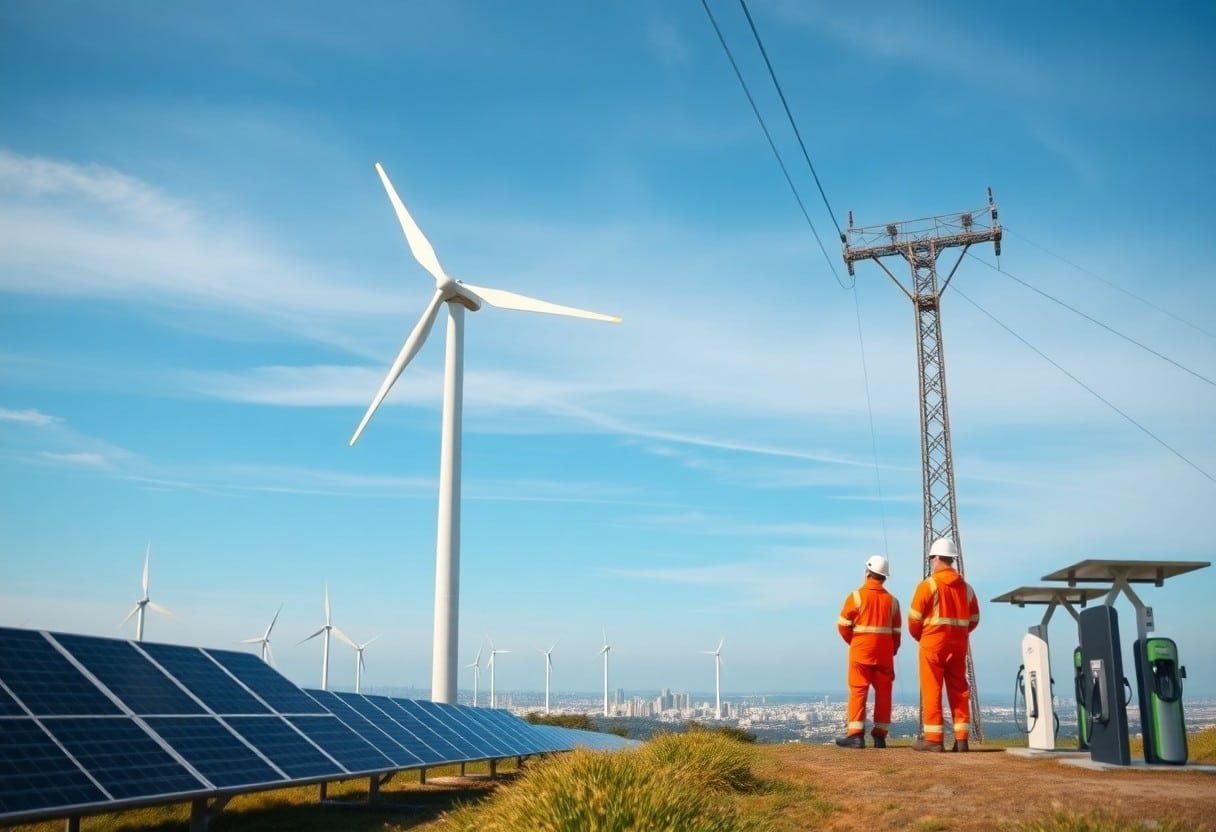
With accelerating turbine efficiency and falling costs, wind energy offers you a scalable, reliable pathway to decarbonize power systems and enhance energy security. As you explore expanding offshore and onshore deployments, smarter grid integration, and advanced storage pairing, you’ll see how policy support and investment unlock widespread adoption. This transformational technology positions you and your community to meet clean energy goals and drive the global energy transition.
Key Takeaways:
- Falling costs and technological advances (larger turbines, higher capacity factors, floating offshore platforms) are making wind energy increasingly cost-competitive and expandable at scale.
- Wind is a major enabler of power-sector decarbonization when paired with stronger grids, energy storage, demand response, and improved forecasting to manage variability.
- Rapid deployment drives jobs, local manufacturing, and energy security benefits; sustained policy support and investment are needed to unlock the full global potential.
The State of Global Energy
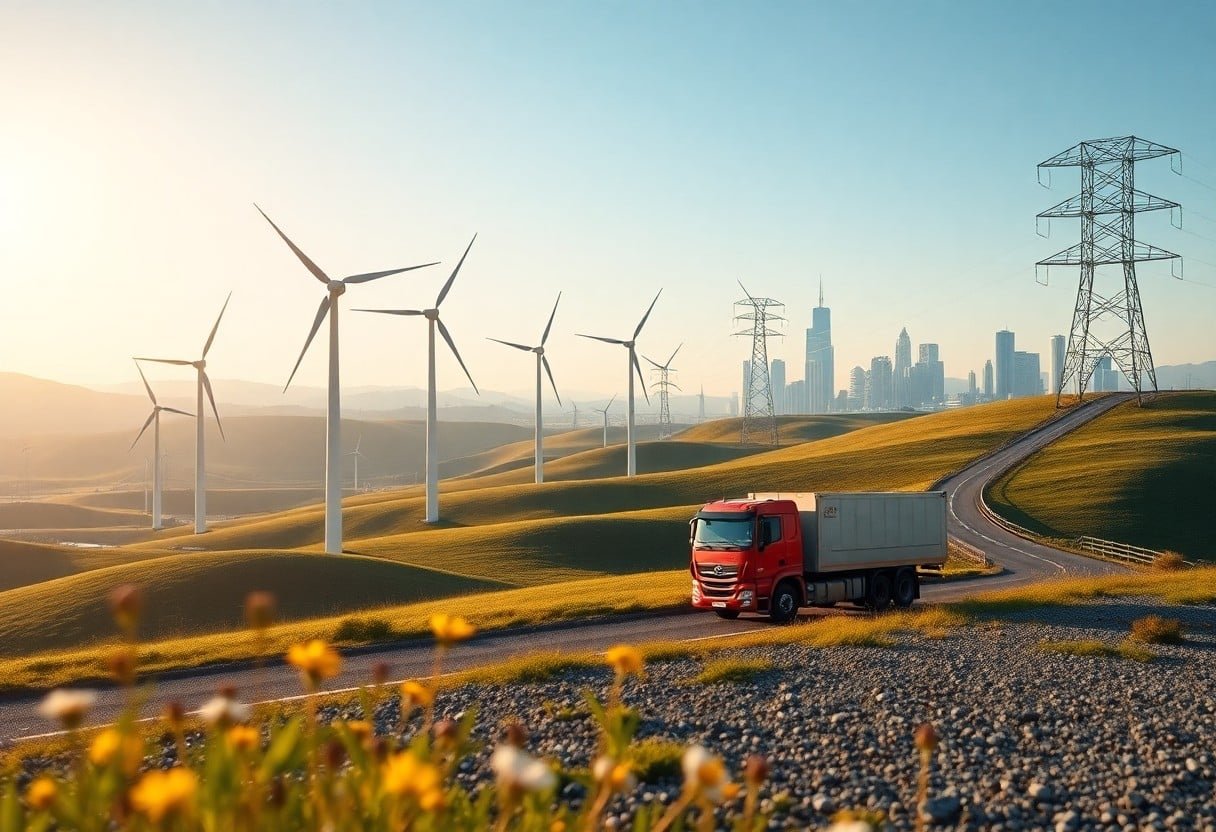
In 2025, you face an energy system where fossil fuels still supply about 80% of primary energy, yet capital is flowing: renewables attract over $500 billion annually, supply-chain shifts reshape mineral and turbine sourcing, and emerging markets in Africa and Southeast Asia expand grid access while adopting decentralized wind and solar at scale.
Current Energy Landscape
You encounter grids still weighted toward coal and gas in India and China, while the EU targets net-zero and has reached roughly 40% renewables in its power mix; US electricity emissions fell about 33% since 2005 as wind capacity surpassed 140 GW, and offshore buildouts in the North Sea and US East Coast are closing large seasonal gaps.
Trends in Renewable Energy
You see rapid cost declines-onshore wind LCOE dropped roughly 40% over the last decade-and scaling manufacturing with China producing over 60% of turbines; hybrids, long-duration storage, and corporate PPAs (growing ~20% year-over-year in key markets) are firming variable generation into bankable supply.
You can point to tangible examples: Hornsea One (1.2 GW) shows utility-scale offshore economics, Hywind Scotland’s 30 MW floating array proves floating viability, China’s industrial scale cut turbine costs, and accelerating battery deployments plus 500+ MW electrolyzer projects in Australia and Chile are converting surplus wind into green hydrogen for hard-to-electrify sectors.
The Growth of Wind Energy
You’re witnessing rapid scale-up: global installed wind capacity has surpassed 800 GW, with annual additions measured in the tens of gigawatts as China, the U.S., and Europe accelerate deployments; offshore projects and auction-driven procurements are widening markets. Policy support and lower turbine costs drive investment, and you can review deployment trade-offs in the DOE overview: Advantages and Challenges of Wind Energy.
Technological Advancements
Turbines have grown to the 12-15 MW class with rotors exceeding 200 meters, raising offshore capacity factors above 50% in favorable sites; you benefit from digital controls, blade-material improvements, and condition-based maintenance that cut downtime. Floating wind pilots like Hywind (30 MW) and WindFloat Atlantic demonstrate scalable access to deeper resources, while modular manufacturing and larger nacelles reduce cost per MWh.
Economic Viability
Onshore wind is now among the lowest-cost generation options, often delivering power for roughly $30-$60/MWh in high-resource regions, and offshore LCOEs are falling as turbine scale and supply-chain maturity lower capex. You’ll see auctions and long-term PPAs driving bankable revenue streams that improve project finance and lower the weighted average cost of capital.
Digging deeper, your project economics hinge on site quality, financing structure, and contract terms: a high-capacity-factor coastal site can double revenue versus marginal inland locations, while corporate PPAs and merchant exposure shape cashflow risk. Policy incentives-such as production or investment tax credits, green certificates, and auction mechanisms like the UK CfD-can shave years off payback timelines; you should model scenarios with varied debt terms, tax treatments, and capacity factors to quantify levelized returns and sensitivity to turbine performance and grid curtailment.
Wind Energy and Climate Change
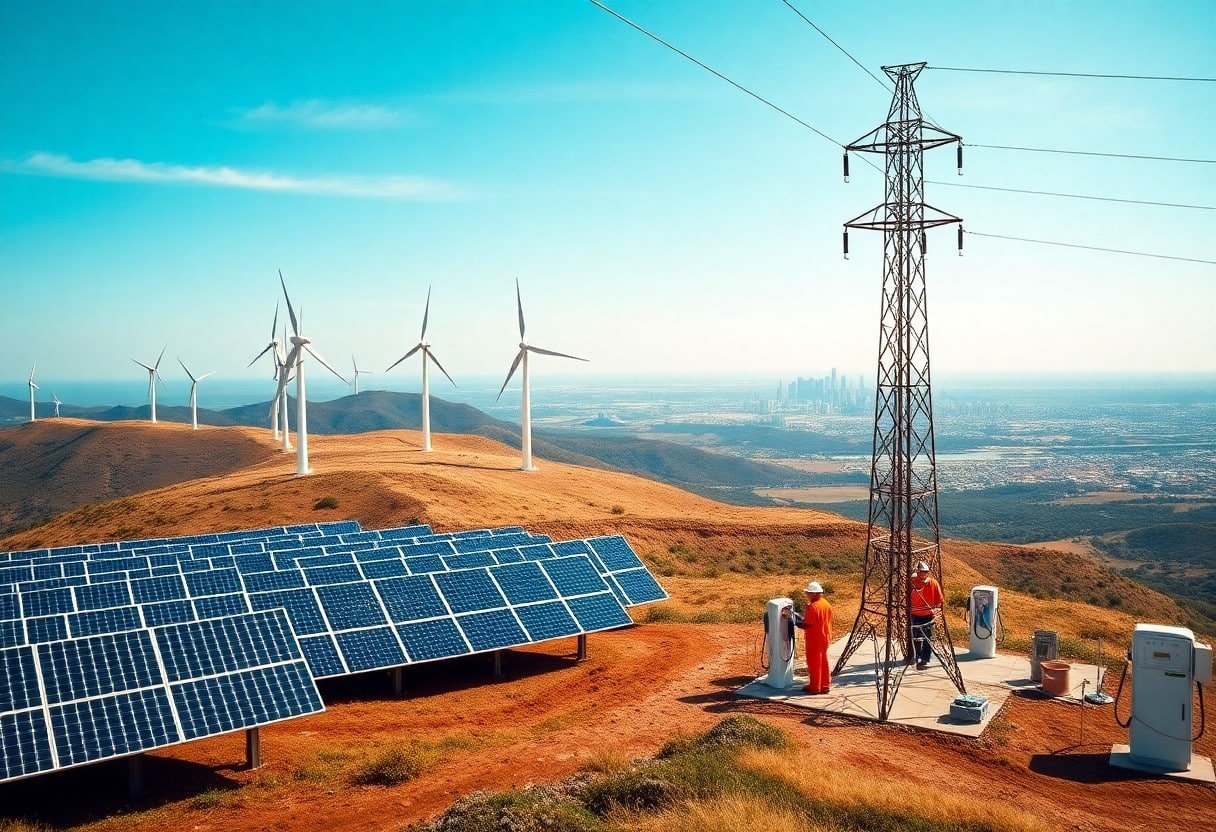
You see wind power not as an abstract clean option but as a measurable climate lever: with over 800 GW installed worldwide, each MW of wind capacity can offset roughly 1,300 tonnes of CO2 annually if it displaces fossil generation, and large-scale deployment has helped regions like Denmark and parts of the U.S. cut grid emissions substantially while stabilizing energy prices.
Reducing Carbon Footprint
You can rely on wind for very low lifecycle emissions-typically about 10-20 g CO2e per kWh versus roughly 800-900 g CO2e for coal-and by replacing thermal plants wind avoids hundreds of millions of tonnes of CO2 annually; for example, adding 10 GW of wind capacity can prevent on the order of 10-15 million tonnes of CO2 each year depending on the grid mix.
Enhancing Sustainability
You benefit from wind’s sustainability gains through longer turbine lifetimes, repowering of legacy sites, and reduced water use compared with thermal generation; repowering commonly doubles or triples output on existing footprints, letting you boost clean supply without new land pressure.
You should note supply-chain and end-of-life improvements are accelerating: manufacturers such as Vestas and Siemens Gamesa are scaling blade recycling pilots, rotor reuse, and modular designs, while predictive maintenance and digital twinning extend asset life, improving material efficiency and lowering embodied emissions per MWh over successive project cycles.
Challenges Facing Wind Energy
Infrastructure and Grid Integration
Variable output and limited transmission capacity strain grids; onshore turbines average capacity factors of 25-40% while offshore often reach 40-50%, so you must balance large swings. Integrating over 800 GW+ of global wind requires storage, demand response, and expanded high-voltage lines. Examples: Texas’s CREZ build-out (~$6.9 billion) shows transmission can unlock thousands of MW but adds cost and delay. Interconnection queues in the US exceeded 1,000 GW in recent years, creating multi-year waits for developers.
Public Perception and Policy
Local opposition, aesthetic concerns, and wildlife impacts frequently stall projects, and you will confront NIMBY cases and legal challenges under statutes like the Migratory Bird Treaty Act that have delayed North American projects for years. At the same time national polls show broad support, yet inconsistent permitting and incentives across jurisdictions leave you exposed to policy risk and financing uncertainty.
Deeper strategies include community ownership, benefit-sharing, and technical mitigation: you can replicate Denmark’s model-where wind supplied about 47% of electricity in 2020 and local co‑ownership boosted acceptance-to accelerate uptake. Mitigation like smart curtailment and careful siting reduced impacts at sites such as Altamont Pass after repowering lowered raptor mortality, while stable long-term contracts or auction frameworks have cut financing costs and improved bankability.
Case Studies of Successful Wind Energy Implementation
Several large-scale projects show what you can expect when policy, finance and local buy-in align; offshore and onshore arrays regularly reach capacity factors of 40-55% with development timelines of 2-6 years. For geopolitical context see How wind energy is reshaping the future of global politics. You’ll also see cost declines near 60% since 2010 and strong local job creation in manufacturing and O&M.
- Hornsea One (UK) – 1,218 MW offshore, operational 2020; capacity factor ~45%; supplies roughly 1 million homes and reduced CO2 by hundreds of kilotonnes annually.
- Alta Wind Energy Center (California, USA) – 1,548 MW onshore, completed 2013; one of the largest onshore complexes, demonstrating economies of scale in repowering and transmission integration.
- Texas (USA) – >40 GW installed by 2023; accounted for ~20-25% of state generation in 2023, showing how high-penetration onshore wind transforms grid dispatch and wholesale prices.
- Middelgrunden (Denmark) – 40 MW, 20 turbines, commissioned 2001; ~50% citizen ownership model that delivers steady dividends and local acceptance over two decades.
- Block Island Wind Farm (Rhode Island, USA) – 30 MW offshore, operational 2016; first US offshore project, shortened local diesel use and informed permitting for larger arrays.
Leading Countries in Wind Energy
You can see global leadership concentrated: China leads with roughly 350 GW installed, the US around 140-150 GW, Germany near 60-65 GW, India about 40-45 GW and Spain roughly 25-30 GW (figures circa 2023-24). These countries pair aggressive auctions, grid upgrades and manufacturing capacity to scale deployment and reduce levelized costs.
Community-driven Wind Projects
You’ll find community projects-like Middelgrunden and Samsø-deliver strong social license: small islands and cooperatives often retain local ownership, channeling revenue into services and local jobs while achieving high local acceptance and long-term maintenance commitment.
Community-driven models typically use cooperative equity, local bonds or municipal investments to finance turbines, keeping 20-100% of project ownership local; Middelgrunden’s ~50% citizen ownership has paid dividends since 2001, and Samsø’s mix of land and offshore turbines enabled net export of electricity in peak years. You can replicate these approaches by structuring feed-in or auction revenues into community funds, offering transparent returns to local investors and tying benefit payments to measurable local outcomes like schools, grid upgrades and retraining programs.
Future Prospects for Wind Energy
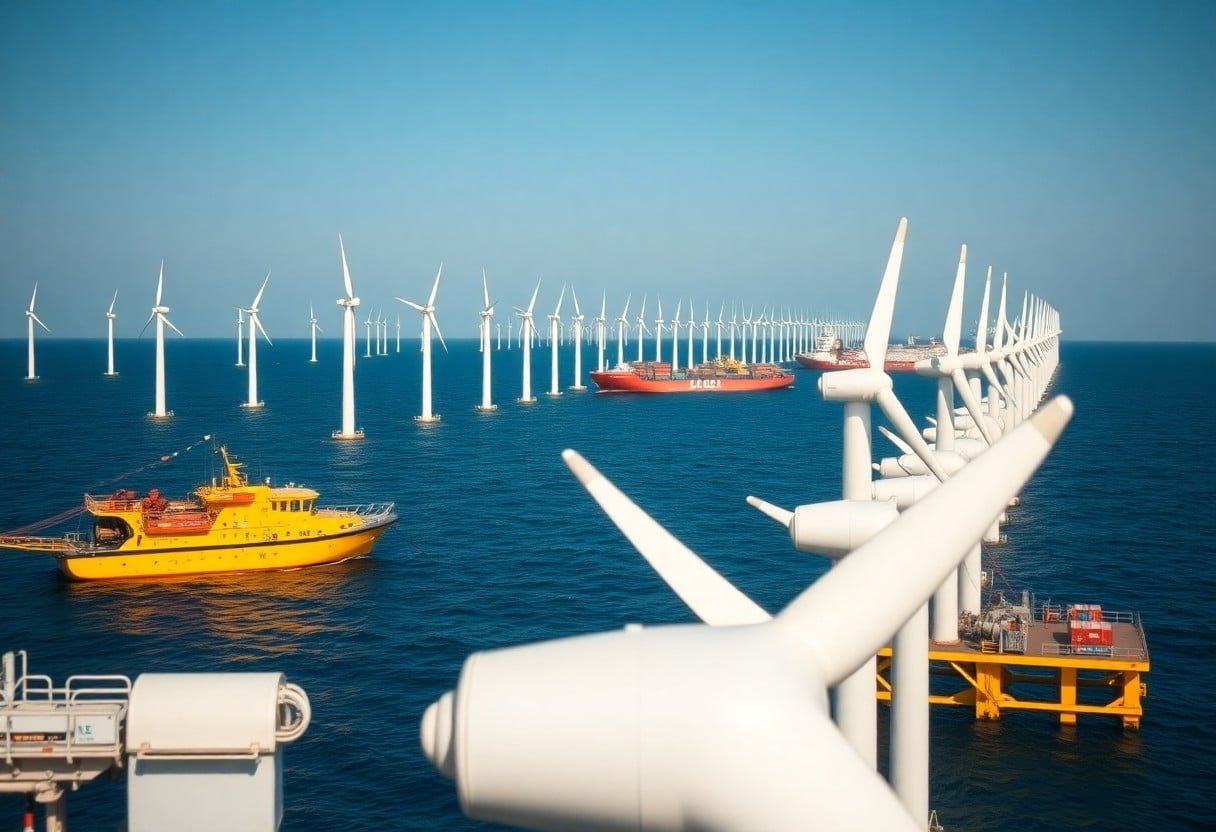
Expect continued scale-up of both onshore and offshore fleets, propelled by 15 MW-class turbines and floating projects like Hywind Scotland (30 MW). You’ll see higher capacity factors offshore and tighter integration with grids and industry, enabling electrification and hydrogen production. Market signals and policy support will open new geographies; explore the Growing Role of Wind Energy in the Global Energy Transition for additional perspective.
Innovations on the Horizon
Advances such as digital twins, AI-driven predictive maintenance and 15-20 MW turbine designs will boost uptime and lower LCOE. You’ll notice floating foundations expanding access to deeper waters-Hywind and pilots in Portugal and Japan demonstrate feasibility. Co-location with batteries and electrolyzers creates firmed output and new revenue streams, while recyclable blade materials and modular assembly ease supply-chain pressures.
The Role of Policy and Investment
Policy tools like the US Inflation Reduction Act, European auction frameworks and streamlined permitting shape where you’ll see projects proceed. Long-term PPAs, green bonds and concessional loans from institutions such as the EIB reduce financing costs and attract developers for multi-GW builds. Clear grid access and stable price signals are what investors look for when underwriting large-scale wind farms.
In practice, you’ll observe the fastest deployments where incentives link to predictable timelines: IRA-style tax credits have spurred US manufacturing and project pipelines, while recent EU and UK auction rounds have awarded gigawatts to developers. Developers depend on bankable PPAs and clear permitting windows-without them, financing dries up and projects are delayed despite strong demand.
To wrap up
As a reminder, you should regard wind energy as a central pillar of your energy transition: scalable, increasingly cost-competitive, and compatible with storage and smart grids. With clear policy, targeted investment, and community engagement, you can accelerate decarbonization, create skilled jobs, stimulate innovation, and secure more resilient, affordable power for current and future generations.