

Automotive industry outlook-shifts in EV adoption, supply chains, interest rates, and consumer preferences-will shape how you manage inventory, pricing, service offerings, and financing to protect and grow dealership margins. This post will help you interpret market signals, adapt operations, and spot opportunities so your dealership can make data-driven decisions, optimize profit streams, and stay competitive through changing market cycles.
Key Takeaways:
- EV adoption shifts the revenue mix: new-vehicle margins may compress while aftersales service declines unless dealerships invest in EV maintenance, parts, and charging infrastructure to capture new income streams.
- Inventory, supply-chain volatility and higher interest rates raise holding and flooring costs, squeezing profitability unless dealers optimize inventory turnover and use dynamic pricing and financing strategies.
- Digital retailing, data-driven F&I and alternative revenue streams (subscriptions, certified pre-owned programs, fixed-ops efficiency) become key levers to offset margin pressure and boost profitability.
Market outlook and demand forecasts
As global EV share climbed to about 14% of new-car sales in 2023-with roughly 28% in China, 21% in Europe and 6% in the U.S.-you should plan for continued electrification while mass-market ICE demand stabilizes. LMC and other forecasters point to modest 2-3% annual light‑vehicle growth toward 2025, driven by replacement cycles and stimulus in emerging markets; your pricing and inventory strategies will need to balance rising EV interest with steady SUV and truck preferences.
Sales volumes, segment winners, and timing
Expect SUVs, crossovers and EV variants to win share through 2026, while light trucks maintain about 70-75% of U.S. volume; you should prioritize floor space and marketing for high-margin mid‑size SUVs and EV crossovers. When new model rollouts occur-Ford’s F‑150 Lightning ramp and BYD/Tesla expansion examples-you’ll see short-term spikes in demand, so time allocations, test-drive availability and targeted incentives around launches to capture sales.
Supply chain, inventory levels, and production risks
Semiconductor constraints have eased but battery raw‑material price swings (lithium/nickel) and regional factory disruptions still create risk; dealers reported days‑of‑supply rebounding into roughly 40-70 days across markets in 2023. You should monitor OEM allocation policies, UAW actions and port congestion metrics-these affect expected arrival windows and your ability to meet customer delivery promises and protect margins.
Digging deeper, battery cell lead times, freight rate volatility and single‑source component exposure are the top operational stressors you’ll face; for example, 2023 chip allocation favored higher‑priced trims, pushing some dealers to pivot inventory toward premium models. Manage working capital by tightening turn targets, using floor‑plan hedges and coordinating with OEM allocation teams, while tracking spot freight and commodity indices to forecast cost pass‑through and price cadence for customers.
Electrification and technology shifts
You’re already adjusting inventory and finance strategies as EVs and advanced driver assistance systems change ownership patterns; global EV penetration climbed to roughly 14% of new-car sales in 2023 and is expected to top 20% in major markets by 2025, compressing traditional service revenue while opening software and subscription opportunities – consult 2025 Auto Dealership Profitability Insights for concrete stocking and remarketing tactics.
EV adoption, incentives, and resale impacts
You can leverage incentives like the US federal EV tax credit (up to $7,500 under the IRA) and state rebates to shorten sales cycles and boost demand; resale patterns vary-early EVs (2011-2016) depreciated steeply, while 2020+ high-range models hold value better-expect 5-10% faster depreciation on low-range models, so prioritize 200+ mile-range inventory and certified pre-owned EVs to protect margins.
Service, parts, and technician training needs
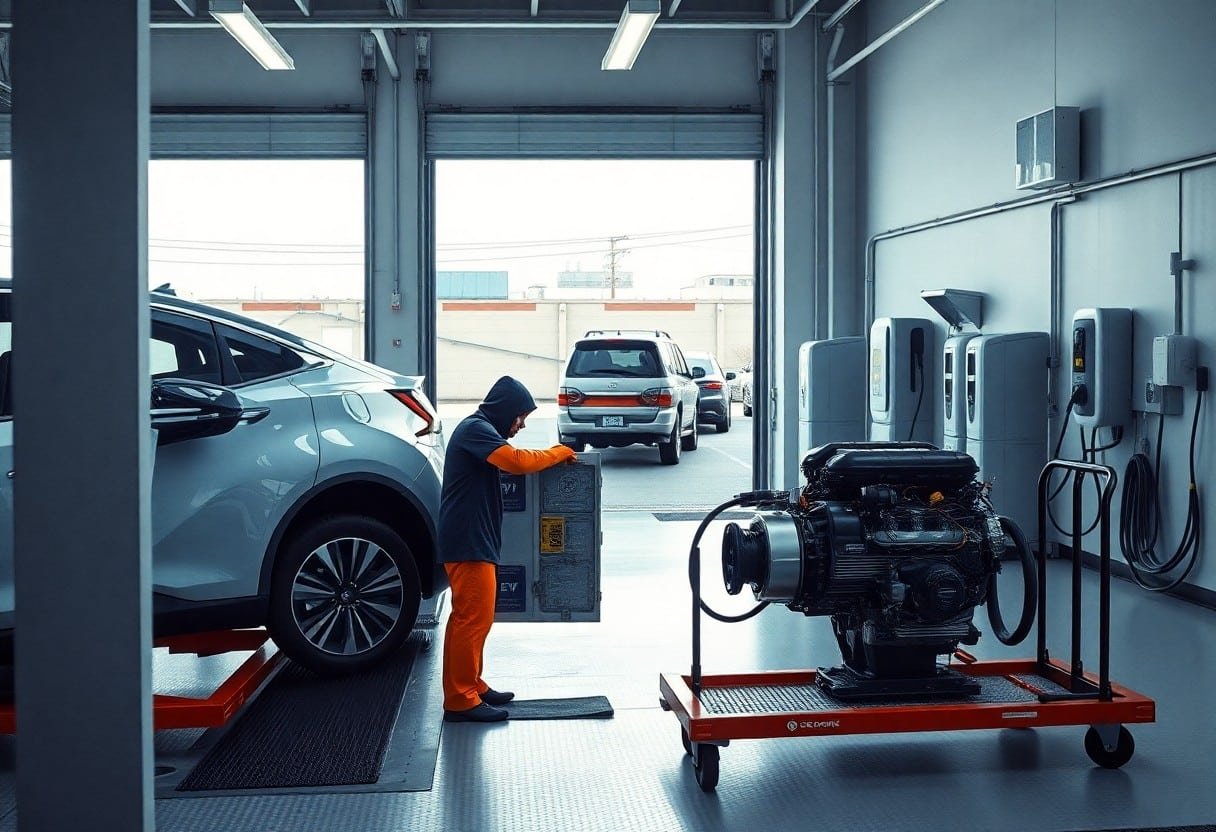
You’ll find EVs reduce routine tasks but raise high-voltage and software work: EVs have far fewer moving parts than ICE vehicles, shifting demand to battery diagnostics, inverter repairs, and ADAS calibrations; OEM HV training programs commonly require 40-80 hours per technician, and initial tooling/fixture investments often run $10k-$50k per bay.
You should reconfigure parts stocking and staffing: anticipate fewer oil-filter SKUs but larger battery and power-electronics inventory with longer lead times, and plan to certify at least 2 technicians per shift for HV and ADAS work to avoid service bottlenecks; ADAS recalibrations can add $200-$500 per job, while software updates and diagnostics can lift average RO by $150-$400, offsetting declines in brake and oil-service revenue.

Changing consumer behavior and financing
You’ve seen shoppers start 70-80% of their purchase journeys online, forcing you to thread digital pricing, trade-in transparency, and home delivery into your sales flow; used-vehicle values have eased roughly 20-30% from 2022 peaks, altering trade equity and stocking decisions. Financing preferences shifted toward shorter terms and larger down payments to control monthly costs. For regional benchmarks and operational takeaways consult the Automotive Trends Report | Q3 2025 Results.
Used-car market, subscriptions, and online buying
You must manage faster turn rates as wholesale volumes normalized in 2023-24 and margins tightened; subscription programs (Care by Volvo, Porsche Drive) are expanding, often pricing between $500-1,200/month and attracting urban, convenience-focused buyers. Online purchasing channels now account for roughly 20-30% of completed transactions in many progressive markets, so your digital retailing, detailed photos, and seamless delivery options directly affect sell-through and reconditioning cadence.
Interest rates, F&I trends, and margin pressures
Rising benchmark rates increased monthly payments, squeezing affordability and compressing your F&I reserve; F&I revenue per unit typically spans a few hundred to several thousand dollars, but stricter underwriting and lower reserve spreads have trimmed averages. You should refine product menus, push value-driven protection bundles, and use captive programs where possible to preserve conversion and per-unit profit.
When policy rates climbed in 2022-23, you likely noticed inventory carrying costs and floorplan interest rise-commonly adding about $100-$400 per unit per month depending on turn rate-forcing clearer pricing strategies and faster reconditioning. Dealer buy-rate compression reduced markup room, so many operators shifted to higher-margin service contracts, branded warranty packages, and subscription-style offers to create recurring revenue. Practically, segment buyers by payment sensitivity, present multiple term/down-payment scenarios, and deploy digital F&I tools to increase penetration and speed; pairing transparent APR buy-rate disclosures with value-focused F&I bundles helps retain conversions while protecting average gross per unit.
Dealership profit centers under pressure
Margins on new and used vehicles are squeezing your bottom line as EVs shift model mix, rising incentives and higher financing rates compress per-unit profit. Many dealerships saw new-vehicle gross drop to roughly $1,000-$1,500 per unit in competitive metro markets, while inventory turns aim for 8-12 per year. You have to balance price, stock and captive incentives to protect cash flow and cover fixed overhead.
New-vehicle margins and incentive strategies
You’ll face incentives often exceeding $2,000 per unit in peak months, and trade-ins plus lease returns change your used-car margin calculus. Leaning on OEM rebates, loyalty cash or floor-plan assistance can move stale units, but overreliance erodes F&I and gross. Use targeted, time-bound incentives, merchandising data and dynamic pricing to maintain turns of 8-12 and preserve per-unit profit.
After-sales, parts, and service as steady revenue
Service, parts and extended warranties often supply 40-60% of your dealership’s gross profit, with labor and accessory margins substantially higher than new-vehicle retail. You can grow average repair order (ARO) by 10-20% via menu selling and digital reminders, while service-contract penetration stabilizes recurring revenue even when new-vehicle sales dip.
To expand fixed-ops, focus on KPIs: aim technician productivity of 70-85%, ARO of $350-$500 and labor gross per RO increases of 10% annually. Implement online scheduling, express lanes and retention CRM; one regional group lifted fixed-ops revenue 12% in a year after digital booking and menu-pricing training. You should monetize software updates, recall campaigns and subscription services to offset lower parts turnover from EV adoption.
Practical strategies to protect profitability
You should prioritize fixed-ops optimization: boosting service hours sold by 10-25% typically lifts gross profits noticeably. Use targeted retention, extended-warranty penetration, and digital booking to recover lost service revenue; one dealer raised service gross 18% within six months after focused campaigns. Read tactical steps in How to Increase Dealership Service Drive Profitability.
Pricing, inventory management, and digital sales
You can use dynamic, market-based pricing tied to VIN-level comps to lift retail conversion 3-7% and cut days-to-turn; aim to lower used-car DTR from ~60 to ~40 days by prioritizing 60-90 day inventory for price adjustments and quick reconditioning. Adopt instant online trade offers and full digital retailing to shorten the buying cycle-dealers adding end-to-end online purchase options often see up to a 20% rise in lead-to-sale conversion.
Cost control, staffing, and new revenue streams
You should control payroll with flexible scheduling and clear productivity targets, pushing technician utilization toward 80-90% through flat-rate goals and cross-training. Boost parts margins and F&I penetration-raising service contract sales by 5-10% lifts per-vehicle gross. Test new revenue like EV charging fees, subscription maintenance plans, and expanded reconditioning services to create recurring income and smooth seasonal dips.
Start by tracking gross per labor hour (GPLH) and flat-rate efficiency on a daily board, then set a GPLH target increase of $10-$25. You can cut overtime 20-30% by aligning staff to appointment peaks and hiring weekend part-timers or apprentices. Pilot an EV charger at $5-$10 per session bundled with a $9.99/month maintenance plan to generate predictable revenue and improve retention while you scale other service offerings.
To wrap up
From above, the automotive outlook-electrification, software-driven vehicles, shifting consumer preferences, and tighter supply chains-will reshape how you price vehicles, manage inventory, and grow aftersales revenue. By adapting your sales model, investing in EV and service training, and using data to anticipate demand, you can protect and improve your dealership’s profitability in a more tech-focused, service-oriented market.