
You are entering a pivotal era where AI-driven analytics, computer vision and IoT data are transforming materials design, production, supply chains and end-of-life decisions across packaging layers; you will learn how predictive optimization reduces waste, intelligent labeling enhances traceability, and adaptive manufacturing enables personalized, sustainable solutions that reshape cost, compliance and consumer experience.
Key Takeaways:
- AI-driven design and personalization accelerate prototyping and enable generative packaging that reduces material use while supporting mass customization.
- Smart packaging and IoT add real-time visibility and consumer engagement through embedded sensors, RFID/QR traceability, freshness monitoring, and anti-counterfeiting.
- Data-powered operations optimize manufacturing and supply chains with predictive maintenance, dynamic routing, demand forecasting, and lifecycle analytics to advance circularity and sustainability.

AI-driven design & materials
You can leverage AI to cut packaging development time and material use: generative algorithms often deliver 20-40% material savings while accelerating iteration cycles by up to 30%, and predictive models spot supply‑chain impacts on material choice so you avoid late-stage redesigns and SKU fragmentation.
Generative design, simulation and rapid prototyping
You can run topology optimization, FEA and multi‑physics simulation in parallel, letting generative design propose lattice structures and minimal‑mass forms that meet strength targets; in practice this reduces physical prototypes by as much as 70%, speeds thermal and drop‑test validation, and enables direct export to additive manufacturing for pilot runs.
Advanced materials, smart coatings and sensor integration
You can adopt biodegradable polymers, nanocomposite barrier films and printable conductive inks to add active functionality: smart coatings can extend shelf life, while embedded RFID/NFC and printed gas sensors turn single‑use packs into data sources for inventory, cold‑chain alerts and provenance tracking.
- Use generative outputs to create lighter corrugated or thermoformed designs while meeting drop and compression targets.
- Combine digital twins with AI‑guided FEA to simulate 10,000+ shipping scenarios instead of manual sampling.
- Deploy additive prototypes from CAD exports in under 48 hours to validate ergonomics and fit before tooling.
Technology vs. Impact
| Generative Design | 20-40% material reduction; faster iterations; direct AM export |
| Simulation / Digital Twin | Reduced physical testing; predictive damage rates across distribution |
| Rapid Prototyping | Pilot validation in 24-72 hours; lower NPI risk |
You can push sensors and coatings into scaled production: printed gas sensors detect ethanol or ethylene at ppb-ppm levels for fresh produce monitoring, while thin inorganic barrier layers (ALD/SiOx) and bio‑based multilayers can lower oxygen transmission rates by 80-95%, extending shelf life and enabling lighter, mono‑material constructions that simplify recycling.
- Integrate printed NFC tags and conductive traces to capture temperature and shock data without bulky electronics.
- Select nanolaminate or bio‑polymer blends to target specific OTR and WVTR requirements for your SKU.
- Plan for end‑of‑life: choose coatings and adhesives that preserve recyclability while delivering barrier performance.
Material / Sensor Breakdown
| Smart Coatings | Barrier layers, antimicrobial and ethylene scavengers for shelf‑life control |
| Printable Electronics | NFC/RFID, printed sensors and conductive inks for low‑cost telemetry |
| Advanced Polymers | Biopolymers and nanocomposites enabling mono‑material solutions and OTR reductions |

Smart manufacturing & automation
You can layer digital twins, edge analytics and MES-driven orchestration to harmonize throughput and inventory, often cutting changeover times 20-30% and scrap by double digits; pilots show AI scheduling reduces idle minutes across multi-line plants. For broader benchmarks and adoption patterns see Industry report examines AI use across the ….
Predictive maintenance, quality assurance and process optimization
You deploy sensor fusion-vibration, acoustic and thermal-to detect anomalies before failure, with studies suggesting unplanned downtime can fall 30-50% and maintenance costs 10-40%. In practice, models that flag bearing degradation weeks ahead let you schedule repairs during planned stops, while inline AI inspectors catch micro-defects that legacy systems miss, improving first-pass yield and lowering recall risk.
Robotics, vision systems and adaptive production lines
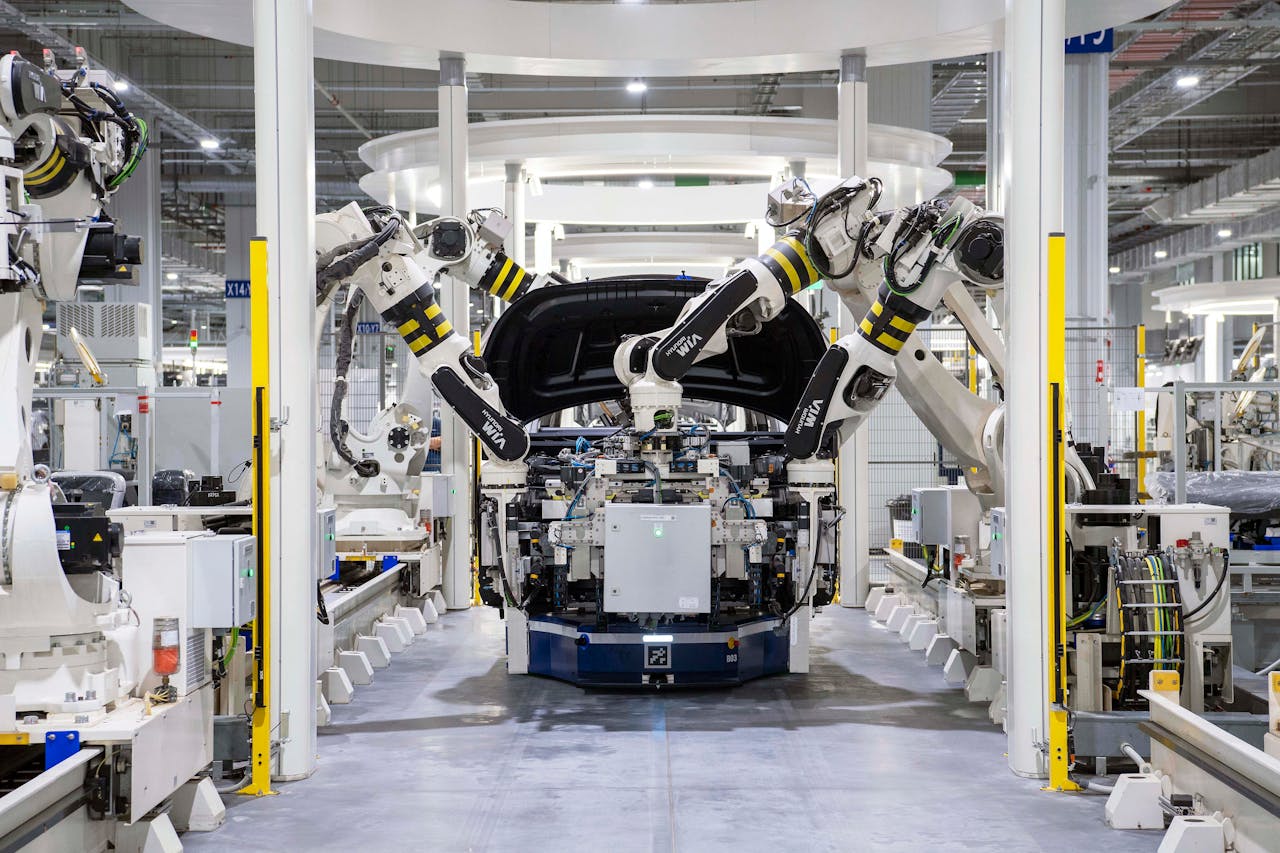
You integrate collaborative robots and deep-learning vision to handle variable formats and higher SKU mixes, where adaptive lines can ramp throughput 15-25% and reduce manual changeover. Vision-guided pick-and-place and real-time pose estimation let you process irregular shapes and shrink-wrap variations without extensive tooling swaps.
Delving deeper, you combine 2D/3D cameras, structured light and convolutional neural nets to perform tasks once impossible for rules-based systems: surface defect detection under 0.2 mm, OCR of fuzzy codes at 600+ items/min, and dynamic ROI reallocation when throughput spikes. Early adopters report lowering rejects by up to 40% after deploying vision-driven feedback loops that adjust robot trajectories and sealing parameters in seconds, enabling true model-driven adaptive production.
Data-enabled supply chain & logistics
AI stitches telemetry, ERP and market feeds so you can cut lead times and align packaging runs with real-time demand; predictive models improve forecast accuracy by 20-50% and integrated label data reduces mislabeling and rework. See packaging-specific workflows and pilot outcomes in How AI Is Redefining the Future of Labels and Packaging.
Demand forecasting, dynamic inventory and route optimization
You should fuse POS, promotions, weather and social signals into your demand models to reduce stockouts and shrink safety stock by 15-30%; dynamic inventory orchestration reallocates units across DCs in real time, while route-optimization engines using time windows and live traffic cut mileage and fuel by up to 15%, lowering expedited shipments and transport spend.
Traceability, provenance and anti-counterfeit systems
You can pair serialized QR/NFC labels with permissioned ledgers and EPCIS event streams so every package proves origin and custody; pilots like Walmart’s blockchain trace reduced traceback time from days to under 3 seconds, and consumer-facing verifications let you block fakes at point-of-scan.
Implement by serializing high-value SKUs with GS1 identifiers, embedding cryptographic hashes in NFC or secure QR codes, and streaming scan events into a distributed ledger for auditable custody. Start small-pilot 3-5 SKUs across one DC, integrate ERP/PLM and WMS feeds, and add a verification app; you’ll gain faster recalls, lower grey-market diversion, and measurable uplift in brand trust while retaining full traceability for compliance audits.
Smart packaging & consumer engagement
When you integrate intelligence into packs, engagement shifts from passive to interactive: NFC, QR and embedded sensors let consumers verify provenance, access recipes or unlock loyalty perks, and pilot campaigns report interaction uplifts often between 10-40%. Brands like Pernod Ricard have used NFC smart labels for whisky authentication, while platform coverage is expanding – see AI in Packaging 2025: The Smart Automation Revolution for examples of scale-up strategies.
IoT-enabled packaging, sensors and real-time feedback
You can deploy temperature loggers, time-temperature indicators and gas sensors to monitor spoilage, and link readings to cloud analytics for alerting and dynamic routing; trials in fresh-food cold chains report waste reductions of roughly 10-25% after adding sensor-driven interventions, while real-time dashboards let your operations reroute shipments or trigger recalls faster than manual checks.
Personalization, AR/VC and data-driven marketing
You should use QR/NFC-triggered experiences and AR try-ons to deliver targeted offers and product demos at point of interaction; L’Oréal’s ModiFace AR is a proven example of virtual try-on adoption, and consumer surveys show over 60% expect personalized brand experiences, so packaging-triggered personalization converts engagement into measurable purchase intent.
To implement this, you feed anonymized interaction data (scans, dwell time, AR sessions) into a customer-data platform, segment users by behavior, and push personalized content or coupons back to the same pack via dynamic QR or short‑lived tokens; A/B test creative and timing, track KPIs like scan-to-purchase conversion, repeat-rate lift and LTV, and enforce consent/opt-out along GDPR lines so your personalization scales responsibly while improving conversion and retention.
Sustainability, circularity & compliance
You’ll see sustainability demands pushing packaging from a cost center to a data-driven design challenge: brands like Coca‑Cola and IKEA set 2030 circularity targets, regulators tighten EPR and deposit rules, and AI lets you run real-time material trade‑offs. Use analytics to link supplier specs, recyclability scores and carbon metrics so you can prioritize mono‑materials, recycled content and reuse pilots that meet both consumer expectations and tightening legislation.
Lifecycle analysis, material optimization and carbon accounting
You can accelerate lifecycle assessments using ISO 14040/44-aligned tools (SimaPro, GaBi, OpenLCA) plus AI to automate inventory and hotspot identification, cutting LCA timelines from months to weeks. Combine GHG Protocol and ISO 14067 carbon accounting to quantify scope‑3 impacts; for example, swapping virgin PET for rPET often reduces material‑stage emissions by up to 60% depending on sourcing and processing.
Design for recycling, reuse systems and regulatory alignment
You should prioritize mono‑materials, compatible inks/adhesives and modular closures to raise sorting yields, and pilot reuse platforms like Loop or deposit schemes inspired by Germany’s Pfand to slash single‑use volumes. Align packaging decisions with emerging EPR rules and regional standards so fees and compliance incentives directly drive design choices and supplier negotiations.
For implementation, start with a packaging audit to map material streams, then set measurable targets: % mono‑material, % recycled content, and reuse cycle goals. You’ll find switching to mono‑PE films, eliminating black plastics and standardizing caps often unlocks higher recycling yields; add digital IDs (QR/NFC/RFID) to improve sorting accuracy. Model reuse economics too – many systems break even after roughly 10-30 cycles depending on product weight and transport – and feed those results into procurement contracts and EPR reporting to close the compliance loop.

Business models, workforce & risks
You will shift from one-off packaging sales to layered revenue streams-subscriptions, packaging-as-a-service, and data-as-a-service-while retooling staff for automation and analytics; manufacturers report pilots where robotics and AI handle up to 40% of routine line tasks, forcing reskilling programs and new HR models. Strategic partnerships with retailers and cloud providers let you scale quickly, but you must balance margin pressure, capex for smart-labels, and regulatory exposure across markets to protect long-term viability.
New monetization models, partnerships and scaling strategies
You can monetize connected packaging through subscription access to product telematics, licensing serialized identities to retailers, or selling aggregated behavioral insights to brands. Startups like Thinfilm and EVRYTHNG show packaging-enabled DaaS models that bundle NFC tags, cloud identity and analytics. Co-investment pilots with major retailers reduce go-to-market cost, and using AWS/Azure edge+cloud architectures helps you scale from thousands to millions of tagged units without rebuilding backend systems.
Data governance, cybersecurity, ethics and risk mitigation
You must align packaging data programs with GDPR, CCPA and standards like ISO 27001 and SOC 2, applying encryption in transit and at rest, role-based access, and third-party penetration testing. Zero-trust architectures and signed firmware updates mitigate supply-chain attacks on smart labels. In parallel, ethical policies for consent, anonymization, and explainable AI prevent consumer backlash and regulatory fines while preserving the value of your datasets.
You should implement strict data classification and retention policies, map data flows end-to-end, and enforce PKI-backed identity for devices; hardware secure elements (TPM or SE) plus signed OTA updates stop tampering. Build incident response playbooks, run quarterly tabletop exercises with suppliers, and require SLAs and cybersecurity attestations from partners. Finally, adopt differential privacy or aggregated reporting for analytics, obtain explicit opt-in where required, and evaluate cyber insurance to transfer residual risk.
Final Words
Ultimately you will see AI and data transform design, supply chains, sustainability, and personalization, enabling you to optimize cost, reduce waste and anticipate consumer demand; your decisions will be guided by predictive analytics, real-time tracking, and automated workflows that make packaging smarter, leaner, and more responsive to market shifts.