
You may not realize it, but the expansion of data centers in your area is closely tied to the capabilities of power grid loads and cooling systems. As technology advances and demands increase, understanding how these factors influence your local data centers can help you appreciate the challenges they face in meeting your data needs. In this post, we’ll explore how energy consumption and cooling requirements can affect the growth and efficiency of data centers, impacting everything from service availability to your digital experiences.
Key Takeaways:
- Power grid limitations can restrict the capacity and operational efficiency of data centers, directly impacting expansion opportunities.
- Cooling system requirements significantly influence energy consumption, affecting both sustainability and cost-effectiveness in data center operations.
- Collaboration with local utilities is imperative to ensure adequate infrastructure support for future growth and reliability in data center environments.
Understanding Power Grid Load
To grasp how power grid load affects data center expansion, it’s vital to examine what constitutes this load and its limitations. The load represents the total demand for electricity from various sources and users, from homes to commercial enterprises, including your local data centers. Understanding these dynamics helps you comprehend the constraints faced by expanding facilities.
What is Power Grid Load?
Power grid load refers to the total amount of power consumed by all electrical devices and systems connected to an electrical grid at any given time. This includes residential, commercial, and industrial usage, impacting how efficiently the grid can distribute electricity and respond to fluctuations in demand.
Factors Influencing Load Capacity
Several key factors play a significant role in determining the load capacity of a power grid. These include the age and infrastructure of the grid, peak demand levels, renewable energy integration, and the resilience of the power supply. Addressing these elements is crucial as you consider data center operations in your region.
- Grid infrastructure quality and age
- Seasonal and time-of-day demand variations
- Renewable energy sources availability
- Technological advancements in energy storage
- Regulatory and safety standards
Time-of-day variations greatly affect load capacity, as peak hours can double or triple demands on the grid. For instance, during hot summer afternoons, cooling systems in commercial buildings often elevate energy use, straining the grid. The integration of renewable energy sources, while sustainable, can also create unpredictability if not adequately managed.
- Geographic location and its impact on grid reliability
- Technological safeguards for load balancing
- Consumer habits and electrical consumption patterns
- Investment in upgrading transmission infrastructure
- Government policies on energy efficiency
The Role of Cooling Systems
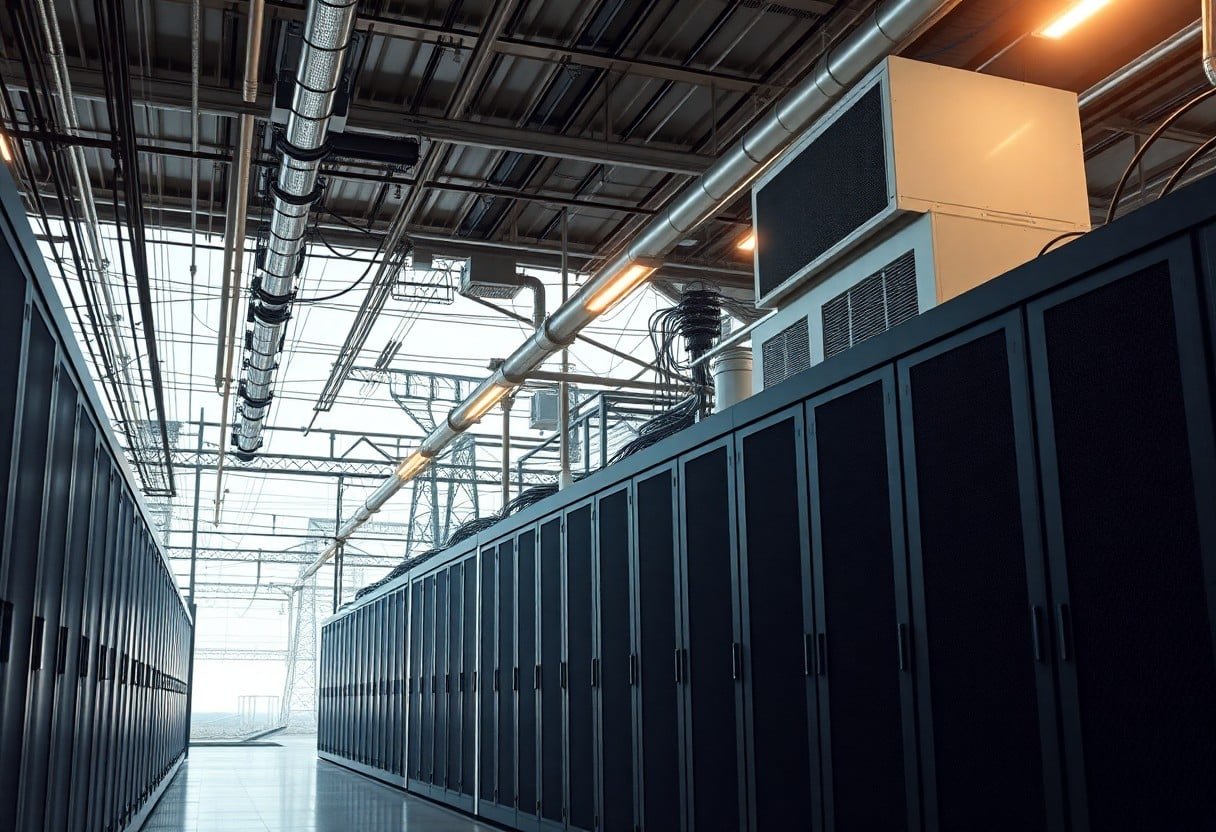
In data centers, effective cooling systems are important to maintain optimal operating temperatures and ensure equipment longevity. Without proper cooling, the risk of overheating increases, leading to potential equipment failure and operational downtime. The demand for processing power has escalated dramatically, and so has the need for efficient cooling solutions to handle these loads.
Importance of Cooling in Data Centers
Cooling systems play a pivotal role in data centers, as they are not only responsible for maintaining a suitable temperature for hardware but also for safeguarding the entire infrastructure against overheating. You may find it surprising that most data centers use approximately 30% of their total energy just for cooling, highlighting its significance in overall power consumption and efficiency.
Types of Cooling Systems Used
Data centers employ several types of cooling systems, each tailored to specific needs and constraints. Examples include traditional air conditioning, liquid cooling, and evaporative cooling systems. You might observe that many facilities opt for a hybrid approach, combining methods to optimize performance and efficiency based on varying workloads and environmental conditions.
| Cooling Method | Description |
| Air Conditioning | Conventional cooling using chilled air. |
| Liquid Cooling | Direct cooling using liquid to dissipate heat. |
| Evaporative Cooling | Uses water evaporation to cool air. |
| Immersion Cooling | Hardware is immersed in a dielectric fluid. |
| Hybrid Systems | Combines multiple cooling methods for efficiency. |
Among the various cooling systems, air conditioning remains the most prevalent due to its familiarity and ease of implementation. However, liquid cooling is gaining traction for its superior efficiency, especially in high-density server environments. You may find evaporative cooling appealing as it uses natural processes to save energy costs in suitable climates. Immersion cooling takes innovation a step further but can involve higher initial investments. Many facilities now blend these methods to balance energy consumption and operational requirements.
- This diversification helps adapt to changing workloads and climate conditions.
| Benefit | Impact |
| Energy Efficiency | Reduces operational costs significantly. |
| Scalability | Supports growth while maintaining performance. |
| Reliability | Minimizes equipment failure risks. |
| Flexibility | Accommodates various equipment loads. |
| Sustainability | Lessens environmental impact over time. |
- This adaptability is key in optimizing performance across diverse data center environments.
The Impact of Power Limitations on Expansion
Power limitations significantly affect your data center’s ability to scale operations. Many facilities operate near their maximum capacity, leaving little room for growth. When the electrical grid cannot provide sufficient power, you face constraints that stifle expansion plans, forcing administrators to weigh usage efficiency against growing demands. As you consider expansion, the power supply’s reliability and capacity will directly impact your operations and potential upgrades.
Current Limitations in Infrastructure
Many data centers today are hindered by outdated infrastructure that cannot support increasing power demands. Aging electrical grids often struggle to deliver the necessary power quality and reliability. You may find that thriving growth pockets in your area are limited by these constraints, impacting your ability to deploy additional servers or hardware upgrades effectively. This scenario creates a bottleneck, forcing you to rethink expansion strategies.
Future Projections for Data Center Growth
As the digital landscape continues to evolve, projections indicate that global data center traffic will triple by 2026, significantly increasing the demand for power. You could be looking at an era where the demand for processing power outstrips the available electrical capacity, especially in regions with limited grid infrastructure. The challenge lies in balancing this projected growth with sustainable energy solutions.
Future projections point to a scenario where data center power demands soar alongside advancements in AI and IoT. By 2026, data centers could account for up to 20% of the world’s electricity consumption, which may result in increased pressure on power grids worldwide. This surge means that you will likely need to invest in renewable energy sources or battery storage solutions to meet operational demands without compromising growth opportunities. In this landscape, ensuring power availability while managing cooling and efficiency becomes paramount for sustainable expansion.
Balancing Energy Needs and Environmental Concerns
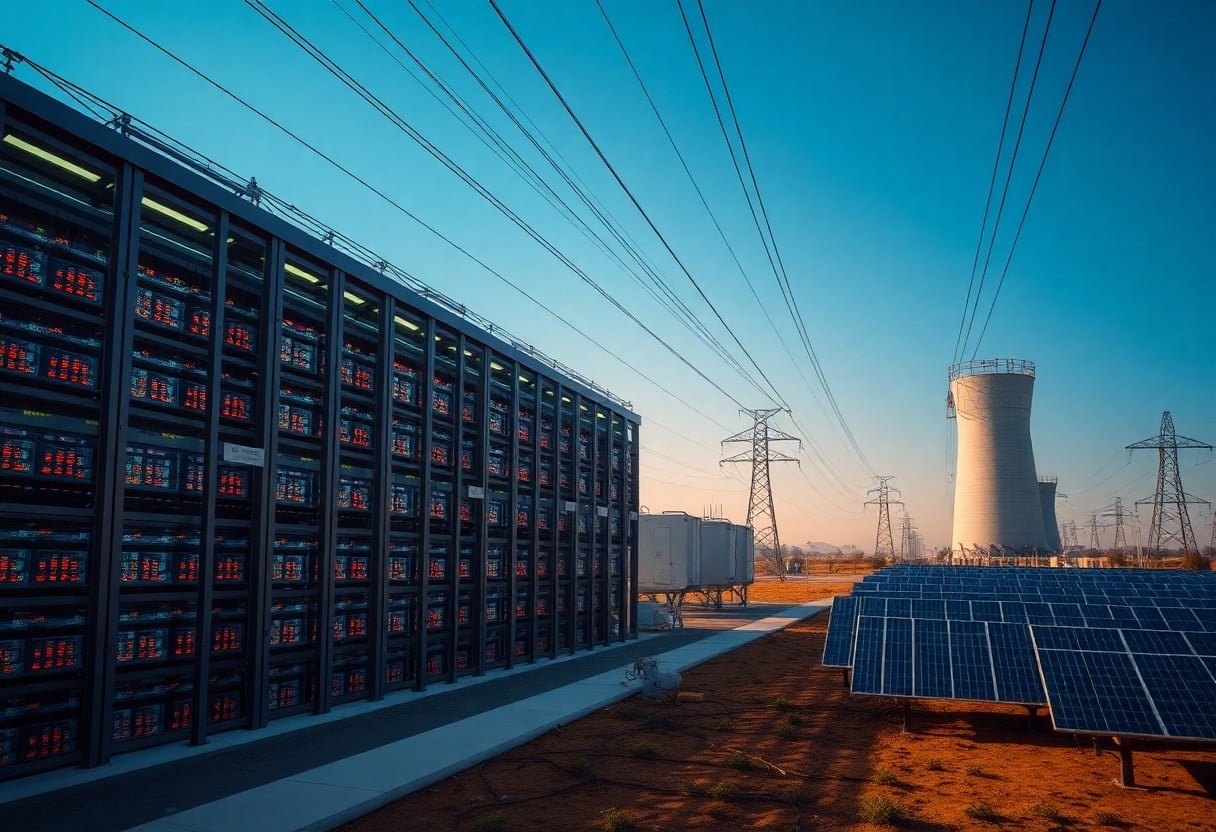
You’ve probably noticed the growing tension between the energy demands of data centers and pressing environmental considerations. As you expand your infrastructure, the need for sustainable energy sources becomes evident. Balancing operational efficiency with the ecological footprint is crucial. By implementing renewable energy solutions, you can reduce reliance on traditional power grids while also decreasing carbon emissions, ensuring your growth aligns with global sustainability goals.
Sustainable Practices in Data Centers
You can adopt several sustainable practices in your data center operations, such as optimizing energy use, utilizing energy-efficient hardware, and incorporating advanced cooling techniques. Many operators are transitioning to green energy sources like solar and wind, resulting in significant cost savings and positive environmental impacts. Additionally, recycling equipment and reducing waste through e-waste programs can further enhance your sustainability efforts.
Innovations in Power and Cooling Technologies
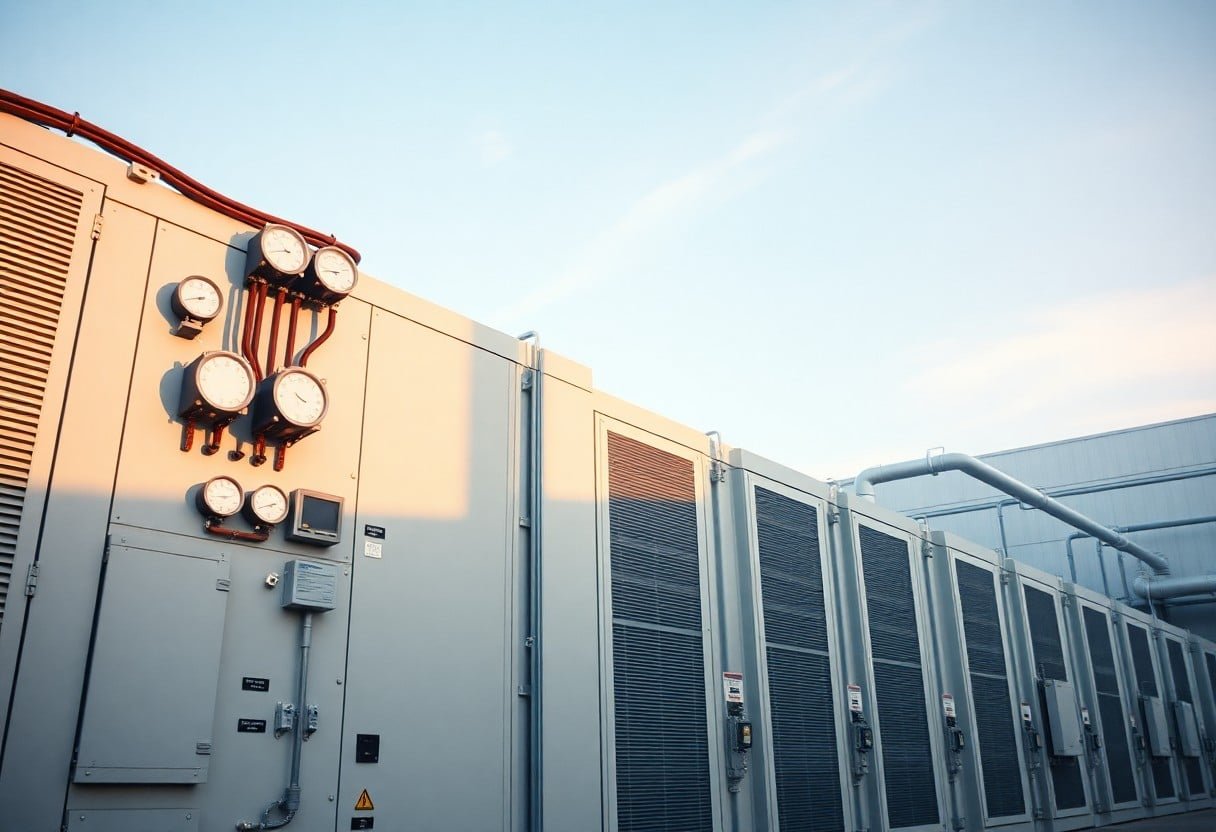
Emerging innovations in power and cooling technologies offer you exciting pathways to enhance efficiency. Techniques such as liquid cooling and immersion cooling systems have been gaining traction, efficiently managing heat and reducing energy consumption. Utilizing AI and machine learning enables predictive maintenance, ensuring optimal operation while minimizing downtime, thus directly addressing both energy efficiency and reliability.
Consider advanced cooling solutions like Direct-to-Chip (D2C) cooling, which delivers coolant directly to your server components. This method significantly lowers energy usage by maintaining optimal temperatures while allowing higher performance levels. Implementing heat recovery systems can recycle waste heat for other uses, further maximizing energy efficiency. As hybrid cooling solutions continue to emerge, you’ll have more opportunities to optimize your data center’s energy consumption while minimizing its environmental impact.
Strategies for Future Expansion
To navigate the future landscape of data center expansion, various strategies can be implemented. Emphasizing efficiency, advanced technologies, and sustainable practices enables you to meet increasing demands while minimizing environmental impact. For insights into energy forecasting and its significance in scaling operations, check out Powering the US Data Center Boom: Why Forecasting Can ….
Upgrading Existing Systems
Enhancing your current infrastructure can yield significant improvements in energy efficiency and cooling effectiveness. By investing in modern cooling technologies and energy monitoring systems, you can optimize operation without the need for extensive new builds, directly addressing limitations imposed by existing power grid capabilities.
Collaborating with Energy Providers
Partnering with energy providers can lead to innovative solutions that support your data center needs. By working closely with local utilities, you can explore options for renewable energy sources or demand-response programs that enhance reliability while decreasing dependence on the grid during peak times.
Collaboration with energy providers isn’t just beneficial; it’s necessary for future-proofing your data center operations. Engaging in discussions with utilities allows you to understand their capacity limitations and potential expansions. This partnership can pave the way for customized energy solutions, ensuring you have the necessary support to grow while adhering to energy regulations and sustainability goals. As data demands rise, having a reliable energy strategy becomes integral to your expansion plans.
Final Words
As you consider the future of your data center expansion, it’s crucial to recognize how power grid load and cooling systems can influence your plans. Ensuring you have adequate infrastructure to support increased energy demands and the necessary cooling capacity will be key to your growth. By proactively addressing these limitations, you can create a sustainable environment for your operations while maximizing efficiency and performance.