
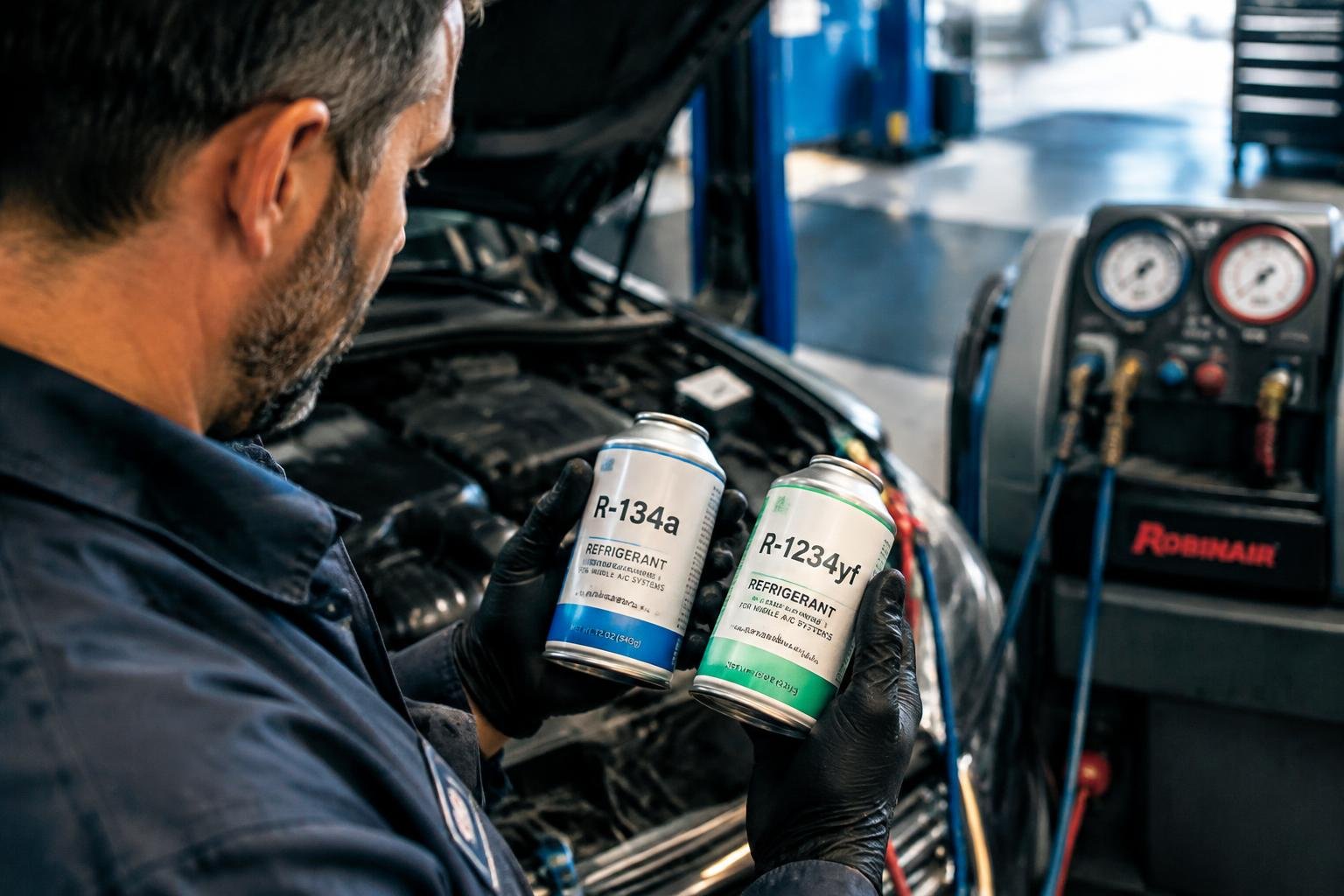
R-134a, once standard in automotive air conditioning, is being displaced by refrigerants with lower climate impact. If you service or own a newer vehicle, you may encounter R-1234yf, which requires compatible equipment and different handling procedures. The transition is changing what technicians connect to A/C systems and what refrigerant appears on a vehicle’s service label.
Key Takeaways:
- R-134a is being replaced because of its high global warming potential. New vehicles increasingly use R-1234yf, a refrigerant with much lower climate impact.
- R-1234yf is mildly flammable and requires compatible A/C components, service equipment, and refrigerant-handling procedures. It is not a drop-in substitute for R-134a.
- Automakers and repair shops must account for refrigerant-specific service requirements. A vehicle’s under-hood label identifies the correct refrigerant and charge specification.
Why R-134a Is Being Phased Out
Environmental rules are driving the move away from R-134a because this hydrofluorocarbon has a high global warming potential. If refrigerant escapes from your vehicle’s air-conditioning system during a leak or servicing, it can contribute to climate warming. Regulations therefore target the production and use of high-impact refrigerants, while vehicle manufacturers and service shops adapt to tighter requirements for automotive A/C systems.
The New Automotive Refrigerants
R-1234yf has become the main replacement for R-134a in many newer vehicles, giving you a refrigerant with a much lower global warming potential. You may also encounter carbon dioxide, designated R-744, in some vehicle air-conditioning applications, while R-152a has been explored as another alternative. These refrigerants differ in properties and availability, so the refrigerant specified for a vehicle depends on its make, model, and system label.
How Vehicle A/C Systems Are Changing
As you service newer systems, refrigerant changes affect more than the charge itself: compressor lubricants, seals, service fittings, and recovery equipment must match the refrigerant specified for the vehicle. R-1234yf systems, for example, use dedicated fittings that prevent standard R-134a service couplers from connecting. Review changes in automotive refrigeration and air conditioning to understand how system designs are adapting.
Components, Service, and Safety
During service, you need refrigerant-specific recovery machines and properly labeled storage cylinders to prevent cross-contamination. R-1234yf is mildly flammable, so technicians use equipment rated for that refrigerant and follow shop procedures that control ignition sources and provide ventilation. Before opening a circuit, identify the refrigerant on the vehicle label and use the matching manifold gauges, hoses, and recovery unit.
Regulations, Compliance, and Industry Timelines
Regional Rules Shape Adoption
Regional regulations set the pace for replacing R-134a in new vehicles. In the United States, EPA rules under the SNAP program restrict the use of refrigerants with higher global warming potential in newly manufactured light-duty vehicles, while European Union rules limit high-GWP refrigerants in new cars. You’ll encounter different requirements depending on where a vehicle is designed, sold, and registered; the Understanding 134a Refrigerant: Properties and Uses article outlines why R-134a remains subject to these changing rules.
Phase-Out Schedules Differ
Automakers align refrigerant adoption with regional model-year requirements and vehicle certification timelines, so R-1234yf adoption has progressed at different rates across markets. You should treat the applicable national or regional rule as the controlling schedule, rather than assume one global cutoff date; production restrictions generally target new vehicles, while existing vehicles remain governed by separate service and handling requirements.
What the Transition Means for Owners and Repair Shops
Owners of vehicles designed for R-134a need refrigerant that matches the system label; substituting another type is not a routine top-up. As supplies and service demand shift, refrigerant and repair costs vary by vehicle, region, and availability. A leak diagnosis followed by a correct recharge can cost less than repeated refrigerant top-ups, which leave the underlying fault unresolved.
Repair shops servicing newer refrigerants need dedicated, clearly labeled recovery and recharging equipment, along with compatible fittings and leak-detection procedures. Technicians also follow the vehicle manufacturer’s service specifications because refrigerant type, charge amount, and oil requirements differ across systems. For owners, the practical result is that the model year and under-hood refrigerant label determine which equipment and service procedure a shop uses.
Environmental Impact and the Road Ahead
Lower-global-warming-potential refrigerants reduce the climate impact of automotive air conditioning when they replace R-134a and are managed carefully. You can see the difference most clearly in the refrigerant’s direct effect if it escapes from a system, since some alternatives have a substantially lower warming potential. The total environmental benefit also depends on leak prevention, recovery during service, and correct handling at end of vehicle life.
To wrap up
Your vehicle’s refrigerant choice now depends on its model year, factory design, and applicable regulations, with R-1234yf replacing R-134a in many newer cars while R-744 serves some systems. For service, the refrigerant label and manufacturer procedure determine the correct recovery equipment, fittings, and charging method. R-134a remains relevant for vehicles designed around it, but it is not an interchangeable substitute for newer refrigerants. As the fleet changes, accurate identification and refrigerant-specific service tools remain central to compliant automotive A/C work.