

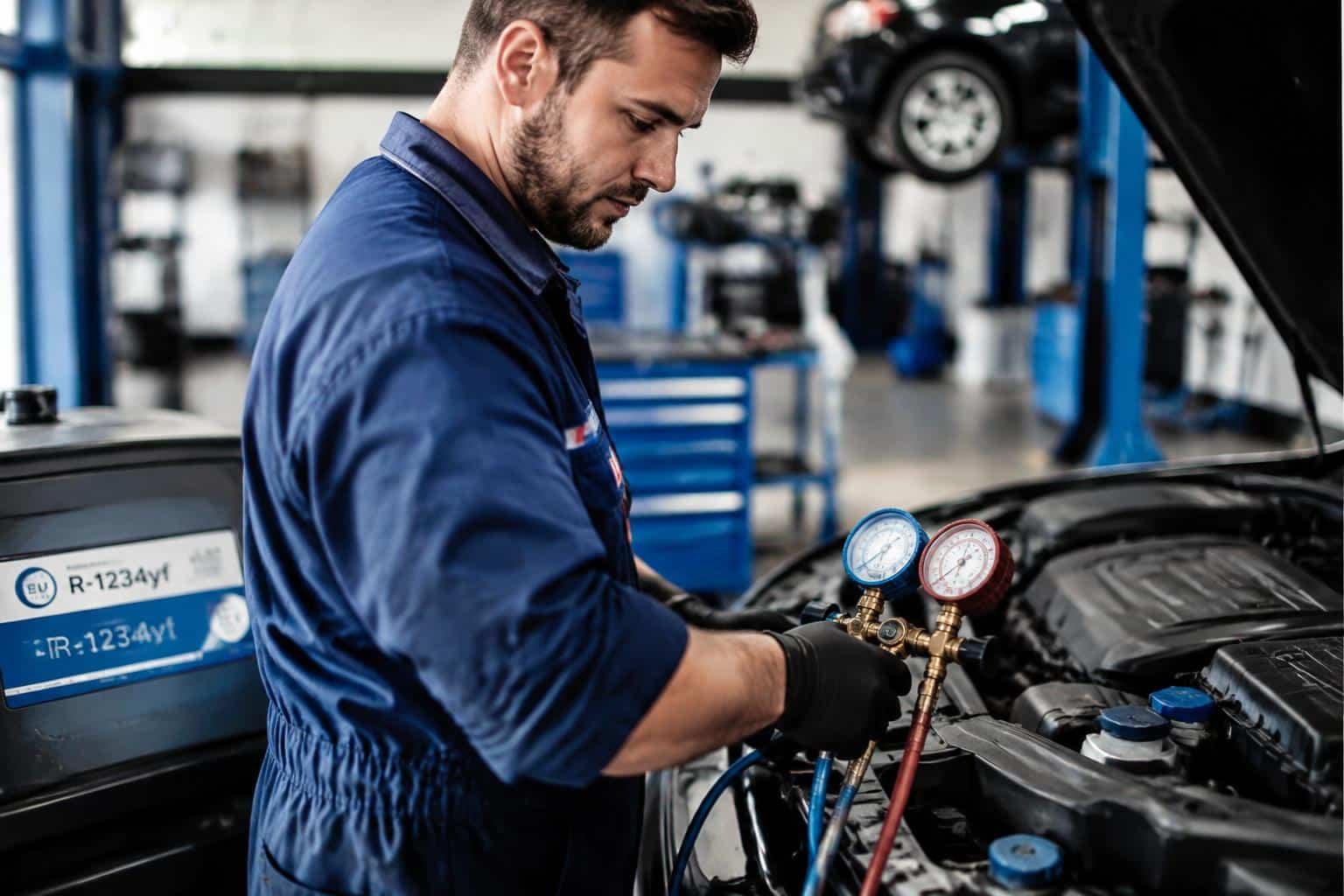
Your car’s air conditioning system uses refrigerant that is subject to EU rules on fluorinated greenhouse gases, or F-gases. Those rules affect which refrigerants vehicle manufacturers can use and how qualified technicians handle them during servicing. For drivers, the practical detail is that automotive AC refrigerant must be recovered rather than released into the air.
Key Takeaways:
- EU rules phase down high-global-warming-potential refrigerants in vehicle air conditioning. Many newer cars use R-1234yf, while older vehicles may still use R-134a.
- Automotive AC refrigerants require compatible service equipment and handling by trained technicians. A recharge must use the refrigerant specified on the vehicle’s label, not a substitute.
- Drivers should ask an AC workshop to identify the refrigerant and inspect for leaks before recharging. Mixing refrigerants or using the wrong equipment can damage the system and complicate service.
What EU F-gas Regulations Cover
EU F-gas rules set controls on fluorinated greenhouse gases, including their production, import, use, recovery and release. For you as a driver, the regulations’ environmental purpose is to limit emissions from gases with a strong warming effect and to support a shift toward refrigerants with lower climate impact. The rules apply across sectors that use these substances, from refrigeration equipment to vehicle air-conditioning systems, with controls shaped by the refrigerant’s properties and intended use.
Which refrigerants are subject to the rules
Fluorinated refrigerants covered by EU F-gas rules include hydrofluorocarbons, commonly called HFCs, such as R-134a and R-1234yf. Their classification depends on chemical composition, not the equipment in which you find them. R-134a is an HFC with a high global warming potential, while R-1234yf is also fluorinated but has a much lower value. The regulations control these gases through measures such as limits on placing certain products on the market and requirements for handling them.
How refrigerants contribute to climate change
When a refrigerant escapes from an air-conditioning circuit, its molecules enter the atmosphere and trap heat. Global warming potential, or GWP, compares a gas’s warming effect with that of carbon dioxide over a defined period; a higher GWP means a greater impact per unit released. For instance, R-134a has a far higher GWP than R-1234yf, so the same leaked mass creates a larger climate burden. Recovery during servicing keeps refrigerant out of the atmosphere.
Requirements for Automotive Air Conditioning
For your vehicle’s air conditioning, EU requirements depend on the refrigerant in the circuit and the system’s design, including whether it uses a fluorinated gas and how much refrigerant it contains. Rules distinguish vehicle categories and refrigerant properties, so two cars with similar climate controls can face different requirements. The refrigerant specification, rather than the dashboard controls, determines which restrictions apply to the air-conditioning circuit.
Restrictions on high-global-warming-potential refrigerants
For passenger cars and light commercial vehicles, EU rules restrict the use of fluorinated greenhouse gases with a global warming potential (GWP) above 150 in air-conditioning systems fitted to new vehicles covered by the relevant type-approval rules. R-134a, with a GWP well above that threshold, was phased out for new models under the earlier framework, while R-1234yf has a GWP below 1. Your vehicle’s age and approval category affect which requirements apply.
Rules for newer vehicles and refrigerant transitions
As manufacturers introduced refrigerants with lower GWP, vehicle systems were designed around the specific chemical and operating characteristics of each gas. R-1234yf systems, for example, use components and service connections intended for that refrigerant, while some electric vehicles use R-744, or carbon dioxide, in high-pressure circuits. A refrigerant transition does not make an older vehicle’s system interchangeable; its approved specification remains tied to the vehicle’s design.
Labeling and refrigerant identification
Under EU vehicle requirements, you can identify the specified refrigerant from the information provided for the air-conditioning system, commonly on a label in the engine compartment or near the service points. The label states the refrigerant type and typically gives the factory charge quantity, such as R-134a or R-1234yf and a mass in grams. Use that specification to distinguish systems, since service couplings and refrigerants are not universally interchangeable.
What Drivers Need to Know About Servicing
For servicing, choose a workshop that follows F-gas requirements and uses technicians trained to work on mobile air-conditioning systems. Qualified handling reduces the chance of refrigerant escaping during diagnosis, repair, or recharging, while proper records can show what work was done. Ask whether the provider checks the system for leaks before adding refrigerant and uses recovery equipment rather than releasing gas. For a clear overview of applicable rules, see What are the latest F-Gas Regulations?
Choosing a qualified AC service provider
Choose an AC provider whose technicians hold relevant F-gas handling qualifications and have experience servicing vehicle air-conditioning systems. Ask who will carry out the work and whether the workshop uses equipment designed for automotive refrigerant recovery and charging. A qualified technician should explain the diagnosis, identify any leak before topping up the system, and document refrigerant recovered or added. Those details distinguish a proper repair from a recharge-only visit that leaves a leaking hose or connection unresolved.
Leak checks, recovery, and proper refrigerant handling
Before refrigerant is added, the technician should inspect the system for leaks, using suitable methods such as an electronic leak detector or approved leak-detection fluid. If a component needs repair, refrigerant must be recovered into appropriate equipment rather than released during disconnection. The repaired circuit should then be tested and charged using the vehicle manufacturer’s specified procedure and quantity. A service record noting the fault, repair, and refrigerant handling gives you a useful account of the work completed.
Why venting refrigerant is prohibited
Refrigerant must not be deliberately discharged into the atmosphere during servicing because F-gases can contribute to climate warming. A technician should connect recovery equipment before opening the air-conditioning circuit, including when replacing a compressor, condenser, or damaged pipe. If a system loses pressure through a leak, the refrigerant has escaped unintentionally; that does not make deliberate venting during repair acceptable. Ask the workshop how it captures refrigerant before components are removed, rather than accepting a procedure that releases gas outdoors.
Refrigerant Options and Vehicle Compatibility
Vehicle design determines which refrigerant belongs in its air-conditioning system. Compressor type, seals, pressure limits, service ports and safety features are engineered around a specified refrigerant, so a product that fits a connection is not necessarily suitable. The correct choice is the refrigerant identified for that vehicle and system configuration, not simply the one available at a workshop. Model year alone is not enough to establish compatibility, particularly where a manufacturer used different systems across a model range.
R-134a and R-1234yf in automotive systems
Across European vehicles, R-134a and R-1234yf are common automotive refrigerants, but they are not interchangeable. R-1234yf systems are designed for a mildly flammable refrigerant and use components and service procedures suited to its properties; R-134a systems have their own specifications. Your vehicle’s refrigerant type depends on its original system design and manufacturer specification. A workshop identifies the system before connecting recovery or charging equipment, since the fittings and labels are intended to distinguish the two refrigerants.
Why refrigerants must not be mixed or substituted
Mixing refrigerants changes the system’s pressure and operating characteristics, while an unsuitable fluid can affect compressor lubrication, seals and heat exchange. Your air-conditioning system is calibrated for a specific refrigerant and compatible oil, so topping up with a different product is not a safe substitute for identifying a leak or low charge. Mixed refrigerant also contaminates recovery equipment and the collected gas, making proper separation and handling difficult. The service machine must match the refrigerant specified for the vehicle.
Checking the vehicle label and manufacturer guidance
Start with the refrigerant label in the engine bay or beneath the bonnet, where the manufacturer typically states the refrigerant type and charge information. Your owner’s manual or manufacturer service data can clarify the specification if the label is missing, damaged or unclear. Ask the workshop to verify the system identification before service, especially after a component replacement or retrofit. A refrigerant identifier can test the gas already in the system, while the label provides the original specification.
Compliance Risks and Driver Protections
Compliant air-conditioning service protects you from avoidable refrigerant releases, equipment damage, and hazards created by incorrect handling. A qualified technician uses suitable recovery and charging equipment, follows the vehicle manufacturer’s specifications, and checks the system for leaks before returning the car. These steps matter whether your vehicle uses R-134a or R-1234yf, since each refrigerant requires compatible service equipment and procedures. Ask who will perform the work and what the service record will include.
Potential consequences of improper refrigerant handling
Improper recovery or charging can release refrigerant into the atmosphere, damage the compressor, or leave your system unable to cool effectively. R-1234yf is mildly flammable, so technicians need refrigerant-specific equipment and safe handling practices; mixing it with another refrigerant can also contaminate the system and complicate repairs. If a workshop vents refrigerant rather than recovering it, or uses unsuitable equipment, you face both environmental harm and the prospect of additional diagnosis and component replacement.
Protecting against unsuitable products and repairs
Before approving a recharge, ask the workshop to identify the refrigerant specified on your vehicle’s under-bonnet label and confirm that its service machine is designed for that type. A compatible machine keeps refrigerants separate and meters the correct charge; an incorrect gas or stop-leak additive can obstruct service equipment or impair system components. Request an explanation before accepting a retrofit, substitute refrigerant, or repair that departs from the manufacturer’s specification, especially if the system has a leak.
Records, invoices, and service documentation
Keep an itemised invoice showing the refrigerant type and quantity added, the work performed, and any parts replaced. Ask the technician to record leak-test findings and whether refrigerant was recovered, because repeated top-ups without locating a leak leave the underlying fault unresolved. A clear service history gives the next workshop useful information and supports warranty discussions; retain the invoice alongside records of refrigerant-system repairs and the vehicle’s maintenance documentation.
Regulatory Changes and What to Expect
EU policy continues to shape which refrigerants enter the automotive market and how workshops handle them. As phase-down rules and restrictions take effect, manufacturers, parts distributors, and service technicians adjust to changing supply and equipment requirements. For your vehicle, the practical effect depends on its original refrigerant, model year, and the repair needed. The EU F-Gas Regulation Overview 2024: Environmental Impact outlines the environmental policy context behind these changes.
Phasing down fluorinated greenhouse gases
EU rules reduce the amount of fluorinated greenhouse gases placed on the market over time, putting pressure on supplies of high-global-warming-potential refrigerants such as R-134a. For your car, a phase-down does not automatically mean that its existing air-conditioning system must be replaced. It can, however, affect refrigerant availability and the equipment workshops need for compliant recovery and charging. A technician must use the refrigerant specified for your vehicle, rather than substituting another gas without an approved conversion.
How changing rules may affect parts and service costs
As refrigerant supply and service requirements change, your repair bill can reflect more than the gas itself. A workshop may need dedicated recovery equipment, compatible fittings, leak-detection tools, or replacement components designed for a newer refrigerant. Costs vary by vehicle and repair, especially if a system requires a compressor or hose assembly rather than a routine recharge. Ask for an itemized estimate that identifies the refrigerant type, parts, and labor before authorizing work.
Staying informed about updates
Official EU regulations and guidance from your national vehicle or environmental authority provide the clearest record of rule changes. Your vehicle’s handbook or under-bonnet label identifies its specified refrigerant, while a qualified AC technician can explain how current servicing requirements apply to that system. Check that an estimate names the refrigerant and the work proposed, particularly before a conversion or component replacement. Keeping the service invoice with those details gives you a useful record for later repairs.
Practical Steps for Drivers
Before booking air-conditioning work, gather the vehicle’s registration details and ask the workshop who will perform the service. Confirm that the garage is equipped for the refrigerant specified by the manufacturer and uses recovery equipment rather than releasing gas during maintenance. You can also ask whether the technician handling refrigerant has the required F-gas certification. Clear answers about equipment, staff qualifications and the planned work make it easier to arrange service with an appropriately prepared workshop.
Identify the refrigerant specified for the vehicle
Check the air-conditioning label in the engine bay or consult the owner’s manual for the refrigerant designation, such as R-134a or R-1234yf. Tell the workshop what the label states before requesting a recharge, since service equipment and fittings must match the system. Do not rely on the vehicle’s age alone to identify its refrigerant, as specifications vary by model and market. For background on technician credentials, read why F-gas certification matters in the EU and UK.
Ask how refrigerant will be recovered and handled
Ask the service adviser whether the technician will connect a dedicated recovery and recycling machine before opening the system. Refrigerant must not be vented intentionally during servicing; recovered gas should be stored in suitable, clearly identified cylinders and handled by trained personnel. If the system needs repair, ask whether the workshop will locate and fix the leak before recharging it. A clear description of the recovery step and leak inspection gives you a practical account of the planned service.
Keep service documentation
Request an itemised invoice or job sheet showing the refrigerant type, quantity added or recovered, work performed, and the workshop’s details. Keep it with the vehicle’s maintenance records, especially after a leak repair or component replacement. These details give the next technician a useful service history and help you verify that the correct refrigerant was used. Record the date and odometer reading alongside the paperwork, and retain any manufacturer or warranty documents supplied for the repair.
Summing up
EU F-gas rules shape how your vehicle’s air-conditioning refrigerant is handled, serviced and replaced. You should use a qualified technician for refrigerant recovery and recharging, and make sure any replacement refrigerant is approved for your vehicle’s system. The label under the bonnet identifies the specified refrigerant, such as R-134a or R-1234yf. Before authorising work, ask the garage to confirm the refrigerant type and explain how it will meet applicable EU requirements.