

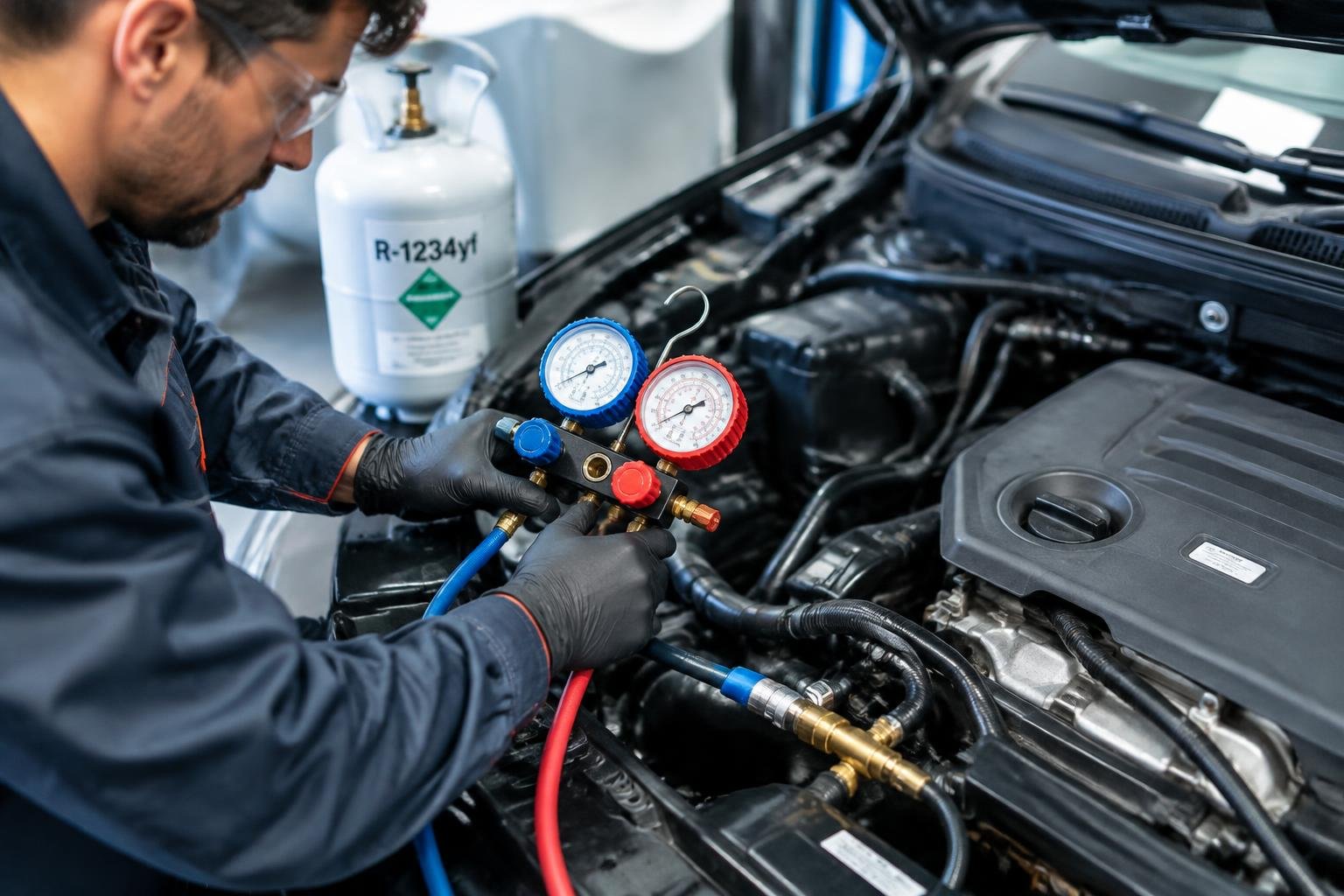
As older refrigerants are phased down, HFO-1234yf has become a common option for vehicle air-conditioning systems. Its low global warming potential offers a clear climate advantage over R-134a, but the refrigerant is mildly flammable and requires specific handling precautions. If you service or assess automotive cooling systems, those trade-offs matter at the service bay and in a crash scenario.
Key Takeaways:
- HFO-1234yf has a much lower global warming potential than R-134a, making it a lower-impact option for vehicle air-conditioning systems when released to the atmosphere.
- Its A2L classification means it is mildly flammable, so automotive systems require refrigerant-specific service equipment, leak controls, and handling procedures.
- HFO-1234yf is not impact-free: its breakdown in the environment can produce persistent trifluoroacetic acid, and its performance depends on system design and operating conditions.
Why Refrigerants Are Changing
Climate impact is driving the phase-down of refrigerants with high global warming potential (GWP), which can trap substantial heat if released into the atmosphere. As a vehicle or cooling system owner, you may encounter rules that restrict these substances and push manufacturers toward alternatives with a lower climate footprint. The change is especially relevant to mobile air conditioning, where refrigerant choice affects the emissions associated with servicing and leakage over a vehicle’s working life.
What HFO-1234yf Offers
HFO-1234yf has a global warming potential of 4, far below that of the older automotive refrigerant R-134a. In a vehicle air-conditioning system, it circulates through the compressor, condenser, expansion device, and evaporator to transfer heat from the cabin. Its pressure and cooling characteristics suit many modern automotive systems designed for this refrigerant, including systems that use dedicated service fittings and equipment.
Flammability and Safety Risks
Because HFO-1234yf is mildly flammable, you need equipment designed for its specific properties, including compatible service couplers and refrigerant recovery machines. In automotive systems, components and installation practices are engineered to limit ignition risks during normal operation. For background on the change from R-134a, see The Refrigerant Transition from R134a to R1234YF in Automotive Systems.
During service, you should use approved leak-detection tools, avoid ignition sources near a suspected leak, and follow the vehicle manufacturer’s recovery and charging procedures. A qualified technician also needs to identify the refrigerant before connecting equipment, since mixing refrigerants or using incompatible tools can create additional hazards. Ventilation, correct labeling, and proper handling of recovered refrigerant are practical safeguards in a repair bay.
Environmental Trade-Offs
Replacing a high-global-warming-potential refrigerant with HFO-1234yf reduces the direct climate impact of refrigerant released from a vehicle’s air-conditioning system. Leakage during servicing or from damaged components still releases refrigerant, and its breakdown in the atmosphere can produce trifluoroacetic acid, a persistent compound whose environmental accumulation warrants continued scrutiny. For background on its consumer-use approval, see 1234yf Approved Consumer Use – A/C Pro®.
Efficiency, Compatibility, and Adoption
Practical Requirements
For your system to deliver practical benefits, its energy efficiency must remain strong under real operating conditions, not just on a specification sheet. HFO-1234yf requires equipment designed for its pressure and material characteristics; it is not a direct substitute for R-134a in an unchanged system. Your adoption costs also include service equipment and technician training, with suitable recovery machines, leak detection tools, and safe handling procedures needed in the workshop.
How HFO-1234yf Compares with Other Refrigerants
Compared with R-134a, HFO-1234yf has a much lower global warming potential, so a vehicle refrigerant leak carries less climate impact. R-134a is nonflammable, while HFO-1234yf is classified as mildly flammable and requires equipment designed for that refrigerant. For you, the distinction is practical: the lower climate impact comes with specific handling and system requirements, not a drop-in substitution.
Against carbon dioxide refrigerant, HFO-1234yf operates at lower pressures, while CO₂ systems use high-pressure components and have different efficiency characteristics across operating conditions. Both offer low direct climate impact compared with R-134a, but their service procedures and hardware differ. In a vehicle designed for HFO-1234yf, the choice is reflected in the refrigerant label, dedicated fittings, and compatible recovery equipment.
Final Words
HFO-1234yf makes the refrigerant transition cleaner by sharply reducing the climate impact of leaks compared with R-134a, but it does not eliminate safety or environmental trade-offs. You still need systems designed for its mildly flammable classification, including compatible components, leak detection, and service procedures that prevent ignition. Its atmospheric breakdown also produces trifluoroacetic acid, a persistent compound that warrants attention. For your vehicle or service operation, the outcome depends on correct equipment, trained technicians, and careful refrigerant handling.