

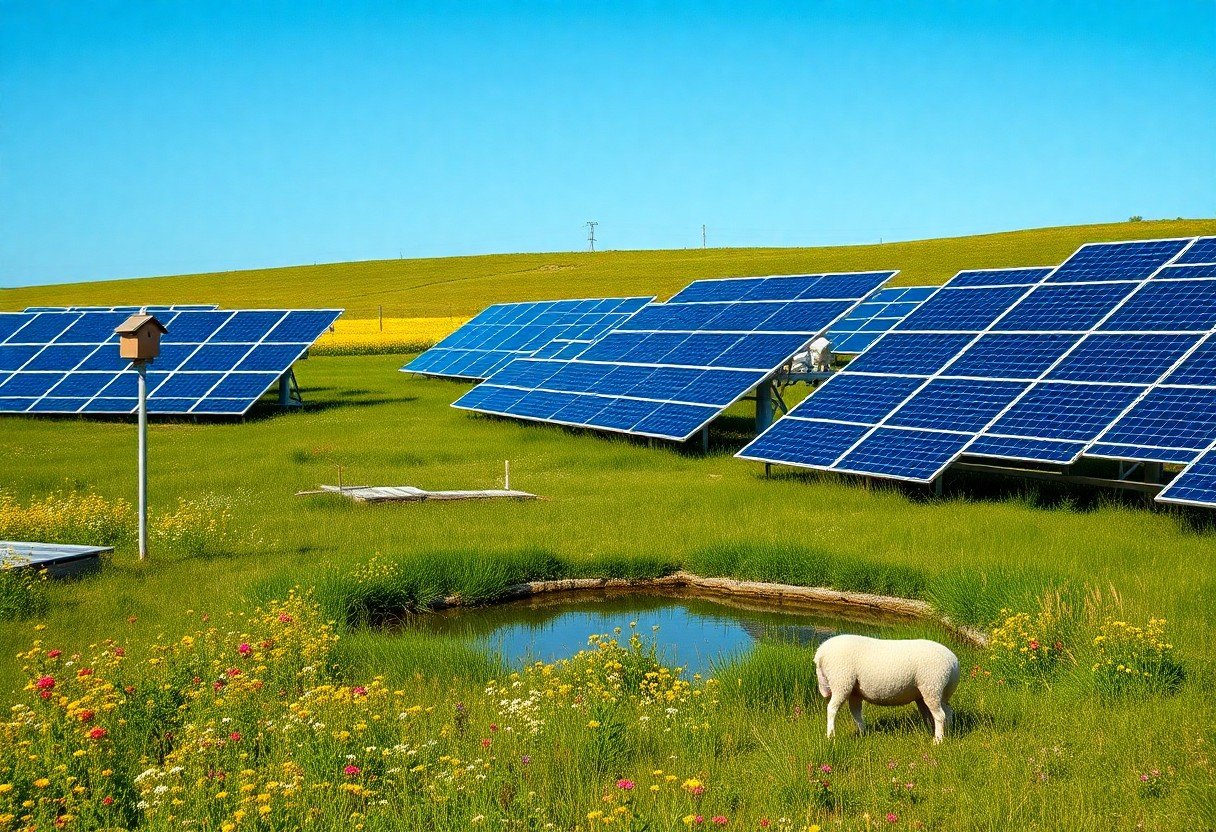
With solar farms sited and managed for biodiversity, you can restore habitats, increase native plant cover, support pollinators, improve soil health, and create wildlife corridors while generating renewable energy.
Key Takeaways:
- Solar farms can support native plants and pollinators by planting native wildflower mixes, creating pollinator corridors between arrays, and reducing mowing and herbicide use to boost on-site species diversity.
- Dual-use approaches such as agrivoltaics and managed grazing maintain continuous vegetation cover, provide forage and shelter for wildlife, and increase structural habitat complexity.
- Siting projects on degraded or brownfield sites and pairing operations with monitoring, adaptive management, and conservation partnerships maximizes habitat restoration benefits.
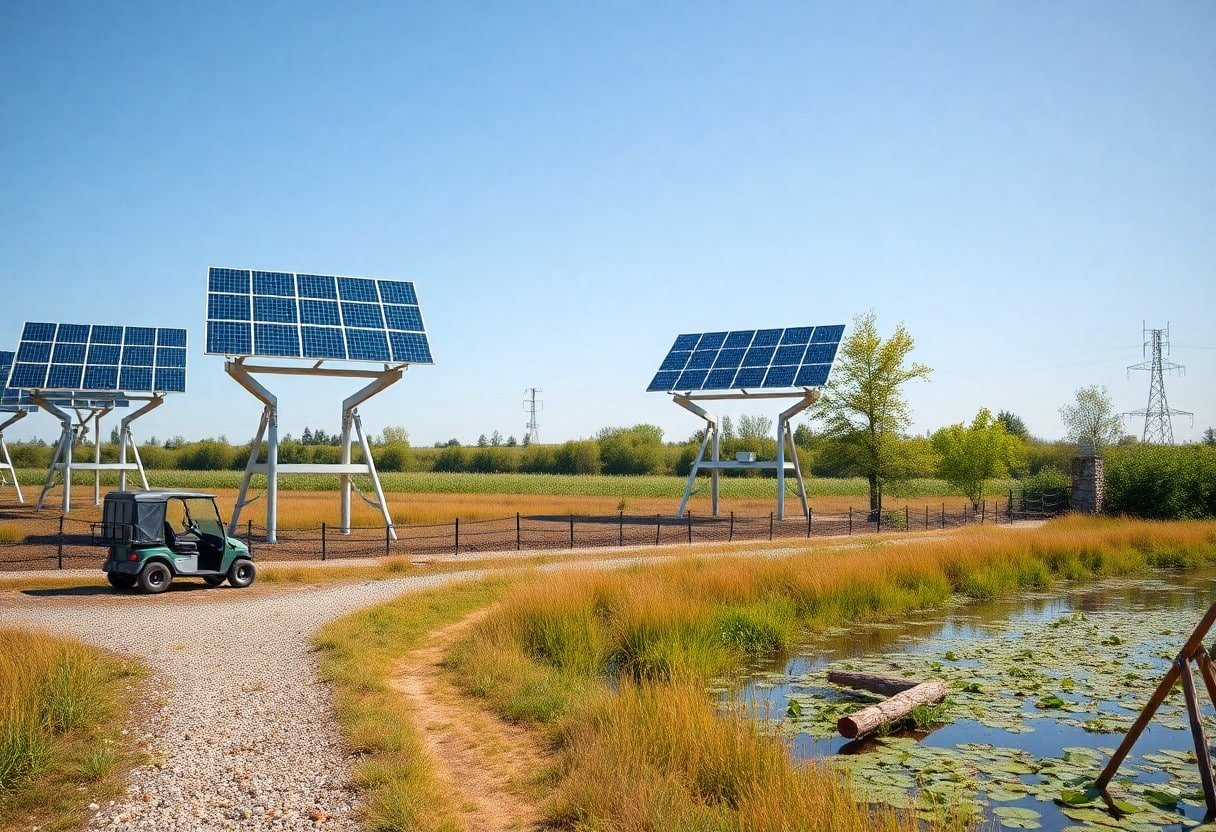
Strategic Vegetation Management
You balance vegetation to protect panels while creating habitat, using mowing regimes, pollinator corridors, and structural diversity to support insects, birds, and small mammals without compromising energy yield.
Establishing Native Grasslands and Wildflower Meadows
When you seed diverse native grasses and wildflowers, you create continuous forage, nesting cover, and improved soil structure; choose regionally adapted mixes and phased plantings to ensure establishment and seasonal resources.
Integrated Weed Management and Invasive Species Control
Prioritize integrated tactics so you limit invasives through regular monitoring, targeted mechanical removal, spot herbicide use only when needed, and rapid reseeding with natives to maintain habitat quality.
Combine regular surveys with mapped priorities so you detect incursions early; apply threshold-based responses-hand-pull or mow small patches, use spot treatments for persistent species, reseed promptly with natives, train crews on ID, and track outcomes to refine timing and methods year to year.
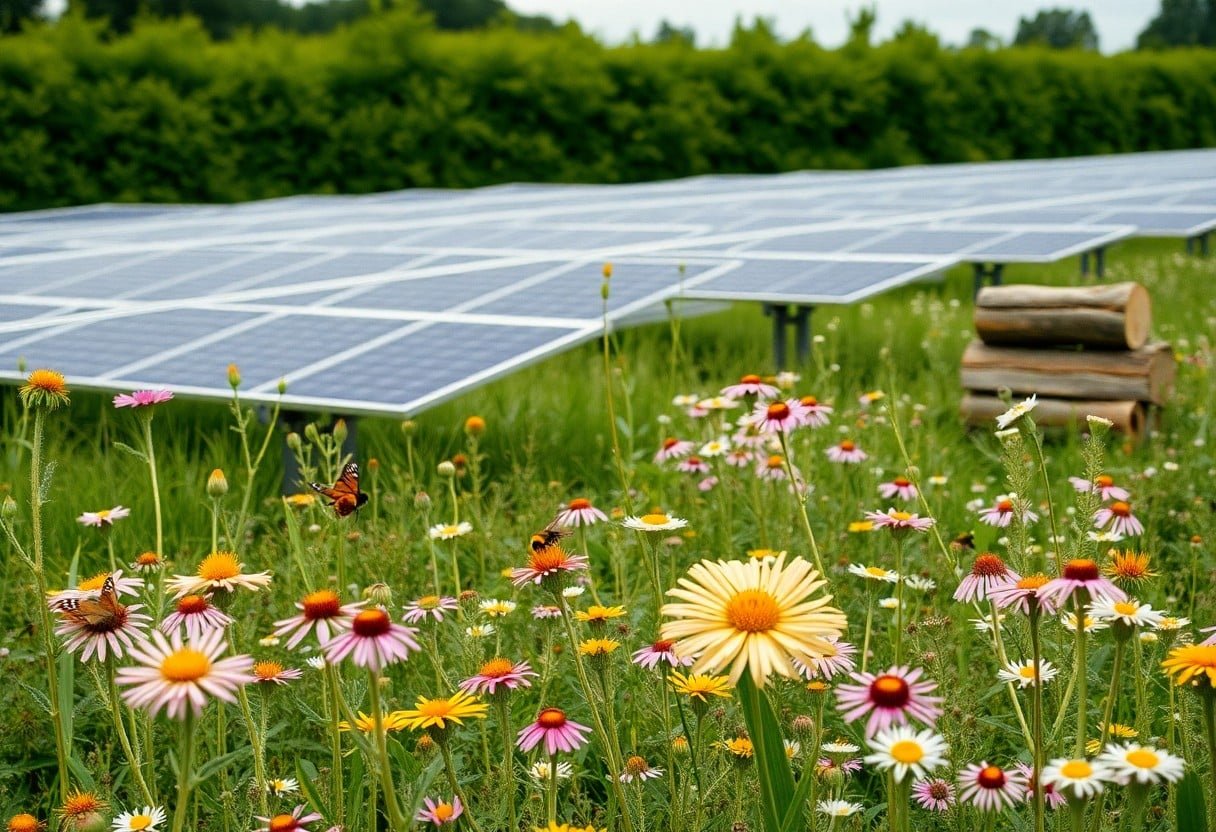
Enhancing Pollinator and Insect Populations
Solar arrays can be managed as pollinator corridors, where you plant native nectar-rich species and follow guidance like New solar farms can benefit nature – here’s how to increase insect diversity and ecosystem services on-site.
Creating Specialized Foraging Habitats Under Solar Arrays
Under panel shade you can design layered plantings that sustain bees, butterflies and other insects year-round while reducing mowing and improving soil, increasing on-site food sources and shelter.
Implementing Nesting Infrastructure for Solitary Bees and Beneficial Insects
Provide nesting banks, bee hotels and sparing bare-ground patches so you support ground-nesting and cavity-nesting species across the site, boosting reproduction and pollination locally.
You can site nesting banks on south-facing slopes with sandy, well-drained substrate, build bee hotels with varied hole diameters (3-10 mm) and protect bare-ground patches from compaction; place structures within 50 m of rich foraging areas, avoid pesticides nearby, replace damaged tubes annually, and monitor occupancy so you adapt spacing and materials to local species needs.
Facilitating Wildlife Movement and Connectivity
Solar arrays with connected grassy corridors let you maintain animal routes across sites, reducing habitat fragmentation and supporting seasonal movements; see practical guidance at Biodiversity & Habitat | Responsible Solar.
Permeable Fencing and the Development of Wildlife Corridors
Permeable fencing allows you to preserve underpass routes for small mammals, reptiles, and amphibians while keeping livestock and equipment contained, sustaining connected movement beneath and between arrays.
Impact Mitigation Strategies for Avian and Chiropteran Species
Adaptive measures help you reduce collision and displacement risks for birds and bats through careful siting, visual markers, and timing operations outside migration peaks.
You should combine pre-construction surveys, species-specific deterrents (such as line markers and non-reflective panel treatments), seasonal work windows, limited night lighting, and post-construction monitoring to identify impacts; use results to adjust layouts, install roost alternatives, and coordinate with wildlife agencies for targeted, evidence-based mitigation.

Soil Regeneration and Carbon Sequestration
Soil under solar arrays accumulates organic matter as you reduce disturbance, allowing microbial communities and deep-rooted plants to build stable carbon stores while restoring fertility and structure over time.
Microclimate Effects on Soil Moisture and Nutrient Retention
Shading by panels lowers daytime evaporation so you retain soil moisture longer, which helps nutrients remain available in the root zone and supports diverse plant and microbial activity.
Long-term Recovery of Degraded Agricultural Land
Passive regeneration beneath arrays allows you to cut tillage and chemical inputs, letting native grasses and legumes rebuild organic matter and slowly reverse soil degradation.
Incorporating tailored seed mixes, periodic light grazing and targeted amendments helps you speed recovery by increasing root diversity and organic inputs; you should monitor soil organic carbon, pH and compaction annually and adjust management. Over a decade these practices can convert compacted, nutrient-poor fields into higher-carbon soils that support pollinators, wildlife and improved crop potential.
Measuring Success: Biodiversity Net Gain
Baseline metrics guide you to compare pre- and post-installation species abundance and habitat quality, helping quantify biodiversity net gain and justify adaptive management for solar sites.
Standardized Ecological Monitoring and Benchmarking Protocols
Consistent methods let you compare species counts, vegetation structure and soil health across sites, producing repeatable metrics for biodiversity net gain reporting and stakeholder accountability.
Utilizing Remote Sensing and eDNA for Biodiversity Assessment
Remote tools enable you to monitor habitat change and detect species signatures rapidly, while eDNA sampling reveals cryptic aquatic and soil organisms that traditional surveys might miss.
Using high-resolution satellite imagery and drone multispectral surveys, you can map vegetation heterogeneity and seasonal dynamics, and pair those maps with targeted eDNA assays to confirm species presence, track rare taxa, and validate large-scale remote observations for rigorous monitoring.
Policy Frameworks and Industry Best Practices
Policy frameworks and best-practice guidelines help you align solar projects with biodiversity goals; consult resources like the Wildlife and Solar Power fact sheet to apply habitat-friendly siting, buffer zones and adaptive management.
Regulatory Incentives for Nature-Positive Solar Development
Incentives such as tax credits and expedited permitting reward you for preserving habitat, using pollinator-friendly groundcover, and meeting biodiversity performance metrics.
Community Engagement and Educational Outreach Opportunities
Community outreach lets you build local support through site tours, volunteer habitat planting, and school programs that highlight pollinator and wildlife benefits.
You should co-design outreach with neighbors and schools, host citizen-science monitoring and volunteer planting days, install interpretive signage, and offer internships or workshops so community members can observe habitat outcomes and report concerns.
To wrap up
With these considerations you can design solar farms that protect native plants, create pollinator corridors, restore soil and wetlands, and provide habitat patches for wildlife while maintaining energy production, giving you measurable biodiversity gains and long-term ecological benefits.