

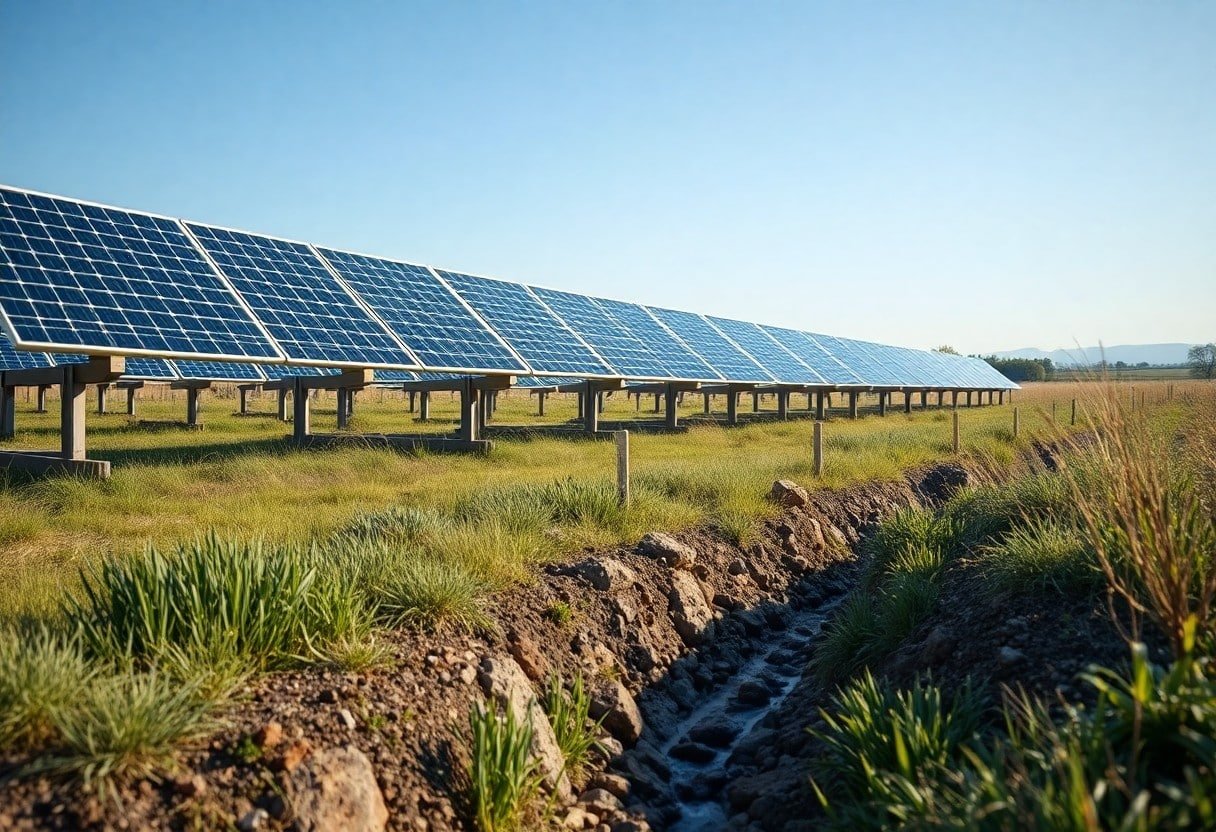

It’s through strategic panel placement, native groundcover, and integrated drainage that you reduce soil erosion, enhance infiltration, slow peak runoff, and trap sediments, so solar PV sites protect topsoil and improve stormwater management.
Key Takeaways:
- Solar PV arrays reduce soil erosion by shading the ground from direct raindrop impact and wind, while racking and maintained ground cover limit bare-soil exposure.
- Vegetation under and between panels, especially native grasses, increases infiltration, strengthens root networks, and traps sediment to lower runoff volumes and peak flows.
- Site design features such as graded swales, permeable access tracks, and array-induced microtopography promote stormwater detention and filtration, improving water quality and reducing downstream flood risk.
Ground Cover Strategies for Erosion Control
Groundcover mixes reduce erosion beneath arrays by protecting soil, slowing runoff, and increasing infiltration, so you maintain soil structure and minimize sediment loss.
Establishing Native Vegetation and Deep-Rooted Perennials
Native grasses and deep-rooted perennials stabilize slopes, increase soil porosity, and attract pollinators; you should choose locally adapted species and stagger plantings to ensure continuous root reinforcement and ground cover.
Reducing Surface Runoff through Biological Stabilization
Biological treatments like live staking, coir logs, and vegetated swales slow flows and trap sediment, so you reduce peak runoff and protect downstream water quality.
You can combine live fascines, brush layering, coir blankets, vegetated swales, and deep-rooting meadow mixes to slow sheet flow, promote infiltration, and bind soil; design installations to match slope, soil texture, and expected storm events, monitor vegetation cover and erosion pins, and adjust species mixes and maintenance based on site performance.
Hydrological Impacts of PV Array Configurations
You should optimize array spacing and row orientation to direct sheet flow into vegetated swales, reducing concentrated runoff and erosion; see Solar farms with stormwater controls mitigate runoff, … for field evidence.
Managing Drip Line Scour and Soil Displacement
Design drip-line pads and energy-dissipating outlets so you prevent soil displacement beneath panels; apply gravel aprons, mulch, or short turf and use micro-terracing to break drop height and stop scour where concentrated drips occur.
Engineered Drainage Systems and Permeable Surfaces
Engineered drainage and permeable access lanes let you capture, detain, and infiltrate runoff; vegetated swales, stone trenches, and permeable paving lower peak flows and enhance groundwater recharge while reducing sediment transport.
Consider sizing swales and detention basins to local design storms and install check dams, geotextile-lined basins, and graded outfalls to slow flow and trap sediment; combine permeable roads with amended subgrades and scheduled maintenance so you sustain infiltration rates and protect soils across the site.
Microclimatic Influence on Soil Moisture Retention
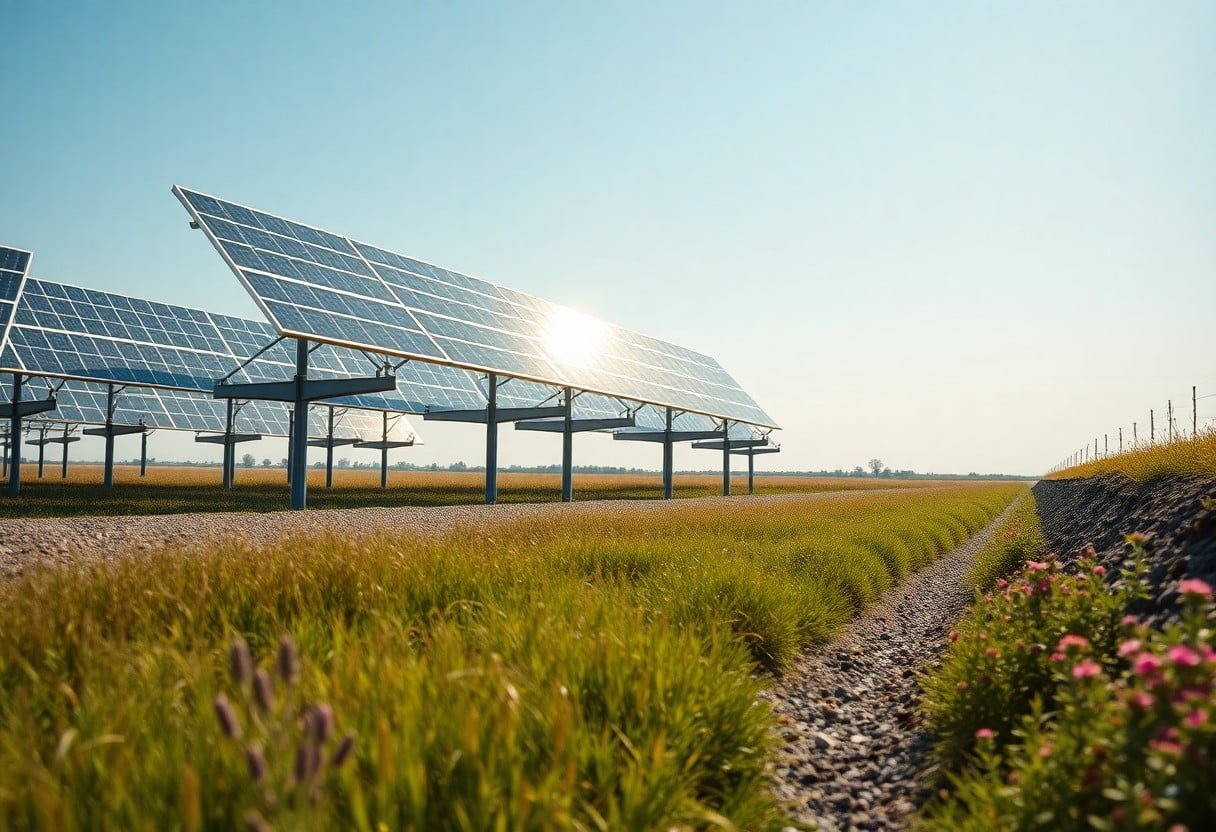
Solar PV arrays create shaded, cooler zones that reduce soil evaporation and wind-driven moisture loss, so you observe improved moisture retention beneath panels and in adjacent strips, helping sustain vegetation and limit erosion.
Shading Effects on Evapotranspiration Rates
Shading from panel rows lowers surface and leaf temperatures, reducing evapotranspiration rates so you retain more soil water for plant use and decrease irrigation needs and runoff during dry periods.
Enhancing Water Infiltration in Arid Environments
Designs pairing raised panels with permeable ground treatments let you capture intense, short storms and boost infiltration, recharging deeper soil layers in arid environments while cutting surface runoff.
Careful placement of panels, paired with graded swales, microbasins and porous paving, helps you slow runoff, concentrate infiltration beneath vegetated strips, and increase percolation to the root zone. Soil amendments, targeted revegetation with native drought-tolerant species, and periodic tilling where appropriate further enhance water-holding capacity, reduce crusting, and support longer-term soil moisture recovery in arid sites.
Soil Health and Nutrient Cycling Enhancement
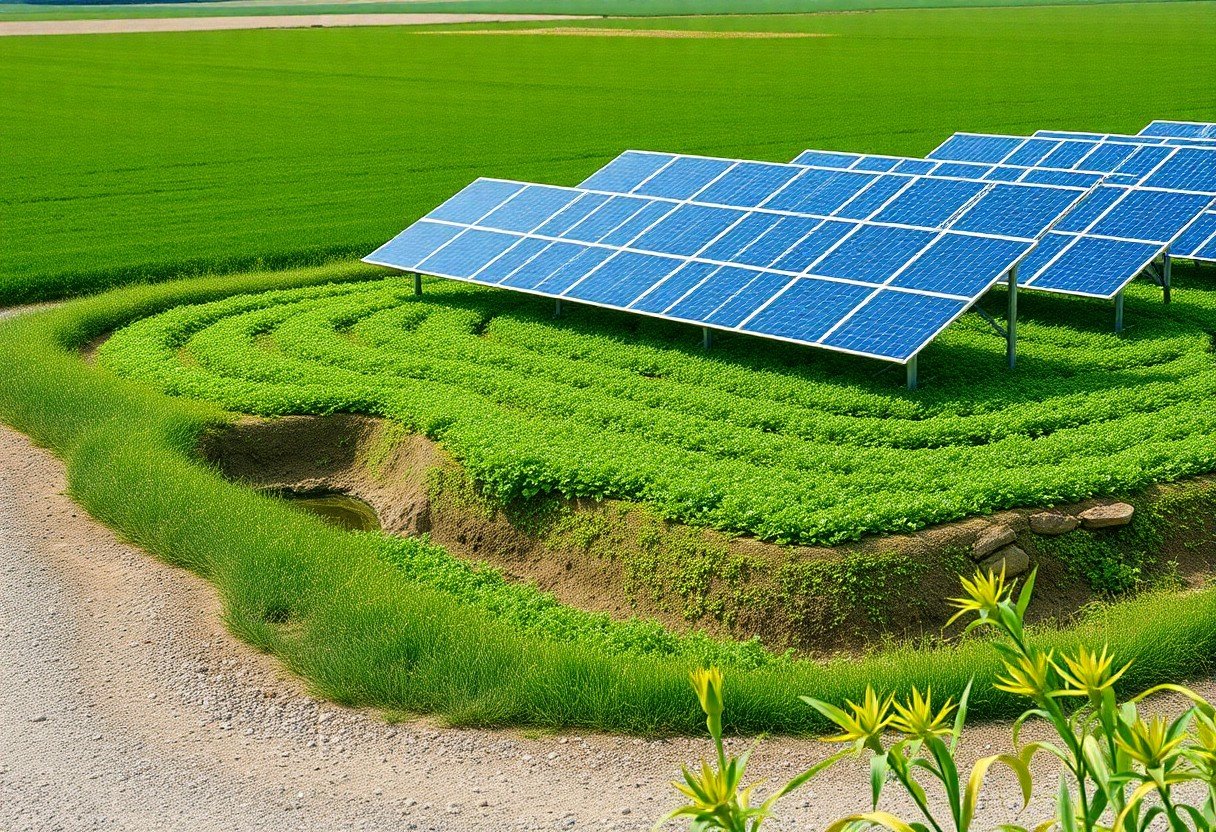
Solar arrays shade and protect groundcover, which helps you reduce erosion, retain nutrients, and improve soil structure while you monitor runoff-see Letting the sunshine in and monitoring stormwater runoff for practical monitoring examples.
Organic Matter Accumulation and Carbon Sequestration
Organic residues under panels increase your soil organic matter, enhancing water retention and storing carbon while managed vegetation prevents compaction and supports longer-term nutrient cycling.
Promoting Microbial Biodiversity and Soil Porosity
Microbial communities expand beneath diversified plantings, improving porosity and nutrient mineralization so you experience better infiltration and reduced runoff peaks.
Enhanced microbial diversity results when you plant diverse native mixes, avoid heavy machinery compaction, and maintain litter layers; microbes increase aggregate formation and pore continuity, improving infiltration rates, nutrient turnover, and resilience to storm pulses while reducing sediment transport to downstream systems.
Integrated Stormwater Management Practices
Solar PV arrays integrated with swales, basins, and permeable surfaces reduce runoff, enhance infiltration, and minimize erosion; you manage grading and cover crops to stabilize soils and direct stormwater into designed treatment paths.
Implementation of Bioswales and Detention Basins
Bioswales and detention basins slow flows, trap sediments, and store floodwaters on-site; you size and place them to capture peak runoff from panels, using native plantings to increase sediment capture and encourage infiltration.
Natural Filtration and Groundwater Recharge Mechanisms
Filtration through vegetated soils beneath arrays removes particulates and nutrients while promoting infiltration; you preserve soil structure and add engineered media where needed to accelerate groundwater recharge.
You can optimize natural filtration by maintaining high-permeability soil zones, avoiding compaction during construction, and installing graded trenches or infiltration basins to intercept concentrated flows; you should select deep-rooted, low-maintenance vegetation to enhance macropore formation and microbial uptake, test infiltration rates before final grading, and include pretreatment (sediment forebays, grassed buffers) to prevent clogging and protect recharge capacity over time.

Land Stewardship and Long-Term Site Sustainability
Site stewardship and long-term plant design reduce erosion and improve infiltration; you can review practical controls in Solar Energy and Stormwater: Erosion, Sediment and Their … to align PV layouts with stormwater management.
Agrivoltaic Synergies for Topsoil Preservation
Under agrivoltaic arrangements you combine shade, targeted seeding, and perennial groundcovers to limit erosion, boost organic matter, and keep topsoil intact for both crops and PV longevity.
Minimizing Compaction through Low-Impact Maintenance
Regularly schedule low-pressure vehicles and avoid wet-season access so you limit compaction, preserve pore structure, and maintain infiltration across the site.
When planning maintenance, map high-traffic routes, use geotextile mats or temporary access pads, adjust tire pressures, prefer tracked equipment, and monitor bulk density so you can target remediation like subsoiling or cover cropping where compaction reduces infiltration and root growth.
To wrap up
Considering all points, you benefit from reduced soil erosion and improved infiltration when solar PV arrays preserve vegetation, add ground cover like grasses and native plants, and use swales or retention features that slow runoff, capture sediments, and enhance stormwater management on-site.