


Just explore how dual-use solar and land sharing can boost local renewable generation, preserve agricultural productivity, create new revenue streams, and improve community resilience, so you can weigh environmental, economic, and social outcomes when planning projects.
Key Takeaways:
- Dual-use solar combines photovoltaic arrays with agriculture or grazing to increase land productivity and generate supplementary income for landowners while maintaining agricultural functions.
- Community-shared solar expands local access to clean power, lowers energy bills for renters and low-income households, and enables local subscription or ownership models.
- Targeted policies, adaptive site design, and stakeholder engagement address zoning, crop compatibility, and ecological impacts to help deliver equitable economic and environmental outcomes.
The Mechanics of Agrivoltaics and Land Sharing
Agrivoltaic systems pair solar panels with crops so you capture energy while maintaining production, and shared land agreements increase revenue and community benefits.
Design Innovations for Dual-Use Solar Infrastructure
Adjustable racking and raised panels let you control shade and machinery access, integrate sensors and drip irrigation, and tailor microclimates to improve yields and energy capture.
Compatibility of Solar Arrays with Diverse Crop Cycles
Crop rotations, planting density and timed harvesting let you align growth cycles with panel tilt and spacing so both production types coexist without major trade-offs.
Planning shade-tolerant varieties and adjusting row orientation helps you match light, water and labor needs to array design; trials show legumes and root crops often perform well under partial shade while sustaining steady solar output.

Economic Resilience for Local Landowners
You can increase income and protect crops by combining grazing, shade-tolerant plantings, and solar arrays; see models in Agrivoltaics: How solar and farms form the perfect partnership that show shared land boosts yields and lease payments while keeping you farming.
Revenue Diversification through Renewable Energy Production
Revenue from solar leases and shared-energy projects gives you steady cash flow, reducing reliance on crop prices while letting you keep farming and selling produce locally.
Long-term Financial Stability for Small-Scale Agriculture
Financial planning tied to predictable solar income helps you manage debt, invest in equipment, and withstand lean seasons without selling prime acreage.
Securing steady solar lease payments or shared-energy revenue gives you predictable cash to cover operating costs, refinance loans, and plan multi-year rotations; you can reinvest in irrigation, organic certification, or value-added processing, and access tax credits or grants to offset installation costs.
Environmental Impacts and Resource Optimization
You can assess how dual-use solar and land sharing reduce resource strain while boosting local resilience; see Solar Energy Expansion and its Impacts on Rural … for case examples of trade-offs and mitigation strategies.
Microclimate Regulation and Water Conservation Benefits
When you integrate panels with crops, shading moderates daytime temperatures and reduces evaporation, cutting irrigation demands and improving water efficiency for farmers.
Biodiversity Enhancement and Soil Health Management
If you design pollinator-friendly planting beneath arrays, habitat connectivity and beneficial insects increase while soil erosion declines.
As you prioritize native flowering strips, deep-rooted cover crops and reduced tillage under and between panels, you restore soil structure, enhance organic matter and improve nutrient cycling; regular soil testing and adaptive grazing keep compaction low, limit runoff, and sustain yields while strengthening local ecological functions over time.

Community Engagement and Social License to Operate
Community trust determines whether you can gain social license, so involve residents early, share benefits, and adapt project design to local needs.
Mitigating Land-Use Conflicts via Collaborative Planning
Local stakeholders help you resolve conflicts by mapping priorities, agreeing buffer zones, and setting shared rules that balance solar panels and agricultural use.
Strengthening Local Energy Independence and Security
You increase energy security by pooling solar generation and storage, reducing outage risks and lowering household bills while retaining local control over rates and dispatch.
Distributed systems allow you to prioritize critical services, implement community microgrids, and coordinate demand response with storage; clear governance, tariff design, and local training let you operate reliably, sell surplus to neighbors, and respond rapidly during grid disruptions.
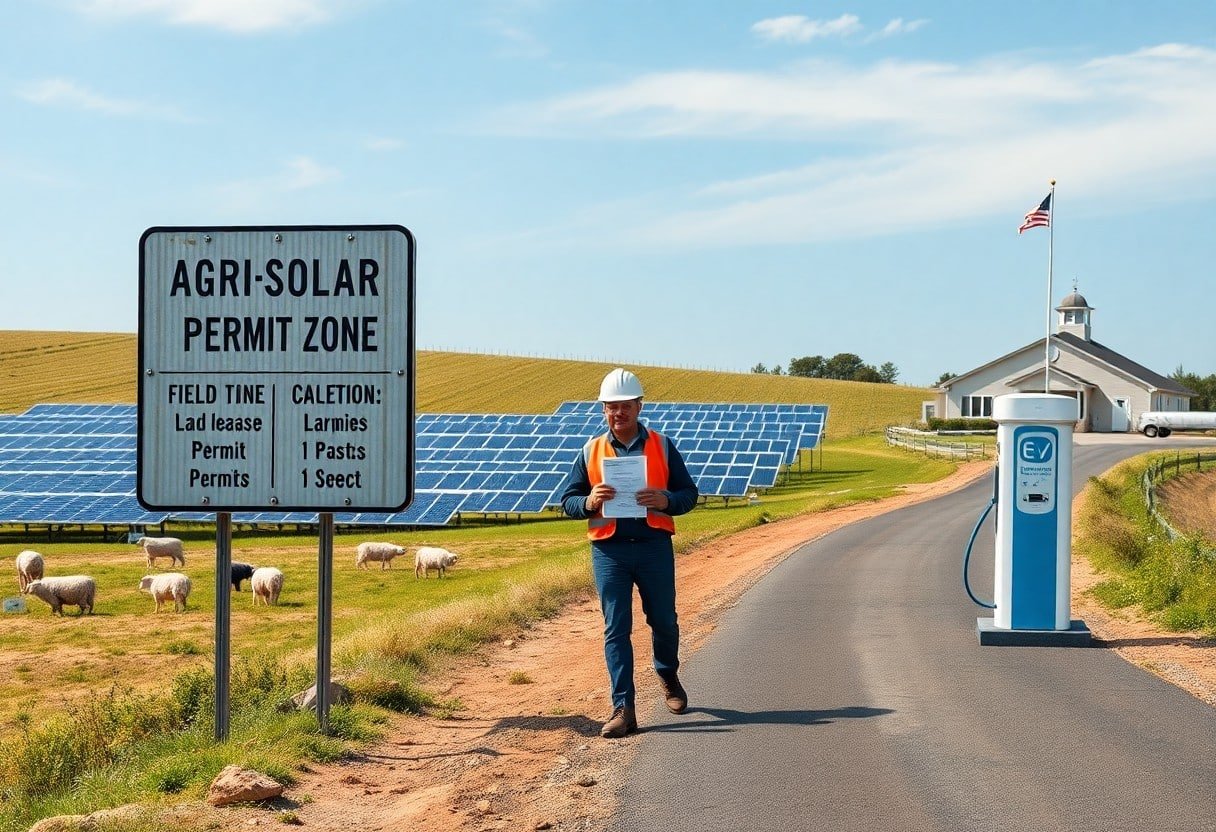
Policy Landscapes and Regulatory Support
National and local regulations shape how you site dual-use solar, setting permitting timelines, environmental reviews, and community benefit requirements that determine project feasibility and public acceptance.
Zoning Innovations and Agricultural Land Protection
Zoning reforms let you combine production and agriculture, protect prime farmland, and require setback or pollinator-friendly buffers to reduce conflicts and preserve farming livelihoods.
Financial Incentives for Integrated Renewable Projects
Incentives such as tax credits, grants, and feed-in tariffs can make you prioritize dual-use designs by improving returns and lowering upfront costs for community-linked projects.
Programs that combine tax credits, low-interest loans, and performance-based payments can change your project’s financial profile by rewarding energy generation, crop yields, and community benefits; you can pair site-prep grants with revenue guarantees, aggregated procurement, and equity incentives to increase bankability and local ownership.
Overcoming Technical and Scalability Barriers
Scaling dual-use projects requires clear engineering standards, modular designs, and farmer-friendly contracts; you can learn practical case studies in How Solar and Agriculture Benefit Landowners and Land … to guide site selection and partnerships.
Optimizing Grid Interconnection for Rural Sites
Rural interconnection planning asks you to coordinate with utilities, advance studies early, and size transformers to minimize curtailment and upgrade costs.
Balancing Operational Maintenance for Energy and Agriculture
Operational maintenance requires you to schedule panel cleaning, grazing rotations, and equipment checks so agricultural routines continue without sacrificing generation.
You should develop a joint operations plan that defines seasonal task windows, responsibilities, and safe access routes, aligning PV inspection cycles with planting and harvest. Train crews on crop-friendly procedures, use low-impact vehicles and anti-reflective coatings when needed, and set remote-monitoring thresholds that trigger maintenance without disturbing farming activity. Clear communication protocols and contingency plans reduce crop loss risk while preserving output.

Summing up
Taking this into account, you should expect dual-use solar and land sharing to expand clean energy access, diversify local income through crop or grazing integration, and reduce land conflicts when projects include clear agreements and fair benefits; successful deployments require careful planning, technical adaptation, and strong local participation.