
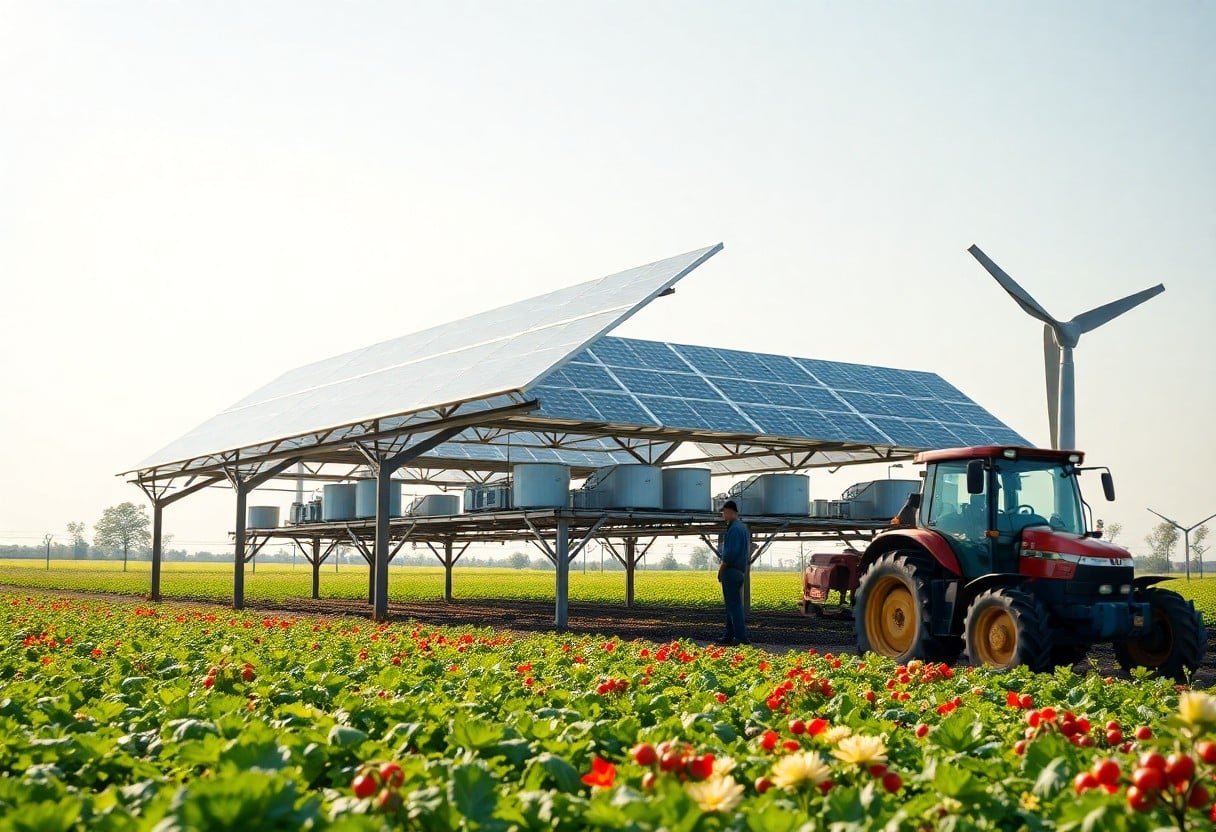
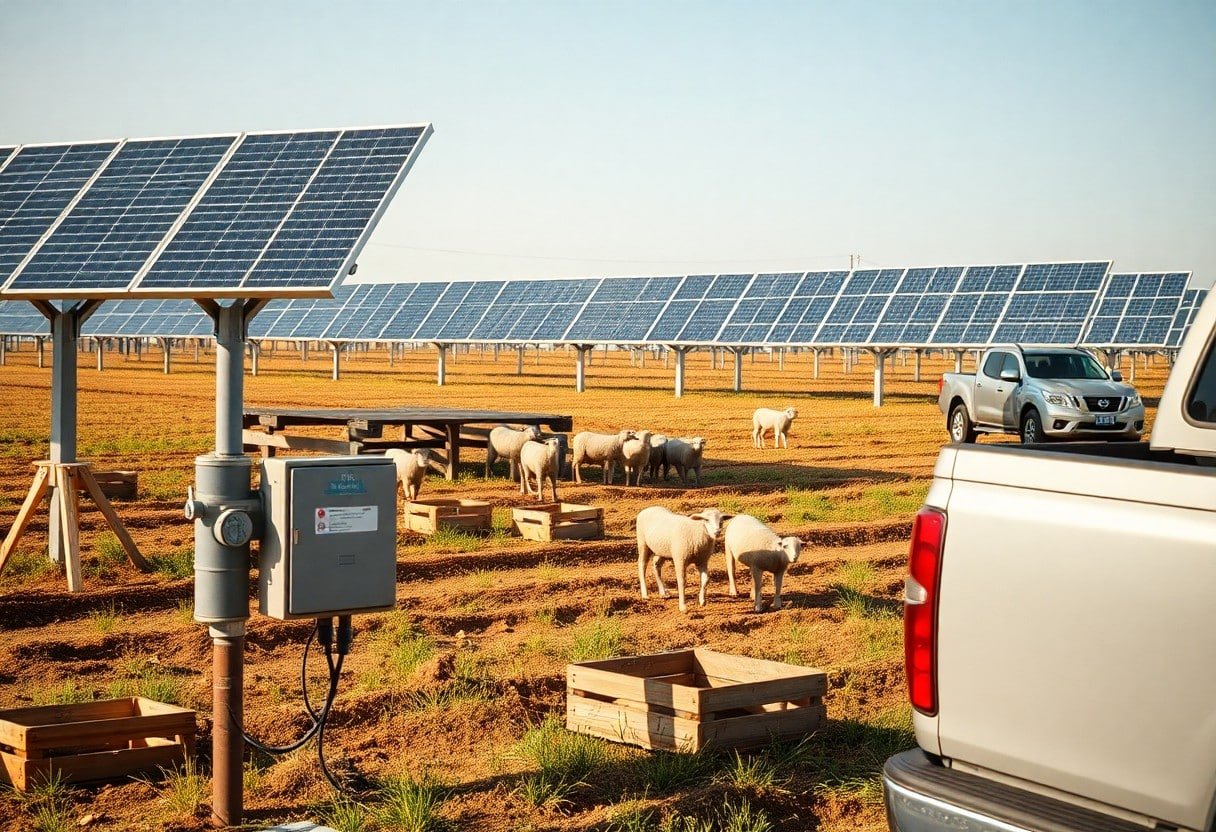
Over a hectare, you can combine photovoltaic arrays with crops to increase land productivity, cut runoff and emissions, and manage microclimates using panel spacing, crop choice, and shared irrigation.
Key Takeaways:
- Agrovoltaics increases land-use efficiency by producing food and electricity on the same plot, reducing pressure to convert natural habitats for solar deployment.
- Partial shade from elevated panels moderates temperature and evapotranspiration, stabilizing crop yields and lowering irrigation demand in arid and semi-arid regions.
- Combining PV with crops or grazing reduces lifecycle emissions per unit output and diversifies farm income while supporting pollinators and soil health when arrays are sited and managed for biodiversity.
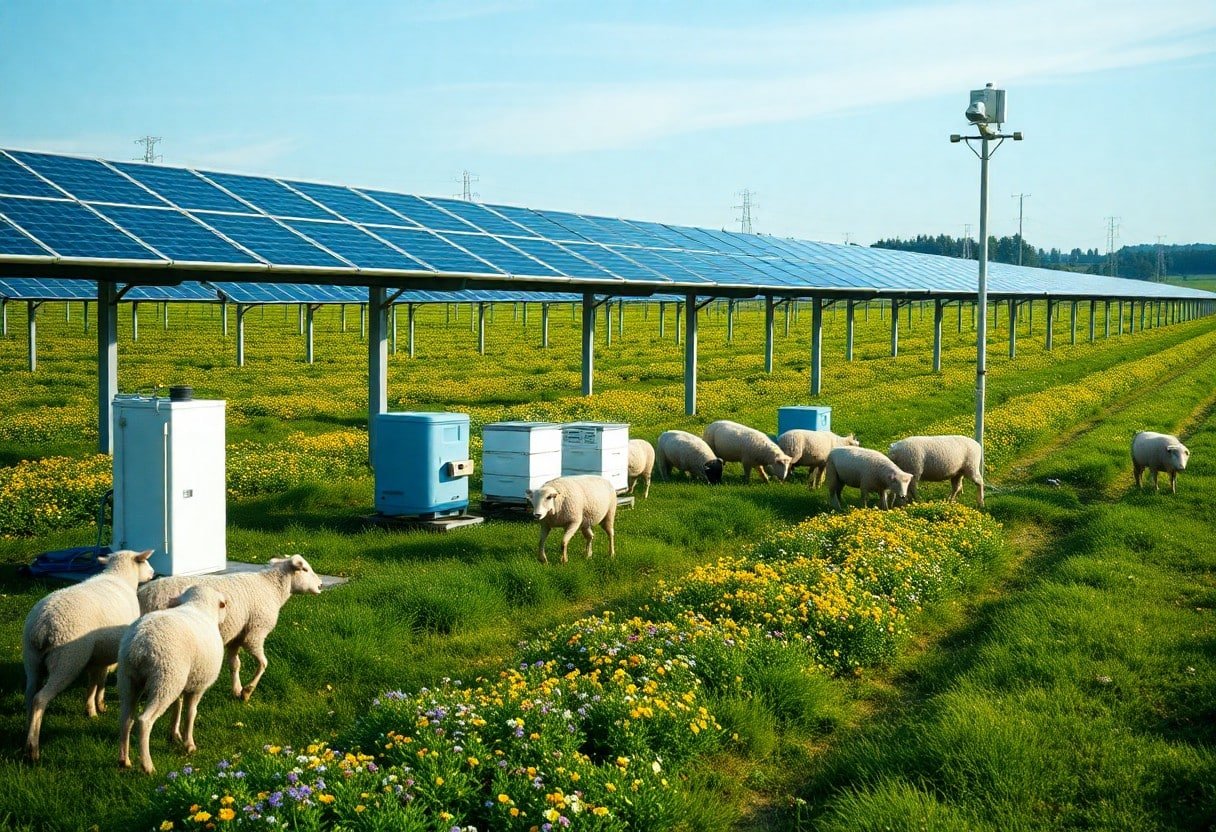
The Synergy of Dual-Land Use Systems
Agrovoltaic systems let you produce crops beneath solar arrays while capturing renewable energy, boosting total productivity and ecosystem services on the same acreage. You can reduce competition for space, moderate microclimates for sensitive crops, and diversify income streams without converting additional fields.
Defining the Agrovoltaic Framework
You treat agrovoltaics as integrated systems where PV panels and crops share resources, microclimates, and management; design choices-panel height, spacing, tilt-and crop selection shape simultaneous energy and harvest outcomes for your site.
Maximizing Land Equivalent Ratio (LER)
Maximizing LER shows you whether combined outputs outperform separate production: values above 1 indicate superior productivity per hectare. You can modify array geometry and crop mixes to push LER above unity and increase both food and energy returns from the same footprint.
Calculating LER requires you to compare yields directly: LER = (crop yield in agrovoltaics / crop yield in monoculture) + (energy yield in agrovoltaics / energy yield in standalone PV). You should aim for LER > 1, and to reach that you can choose shade-tolerant or high-value understory crops, raise panel height and spacing, stagger seasons, apply targeted irrigation, and monitor microclimate and yields so you iteratively refine layout and management for better combined returns.
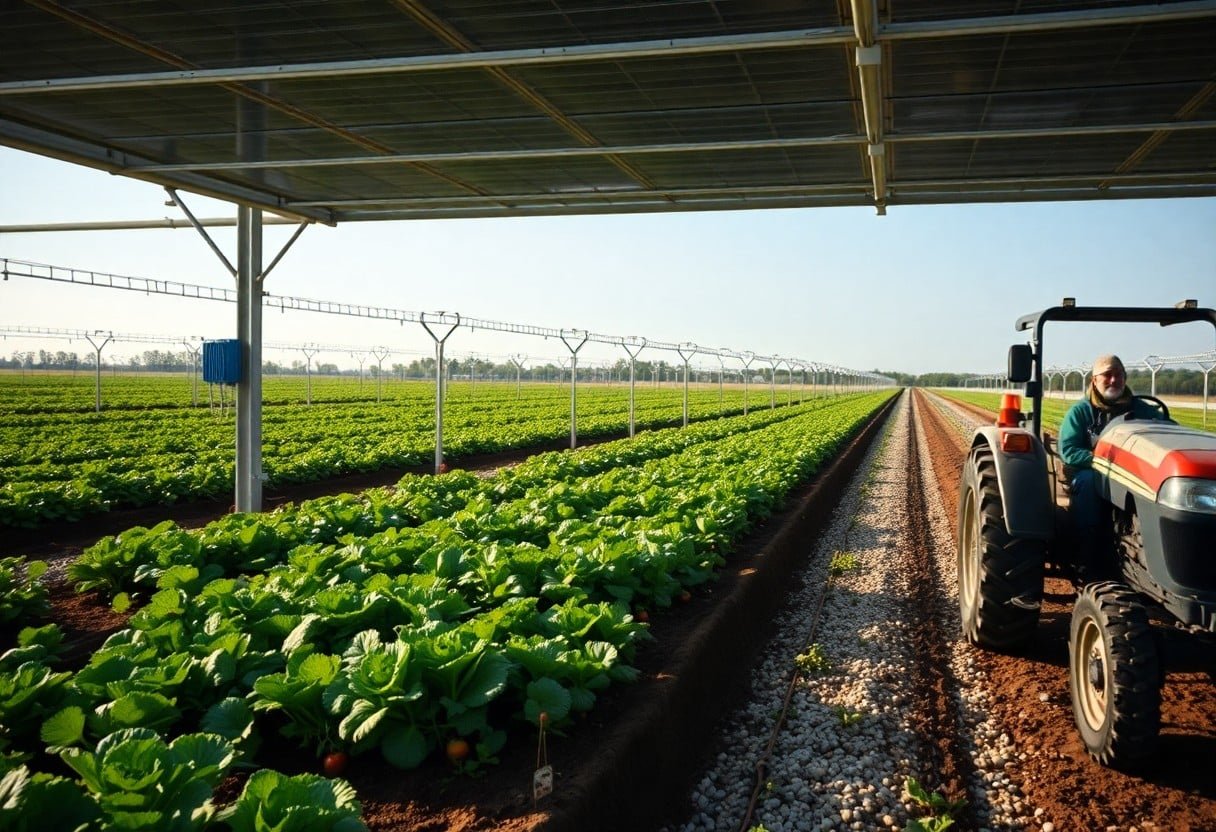
Optimizing Agricultural Yields Under Photovoltaic Arrays
You can increase yields beneath arrays by adjusting panel height, spacing and crop placement; recent trials show adaptive layouts improve both production and PV performance (see Solar solutions: Agrivoltaics offer array of options for farmland …).
Microclimate Regulation and Shading Effects
Shading from panels moderates temperature and evapotranspiration, so you can reduce heat stress and irrigation needs while managing light for critical crop growth stages.
Selection of Shade-Tolerant and High-Value Crops
Choose shade-tolerant and high-value species so you maximize income per hectare under reduced irradiance, pairing deep-rooted herbs with seasonal vegetables to optimize space and cash flow.
Assess site-specific irradiance maps, soil moisture and local markets before selecting varieties; you should run small-scale trials for yield and quality under partial shade, stagger planting to match light windows, prioritize short-cycle or premium crops, and plan rotations that maintain soil health while sustaining revenue.
Enhancing Solar Efficiency Through Plant Transpiration
Plant transpiration cools PV arrays during heat peaks, letting you capture higher output and reduce thermal stress; see research in Agrivoltaics: Pairing Solar Power and Agriculture in the Northwest.
The Cooling Effect of Vegetation on PV Modules
Vegetation-driven evapotranspiration lowers module temperatures so you gain immediate efficiency boosts and less frequent heat-related losses while managing crop choices beneath arrays.
Impact on Long-term Energy Generation Yields
Panel cooling from plant cover reduces degradation rates, so you can expect steadier annual generation and improved lifetime energy yield, depending on system design and microclimate.
You should monitor module temperatures to quantify reduced thermal stress and slowed encapsulant aging. You should balance shading patterns with crop light requirements and schedule regular cleaning to prevent humidity-related soiling losses. You can use modeling and long-term field trials to estimate net yield changes and select array height, row spacing, and crops that maximize combined energy and food output.
Environmental Stewardship and Resource Conservation
Agrovoltaic systems reduce water and habitat pressures by combining panel shading with agricultural practices, so you conserve resources, protect ecosystems, and sustain yields on the same land.
Reducing Evapotranspiration and Irrigation Requirements
Shading from PV arrays lowers plant temperatures, which helps you cut evapotranspiration and reduce irrigation frequency, improving water efficiency during heat or drought.
Promoting Soil Health and Local Biodiversity
Integrated groundcover and reduced soil exposure increase organic matter and microbial activity, allowing you to boost soil structure, nutrient cycling, and on-site biodiversity.
You can design planting schemes beneath panels to support pollinators, ground-nesting birds, and predatory insects while choosing cover crops that add biomass, suppress weeds, and enhance water infiltration. Rotational grazing or low-impact machinery further reduces compaction and increases root diversity, which raises carbon sequestration and stabilizes nutrients. Monitoring soil tests and adjusting organic amendments lets you address deficits without heavy synthetic inputs, preserving crop productivity and habitat function across the site.
Engineering and Design Solutions for Co-location
Design choices like elevated racks, row spacing, and crop-tolerant shading let you optimize both yield and generation, integrating irrigation routes and access while minimizing shading losses and soil compaction.
Vertical Mounting and Dynamic Tracking Systems
Tilted and vertically mounted panels with adaptive trackers allow you to balance light distribution, increasing midday generation while preserving morning and evening sunlight for crops.
Structural Configurations for Farm Machinery Access
Clearances and span widths designed to match your tractors and sprayers let you maintain routine operations without dismantling PV structures, reducing downtime and maintenance conflicts.
You can specify aisle widths, column placements, and low-impact foundations so machinery reaches every row; modular trackers and removable lower panels can be scheduled around planting, spraying, and harvesting to keep operations efficient and safe.
Overcoming Economic and Regulatory Barriers
You can reduce permitting delays and secure blended returns by citing research like Agrivoltaics: Food, Energy, and Water Solutions, aligning proposals with regional goals and packaging revenue models to appeal to investors and farmers.
Balancing Capital Investment with Dual Revenue Streams
Investors expect clear cash-flow models showing you recover capital through combined crop income and solar revenue, supported by phased deployment and cooperative ownership to lower upfront risk.
Navigating Land-Use Zoning and Agricultural Subsidies
Policy adjustments can open subsidy access and mixed-use permits when you present adaptive management plans and crop-compatible array designs to zoning boards.
Local codes vary widely; you should map parcel classifications, propose conditional-use permits, pursue agricultural tax assessments, and coordinate with extension services to document crop compatibility and water impacts, while pilot demonstrations and clear maintenance agreements help convince planners and unlock subsidy eligibility.
Final Words
Taking this into account, you can balance food production and solar benefits by siting panels for partial shade, selecting compatible crops, adjusting irrigation and management, and monitoring yields so your farm sustains productivity while delivering clean energy and biodiversity gains.