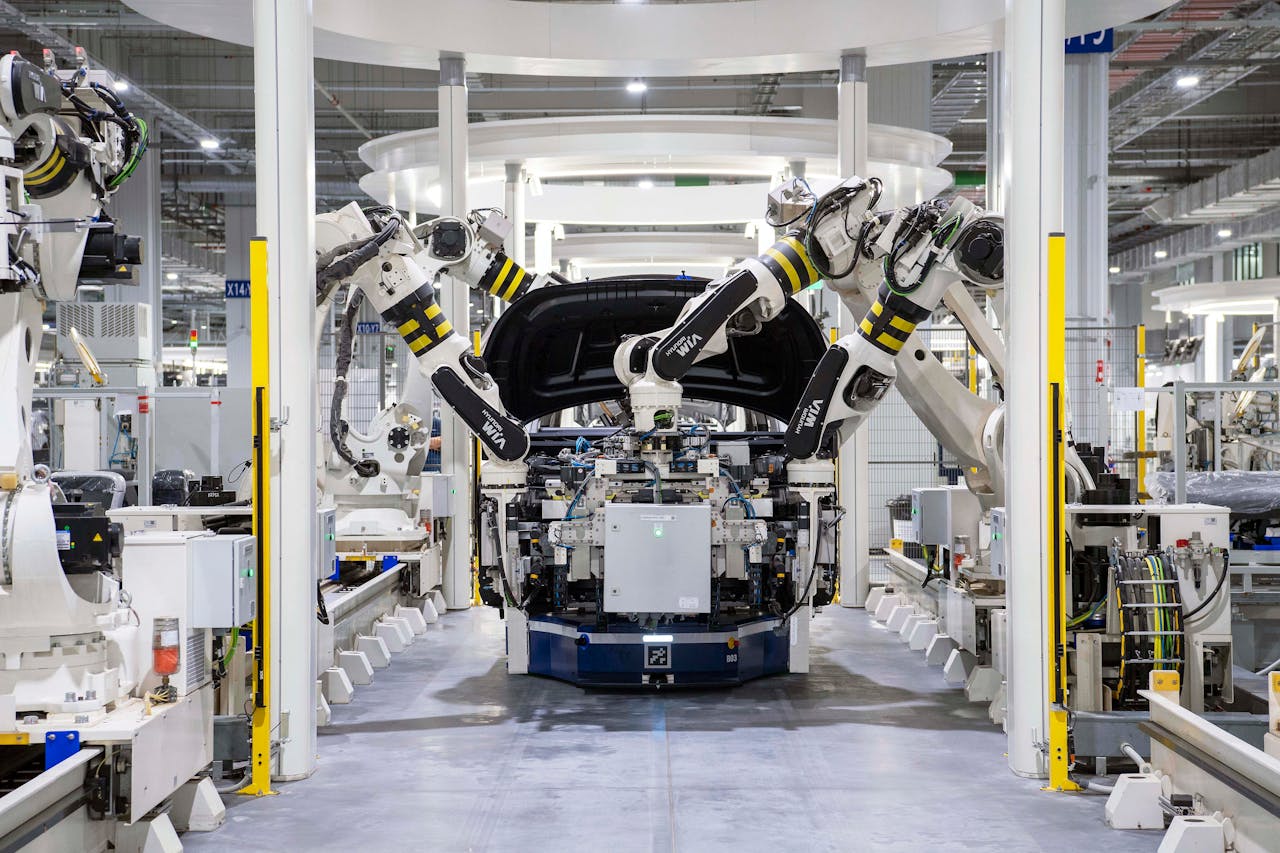

Many of your packaging workflows can be optimized through AI-driven logistics, enabling predictive routing, dynamic inventory allocation, and automated packaging decisions that reduce waste and speed delivery. By integrating machine learning with sensors and cloud platforms, you gain real-time visibility and actionable insights to cut costs and improve sustainability. Adopting these technologies lets you anticipate demand shifts, personalize packaging at scale, and coordinate multimodal transport with greater reliability.
Key Takeaways:
- AI-driven forecasting and route optimization cut costs and lead times by predicting demand, minimizing stockouts, and improving load efficiency.
- Real-time visibility and digital-twin analytics enable adaptive packaging decisions-right-sizing, material reduction, and lower return rates.
- Automation, robotics, and AI-powered quality checks scale flexible, personalized packaging while improving sustainability and regulatory compliance.
The AI-Driven Logistics Landscape
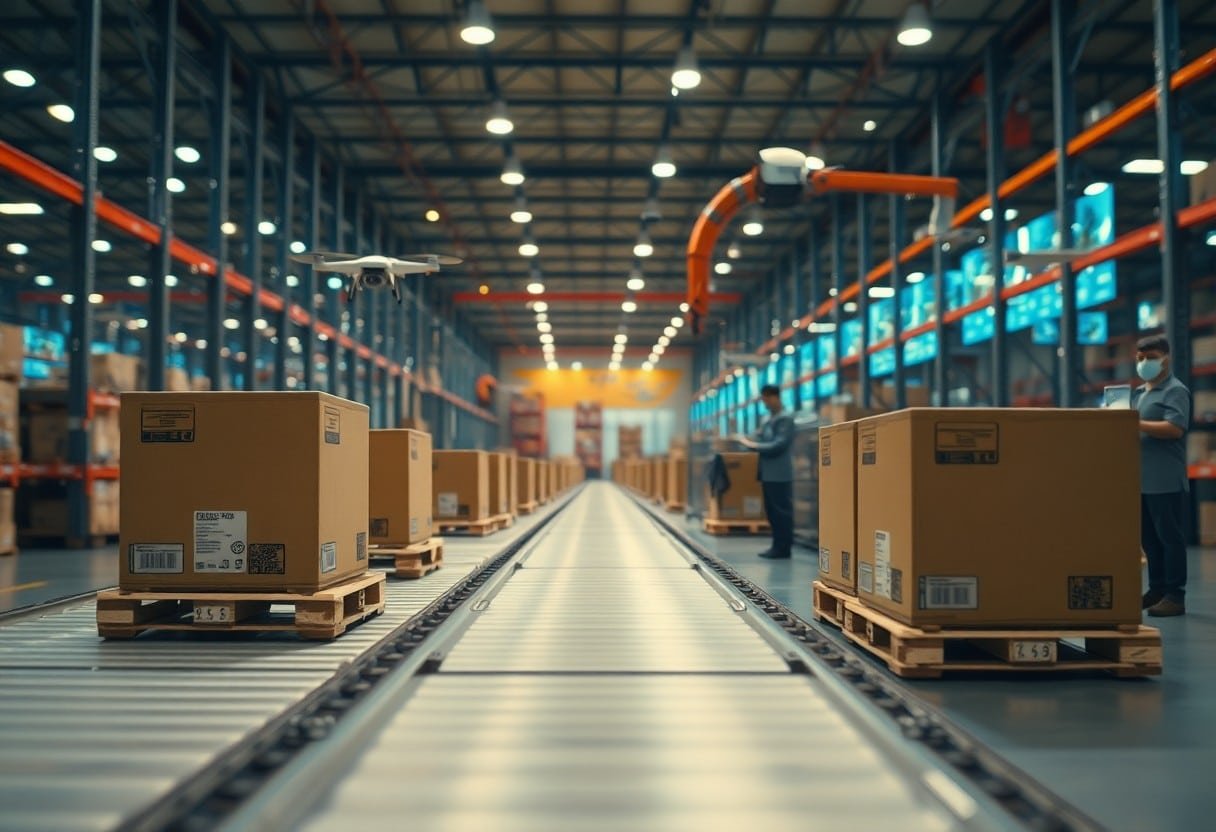
AI is already optimizing networks end-to-end: advanced routing, demand sensing, and autonomous inspections deliver measurable ROI. UPS’s ORION program trimmed roughly 100 million miles driven and saved about $300 million annually, and pilots routinely report 10-30% transport cost reductions and 20-40% fewer stockouts. You’ll see AI shift spend from buffer inventories to real-time orchestration, forcing legacy players and startups to compete on data quality and execution speed.
Core AI technologies reshaping logistics
Machine learning boosts demand forecasting accuracy by 20-50% depending on SKU complexity, while reinforcement learning optimizes dynamic routing under uncertainty. Computer vision and robotics accelerate picking and quality checks in warehouses, and NLP combined with RPA automates invoice and bill-of-lading processing. Edge AI paired with IoT enables predictive maintenance on fleets, and digital twins let you simulate network changes before committing capital.
Market trends, stakeholders, and value drivers
Carriers, 3PLs, retailers, CPGs, and marketplaces are driving adoption, with TMS/WMS vendors embedding AI modules and platforms consolidating visibility. Key value drivers include lower cost-to-serve, improved on‑time delivery, and measurable emissions reductions through optimized routing. Major incumbents such as DHL and Maersk have launched AI-enabled platforms, forcing smaller providers to partner or specialize in niche capabilities.
Funding and procurement patterns are shifting: you’ll see more outcome‑based contracts and proof-of-value pilots with 6-18 month payback expectations. Sustainability mandates and customer SLAs increase pressure to reduce empty miles and report scope 3 emissions, while data governance and API standardization become gating factors for scaling cross‑party AI solutions. Integration speed, not just model accuracy, determines who captures long‑term share.
Packaging in the Age of AI
You can use AI to turn packaging from a passive shell into an active logistics node: predictive algorithms optimize carton sizes, vision systems verify SKU-to-box accuracy, and adaptive networks feed live telemetry to your TMS. See how major pilots are integrating these layers in The Next Big Leap into an AI-Powered Supply Chain, where item-level visibility and automated decisioning reduce errors and speed throughput in high-volume fulfillment centers.
Smart packaging: sensors, connectivity, and real-time insights
You deploy temperature, humidity, shock, NFC and RFID sensors to get minute-by-minute condition data-temperature loggers often offer ±0.5°C accuracy and telemetry intervals from 1s to 15m depending on battery and use case. Integration with your cloud analytics surfaces spoilage risk, route delays, or tamper events in real time, letting you trigger reroutes, insurance claims, or consumer notifications without manual intervention.
Adaptive packaging systems and on-demand customization
You implement on-demand box makers, robotic erectors, and digital die-cutters that produce right-sized packaging at line speed; vendors like Packsize and Baumann-style automated cells can switch box dimensions in under 10 seconds, reducing void fill and lowering dimensional-weight surcharges while improving pack density for cartons and pallets.
When you expand on adaptive systems, integrate 3D scanners and machine-vision to measure products in milliseconds, then feed that data to AI models that select materials, cushioning, and sealing patterns. You connect these decisions to WMS/OMS via APIs so the pack station pulls order metadata, prints dynamic labels, and applies custom inserts; the result is lower material spend, fewer damages, and measurable labor savings-typically visible within the first 90 days of deployment in pilot programs.
Operational Impacts on Supply Chain and Fulfillment
You will see AI shift fulfillment from reactive to anticipatory operations: robotics and automated routing raise throughput by 20-40% in many deployments, while ML forecasting can trim forecast error by 10-30%, cutting stockouts and excess safety stock. Case studies like Amazon’s Kiva adoption (post-2012) and Ocado’s automated hubs illustrate tangible gains in pick rates and space utilization, and you can expect those efficiencies to cascade into lower lead times, higher fill rates, and tighter SLA compliance across your network.
Automated sorting, routing, and warehouse robotics
You gain speed and predictability when you deploy automated sorters, AMRs and smart conveyors: Kiva-style systems reduced picker travel and raised throughput for major e-commerce players, and Ocado’s grid robots demonstrate scale with hundreds-to-thousands of bots per hub. Real-time routing cuts sort-to-ship latency, and carriers’ pilot programs report double-digit productivity gains; as a result you can compress order cycle times and free labor for exception handling and value-added packing.
Predictive inventory, demand forecasting, and SLA optimization
You lower inventory carrying and improve service by applying ensemble ML and causal models to demand signals-combining POS, promotions, weather, and social trends. Retailers using these approaches report 10-30% forecast error reductions and measurable drops in stockouts, while anticipatory replenishment enables tighter safety stock and more reliable SLA adherence for same-day or next-day promises.
You should instrument features like lead-time variance, promotion lift, channel mix and local events, then use hierarchical time-series models plus gradient-boosted or deep-learning hybrids to generate store- and SKU-level forecasts. Next, translate forecasts into dynamic reorder points and multi-echelon optimization; reinforcement learning can then allocate inventory to maximize fill rate and minimize expedited freight. Track KPIs such as fill rate, days-of-supply, inventory turns and on-time delivery, and expect several percentage-point improvements in fill and measurable reductions in expedited costs when you close the loop between prediction and automated replenishment.

Design, Materials, and Sustainability
You can push sustainability by combining AI-driven design with material science: generative algorithms cut material use while lifecycle analysis (LCA) quantifies carbon impacts, and corporate targets (Unilever: 100% recyclable/compostable by 2025; Coca‑Cola: collect and recycle every bottle/can by 2030) drive rapid adoption. Use cases show you can trim packaging mass and transport volume simultaneously, lowering both material costs and scope 3 emissions through smarter form, fit, and material selection.
Algorithmic packaging design and material efficiency
By applying generative design, topology optimization, and palletization algorithms you can reduce raw material and void space; industry pilots report 10-40% material or volume reductions. Tools like Autodesk Generative Design and automated right‑sizing systems (used at scale by major e‑commerce players) help your packaging minimize dimensional weight, optimize corner strength, and tailor cushioning only where sensors or FEA indicate stress.
Circularity, recyclability, and lifecycle carbon reduction
You should prioritize mono‑materials and recycled content: switching to rPET can cut lifecycle CO2 roughly in half versus virgin PET, while reuse models and refill systems (e.g., Loop pilots) lower per‑use emissions as returns and refills scale. Setting measurable targets, designing for disassembly, and mapping end‑of‑life streams lets you convert design gains into verified carbon reductions and higher recycling rates.
Digging deeper, you can combine design rules with LCA-driven constraints so AI weights tradeoffs between light‑weighting and recyclability: for example, replacing multi‑layer laminates with a single recyclable polymer might modestly increase material mass but raise recycling value and lower end‑of‑life emissions. Implementing closed‑loop collection for high‑value streams (like PET) and integrating chemical recycling where mechanical routes fail gives your program resilience; models show that after 5-10 reuse cycles or with 30-50% recycled content, total lifecycle emissions drop materially, depending on product and logistics intensity.
Data, Security, and Standards
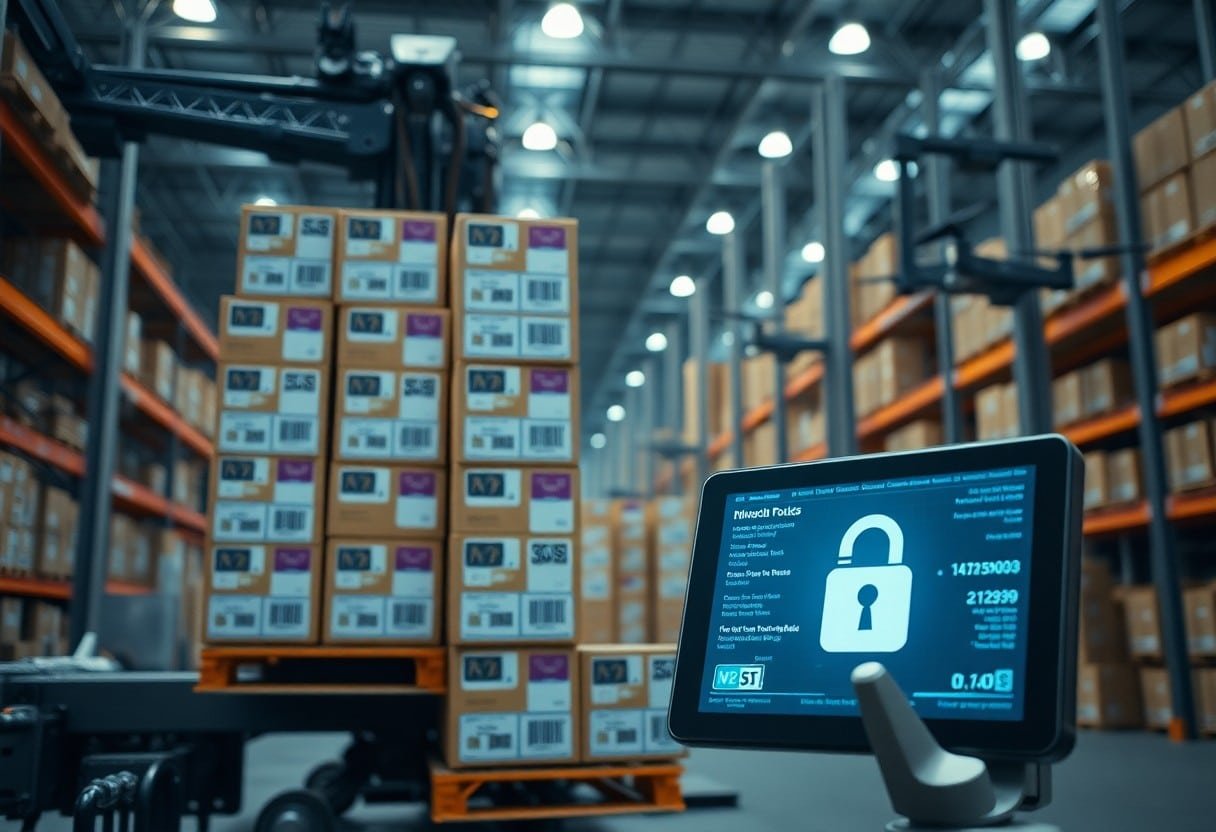
You must harmonize telemetry, RFID and transactional schemas with global standards like GS1 EPCIS and ISO 28000 while adopting modern security controls; see How AI is Changing Logistics & Supply Chain in 2025? for market context. TradeLens (2018) showed blockchain pilots can streamline manifests; combining that with PKI, TLS 1.3, and role-based access lets you scale AI-driven packaging decisions without breaking audit trails.
Data architectures, analytics pipelines, and interoperability
Start with a hybrid data lakehouse and stream-first pipeline using Kafka for ingestion, Spark/Flink for processing and a feature store (Feast) feeding models in real time; you should expose normalized events via GS1/EPCIS and RESTful APIs so downstream systems and 3PLs can consume predictions. Example: real-time weight/volume telemetry plus historical demand can reduce packaging material waste by enabling elastic pack-sizing at sorting hubs.
Privacy, cybersecurity, and compliance frameworks
Implement NIST CSF or ISO 27001 as your baseline, enforce zero-trust identity (MFA, conditional access), and ensure data minimization to meet GDPR/CCPA rules while classifying PII and commercial secrets. You should log immutable audit trails, use HSM-backed keys for model weights containing sensitive training data, and run continuous monitoring with ML-based anomaly detection to catch exfiltration attempts early.
NotPetya (2017) cost Maersk roughly $300 million and shows how OT and IT breaches stop packaging lines; you must prioritize network segmentation, immutable backups, and supplier security questionnaires plus contractual SLAs for incident response. Perform regular red-team exercises, require SOC 2/ISO 27001 evidence from cloud vendors, enforce secure SSO/SCIM for partners, and use differential privacy or synthetic data when sharing datasets for collaborative model training to reduce exposure.
Implementation, Business Case, and Risk Management
You should build the business case around measurable KPIs-throughput, waste, OEE-and model scenarios showing 10-25% efficiency gains and 5-15% cost reductions; validate assumptions with industry pilots (see AI is Transforming Packaging Manufacturing), then include CAPEX, integration, and data-cleanup costs with payback horizons (typically 12-24 months) and a mapped risk register tying risks to mitigations.
Pilots, scaling strategies, and ROI measurement
You should run 6-12 week pilots on representative lines with A/B tests across 10k-50k units, tracking throughput, scrap, OEE and defect rate; prove statistical significance before scaling. Start with edge inference per line, central retraining cadence, and modular deployments that let you expand by plant in 3-9 months. Calculate ROI with NPV and payback targets (12-24 months) and link vendor SLAs to realized KPI improvements.
Organizational change, skills, and regulatory/legal risks
You must budget for hiring or upskilling data engineers, MLops, automation technicians and packaging specialists, allocating ~20-30% of project costs to training and change activities. Align models with labeling and traceability standards (GS1) and regulatory requirements, and embed contractual clauses on data ownership, liability, and auditability to reduce legal exposure.
You should map roles to clear competence levels and timelines: define squads combining operations, IT and packaging compliance, assign 40-120 hours of hands‑on training per role, and decide hire-versus-upskill by gap size. Establish a model governance board that meets monthly, keep immutable audit logs for training data and inference, and run annual third‑party algorithmic audits. For legal protection, put data processing agreements (GDPR where applicable), indemnities, and staged rollout gates tied to safety, labeling and traceability tests into vendor contracts to limit downstream liability.

Conclusion
To wrap up, AI-driven logistics transforms packaging by giving you real-time visibility, predictive demand and intelligent routing that reduce waste and accelerate delivery, while automating handling and compliance. You can optimize materials, cut costs, and scale operations with data-driven decisions that align sustainability with speed. Embracing these tools positions your business to lead the next phase of digital packaging innovation.