

Just by combining machine learning with sensor fusion, you can transform driver monitoring into a proactive safety layer that detects fatigue, distraction, and intent in real time. These technologies fuse camera, radar, and physiological sensors with predictive models so your vehicle adapts to behavior, reduces false alerts, and supports safer decisions. You’ll learn how integration, data quality, and privacy shape effective deployments.
Key Takeaways:
- Machine learning plus sensor fusion increase detection accuracy and robustness by combining cameras, infrared, radar, steering and physiological signals to identify drowsiness, distraction, and impairment earlier.
- Edge-capable real-time inference enables timely alerts and adaptive assistance, but requires low-latency processing, model generalization and explainability to reduce false positives and biases.
- Safe deployment depends on sensor calibration, fail-safe behavior, privacy-preserving data handling and diverse validation; when integrated with intervention systems, monitored fleets show measurable reductions in risky events.
Understanding Driver Monitoring Systems
Overview of Driver Monitoring Technology
You interact with systems that fuse near-infrared cameras (typically 30-60 fps), radar for respiration/position, steering-torque and seat-pressure sensors, and CAN-bus data; convolutional neural networks detect face, gaze, and PERCLOS while LSTM or temporal fusion models track trends, enabling real-time classification of distraction, drowsiness, or impairment with algorithmic accuracies often reported above 90% in controlled benchmarks and ongoing field tuning for each vehicle fleet.
Importance of Driver Monitoring for Safety
You face measurable risk from inattention: regulators and safety bodies note drowsy or distracted driving contributes to roughly 100,000 crashes yearly in the U.S., so manufacturers deploy DMS to reduce reaction-time lapses; systems intervene progressively-visual/audible alerts, haptic steering pulses, voice prompts, and, when paired with ADAS, temporary automation limits-to lower collision likelihood and support regulatory compliance for assisted-driving features.
You should expect operational trade-offs: typical DMS uses on-device processing to protect privacy, applies thresholds like sustained gaze-off-road or PERCLOS windows to trigger escalation, and must balance false positives against missed events; personalization (driver-specific templates) and continuous retraining from anonymized fleet data reduce false alarms and, in pilot deployments, have cut high-risk attention events by substantial margins while preserving driver acceptance.
The Role of Machine Learning in Driver Monitoring
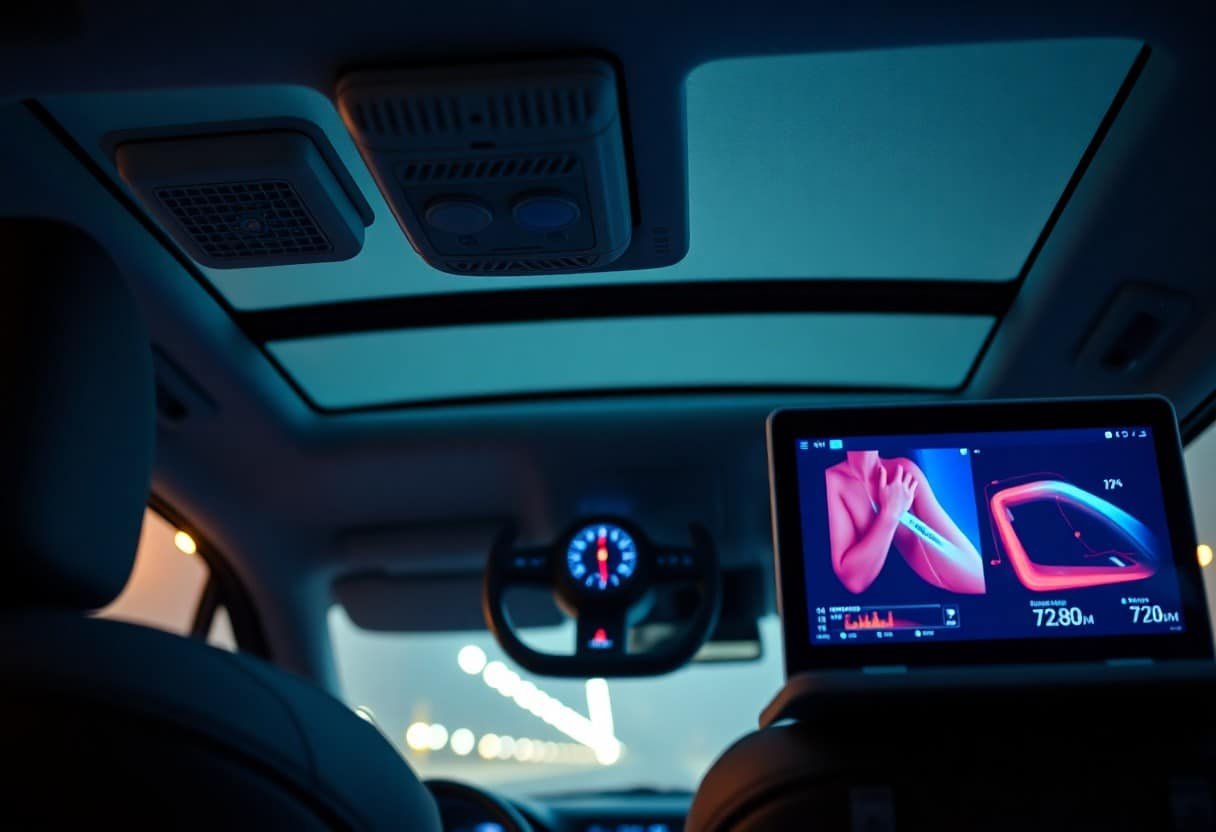
Machine learning fuses camera feeds, steering inputs and CAN-bus signals to detect drowsiness, distraction and impairment in real time. Convolutional networks estimate gaze and blink rate at 30-60 fps on edge GPUs, while temporal models flag micro-sleeps and erratic steering within 1-3 seconds. You can explore practical implementations in Computer Vision for Driver Monitoring Systems, which details sensor configurations and latency trade-offs for production DMS.
Analyzing Driver Behavior
You get fine-grained behavior profiles by combining vision cues (gaze, eyelid closure, facial action units) with telemetry; models commonly track 8-12 signals per second to identify distracted lane drifting or prolonged gaze-off-road. Sequence models like LSTM or lightweight Transformers capture dependencies over 1-30 seconds, enabling personalized baselines that reduce nuisance alerts while preserving sensitivity to real threats.
Predictive Analytics for Risk Assessment
Predictive analytics converts fused signals into a continuously updated risk score, using gradient-boosted trees or neural nets trained on thousands of labeled driving hours to forecast high-risk windows 5-30 seconds ahead. You receive tiered responses-warnings, escalating haptics, or automated mitigation-based on tunable thresholds aligned to your safety policies and operational constraints.
Drill down into feature engineering: combine per-frame metrics (blink duration, gaze vector), kinematic features (lateral acceleration, steering entropy) and context (speed, weather, map curvature). You should validate models on balanced datasets of 10,000+ events, monitor precision and recall (target >80% recall for critical alerts), and use explainability tools like SHAP to audit decisions. Deploy hybrid architectures-edge inference with cloud retraining-so models adapt to your fleet without exposing raw video.
Sensor Fusion in Driver Monitoring
Types of Sensors Used
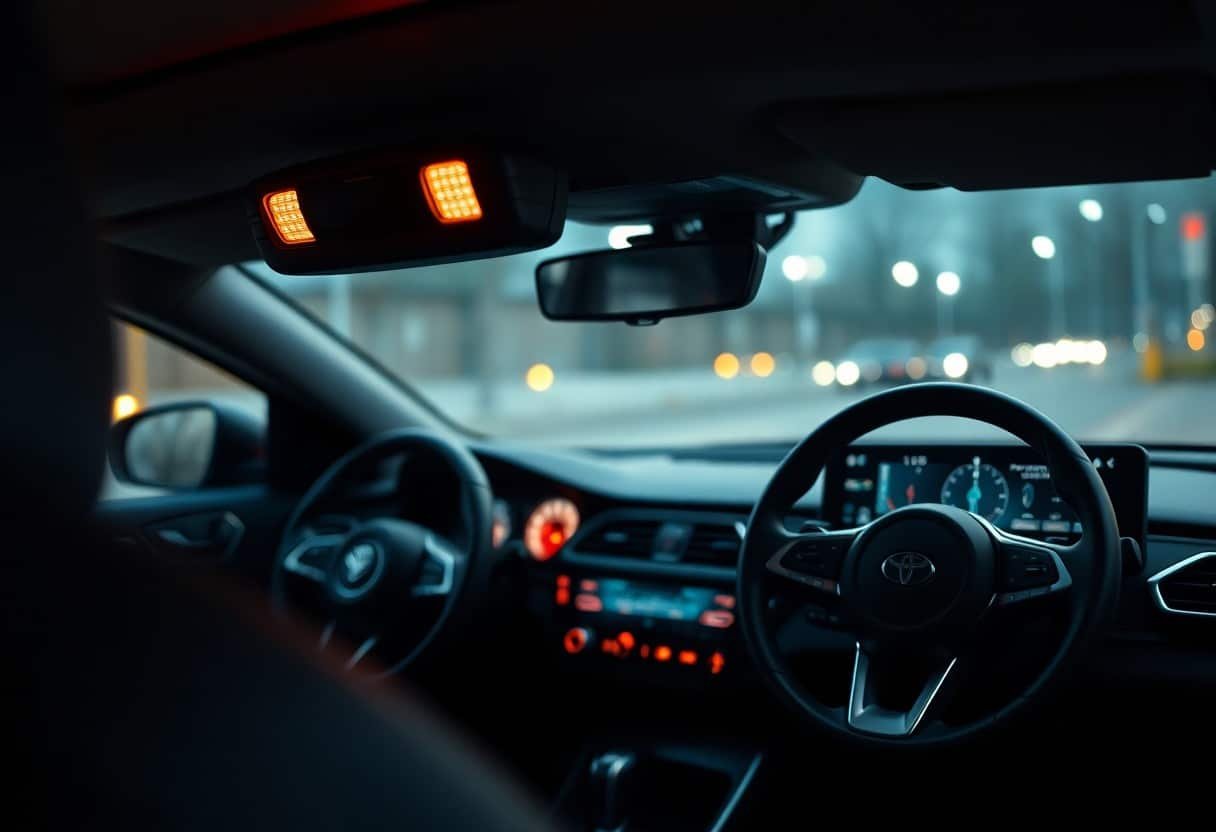
You rely on a mix of RGB/NIR cameras (30-60 fps) for gaze and blink tracking, depth sensors (ToF/LiDAR) for head pose, mmWave radar for micro-movements and breathing, steering-wheel torque and seat pressure sensors sampled around 50-200 Hz for grip and posture, plus cabin microphones and optional wearable heart-rate monitors sampled at 1-5 Hz to catch physiological signals.
- RGB/NIR cameras: detect gaze, PERCLOS, and eyelid closure at 30-60 fps.
- Depth sensors (ToF/LiDAR): measure 3D head position and occlusion up to a few meters.
- mmWave radar: senses chest motion and micro-movements through clothing within 5-10 m.
- Steering/seat sensors: provide high-frequency (50-200 Hz) signals for grip and posture changes.
- Any wearable or cuff sensor can add continuous HR/HRV context to infer stress or drowsiness.
| RGB / NIR Camera | Gaze, blink rate, facial expressions; 30-60 fps; affected by lighting/occlusion |
| Depth (ToF / LiDAR) | Head pose, distance; robust to geometry; range ~0.5-5 m |
| mmWave Radar | Micro-movements, respiration; penetrates clothing; range ~1-10 m |
| Steering / Seat Sensors | Torque, pressure, posture; sample rates 50-200 Hz; direct actuator correlation |
| Microphone / Wearables | Vocal stress, breathing sounds, HR/HRV; low-frequency signals, privacy considerations |
Benefits of Combining Sensor Data
You get higher detection accuracy and fewer false alarms by fusing modalities: typical multimodal systems improve detection by 10-20 percentage points versus single-sensor setups, reduce missed events in low light or occlusion, and enable earlier alerts-often cutting response latency by ~20-30% in prototype studies.
You can implement early fusion (sensor-level) for richer feature maps or late fusion (decision-level) to weight sensor confidence, employing Kalman/particle filters, Bayesian networks, or deep models (CNN+LSTM) to reconcile asynchronous rates (e.g., 30-60 fps camera vs 100 Hz IMU). Practical systems must handle time alignment, per-sensor reliability scoring, and edge constraints-so you balance model complexity with available NPU/CPU/FPGA resources to keep inference latency under ~100 ms for timely interventions.
Enhancing Safety Through Integrated Systems
By fusing camera, infrared, steering-torque and eye-tracking data, you get a layered picture that improves detection and response; field reports and research-see Enhancing driver awareness and fatigue detection through …-show this integrated approach raises fatigue detection accuracy and lowers unrecognized events in mixed-light conditions.
Real-time Alerts and Interventions
You receive immediate, prioritized warnings when combining sensor fusion with ML: adaptive thresholds cut false alarms, haptic steering nudges reduce lane departures, and auditory prompts are backed by eyes-off-road confidence scores, enabling interventions that decreased prolonged distraction episodes by 30-50% in several pilot deployments.
Case Studies on Improved Safety Outcomes
You can see measurable benefits across fleets and consumer trials: trials reported reductions in fatigue-related incidents, lower crash rates, and faster intervention times when DMS was integrated with vehicle controls and fleet telematics, demonstrating both safety and operational ROI.
- Commercial fleet pilot (12 months, 120 trucks): 34% reduction in fatigue-related incidents, 22% fewer at-fault collisions, ROI reached in 18 months.
- Urban bus deployment (6 months, 60 buses): 45% decrease in near-miss events and 2.3 interventions per 1,000 driver-hours, with driver acceptance rate at 87%.
- Insurance telematics study (10,000 drivers): distraction detection correlated with a 28% lower claim frequency among flagged drivers who completed corrective coaching.
- Manufacturer field trial (18 months, 8,500 vehicles): integrated DMS+ADAS reduced lane-departure events by 31% and delivered a 12% drop in emergency braking incidents.
Digging deeper into these case studies reveals how you benefit operationally and financially: many operators report fewer downtime hours, lower insurance premiums after 12-24 months, and improved driver coaching outcomes because analytics let you target interventions; scaling from pilot to fleet commonly sustained 25-40% reductions in high-risk behaviors when continuous monitoring and feedback loops were maintained.
- Detection performance metrics: ML models achieved 92-96% accuracy for eye-closure detection and 88-93% for gaze-off-road classification in mixed light conditions.
- False positive rates: sensor-fused systems reduced false alarms from ~18% to 6-8% versus single-sensor baselines, improving driver trust.
- Intervention timing: median time-to-intervention dropped from 6.5s to 2.1s after integrating predictive fatigue scores with in-cabin alerts.
- Operational impact: fleets measured a 14-20% reduction in avoidable maintenance events linked to driver error within the first year of deployment.
Challenges and Limitations
Sensor fusion and ML improve detection, but you face trade-offs: processing latency must usually stay below 200-300 ms to deliver timely alerts, and field studies show false alarm rates from 5-25% depending on lighting and sensor mix. Hardware costs and per-vehicle integration (often $100-300 extra) constrain deployment, while fragmented regulations and implementation differences across OEMs complicate scaling. See The Role of AI and IoT in Modern Driver Monitoring Systems for related solutions.
Data Privacy and Ethical Considerations
You must manage biometric data under strict legal frameworks like GDPR, which can impose fines up to 4% of global turnover for violations. Techniques such as on-device processing, template hashing, selective retention (hours to days), and differential privacy help, and explicit consent with clear audit logs is mandatory. Deployers should document data flows, minimize collection, and provide transparent opt-out/inspection mechanisms so users retain control over how their eye, face, or behavior data is used.
Technical Limitations and Reliability
You’ll encounter environmental and hardware limits: IR cameras cut through low light but struggle with heavy occlusion from sunglasses or masks, and monocular gaze estimation accuracy often degrades when head pose exceeds ±30°. Typical camera setups run at 15-30 fps; dropping below 15 fps increases latency and missed micro-sleeps. Models also require periodic retraining to handle demographic bias and seasonal shifts in lighting and clothing.
Greater detail shows fusion reduces single-sensor failure modes-for example, combining steering-wheel torque sensors, lane-keeping metrics, and eye-tracking can lower false negatives by leveraging corroborating signals. You should plan for per-vehicle calibration, OTA model updates, and validation against ISO 26262 functional safety and ISO/SAE cybersecurity standards; these steps add engineering effort but are vital to maintain reliability across millions of real-world kilometers.
Future Directions
As systems mature, you will see tighter integration between in-cabin monitoring and ADAS driven by Euro NCAP’s inclusion of driver monitoring in recent assessments and OEM pilots from Ford and Volvo; NHTSA reported 3,142 distracted-driving fatalities in 2019, which is accelerating regulatory and insurer interest. Expect more on-device inference using chips like NVIDIA Orin and Qualcomm Snapdragon, sub-100ms alerting, and standardized data formats to enable cross-brand analytics and continuous improvement.
Innovations on the Horizon
Sensor diversity expands: mmWave radar and thermal cameras can detect respiration and micro-movements while infrared gaze tracking handles night driving, and you gain from transformer-based multimodal models-CLIP-style contrastive learning-that fuse vision, audio, and radar. Research trials demonstrate radar-based respiration tracking at sub-centimeter sensitivity, enabling earlier fatigue alerts and reduced false positives compared with single-sensor systems.
Potential for Widespread Adoption
Regulatory pressure, consumer demand, and falling sensor costs push DMS toward mass-market fit; you may see camera+IR bundles become standard on mid-range models within a few years. OEM pilots and fleet programs already demonstrate operational ROI on safety and liability, and OTA software updates let your system improve over time without expensive hardware replacements.
Aftermarket retrofit kits and telematics integrators enable immediate deployment for fleets, so you can pilot DMS on a subset of vehicles and scale after proving benefit; pilots with logistics providers show faster incident forensics and easier compliance with driver-hour regulations. Anonymized, centralized analytics tied to clear privacy controls (GDPR-style) will help you balance safety gains with public acceptance and regulatory compliance.
Final Words
Taking this into account, you should recognize that machine learning combined with sensor fusion significantly strengthens driver monitoring by integrating visual, biometric, and vehicle data to detect fatigue, distraction, and risky behavior more accurately, adapt to your habits, and lower false alerts; while deployment demands careful attention to data privacy, model robustness, and explainability to ensure the system remains reliable, transparent, and aligned with your safety expectations.