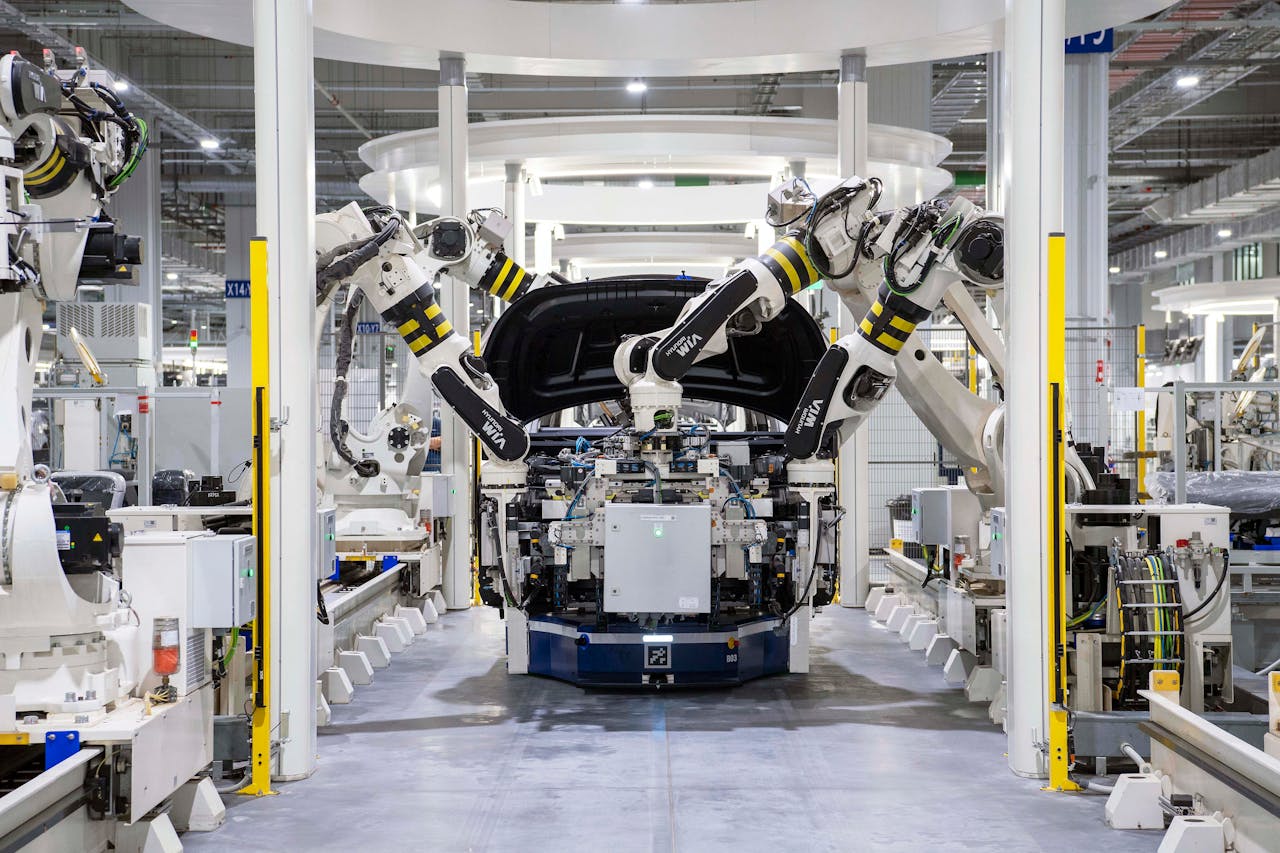

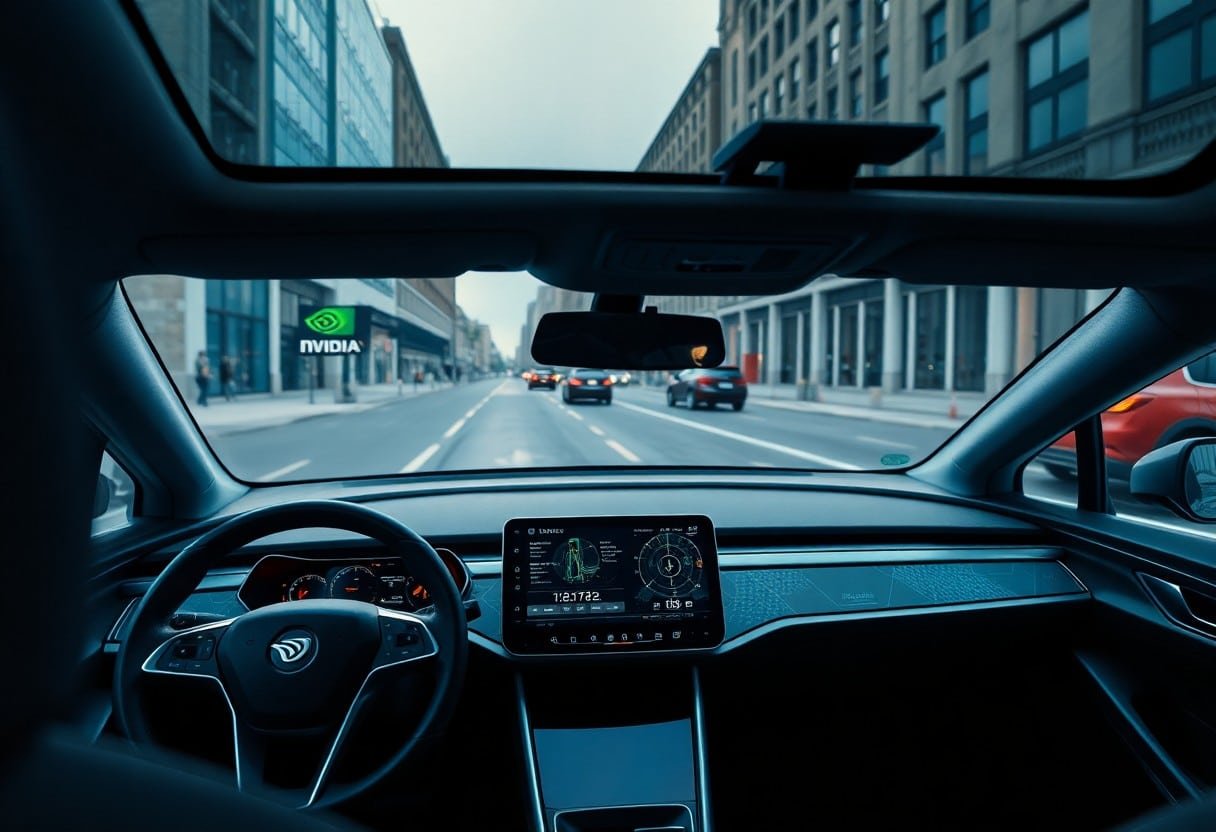
ConnectedCars are rapidly evolving as platforms like NVIDIA Drive and Qualcomm Snapdragon Digital Chassis bring high-performance compute, advanced AI, and integrated connectivity to vehicles; you can expect smoother driver assistance, richer infotainment, and continuous over-the-air updates that tailor experiences to your preferences while enabling safety and autonomous features to scale across vehicle fleets.
Key Takeaways:
- High-performance platforms like NVIDIA Drive and Qualcomm Snapdragon enable real-time AI, sensor fusion and ADAS/autonomy by delivering GPU/accelerator compute, power efficiency and low-latency connectivity for richer in-vehicle experiences.
- Open software stacks, developer ecosystems and OTA update support accelerate feature deployment and personalization, letting OEMs and suppliers iterate faster and integrate cloud-edge services such as telematics, HD mapping and in-cabin AI.
- Adoption depends on solving integration, cost, safety/regulatory certification, data privacy and supply-chain challenges; when paired with 5G/cloud and strong partnerships, these platforms can materially advance connected-car services and business models.
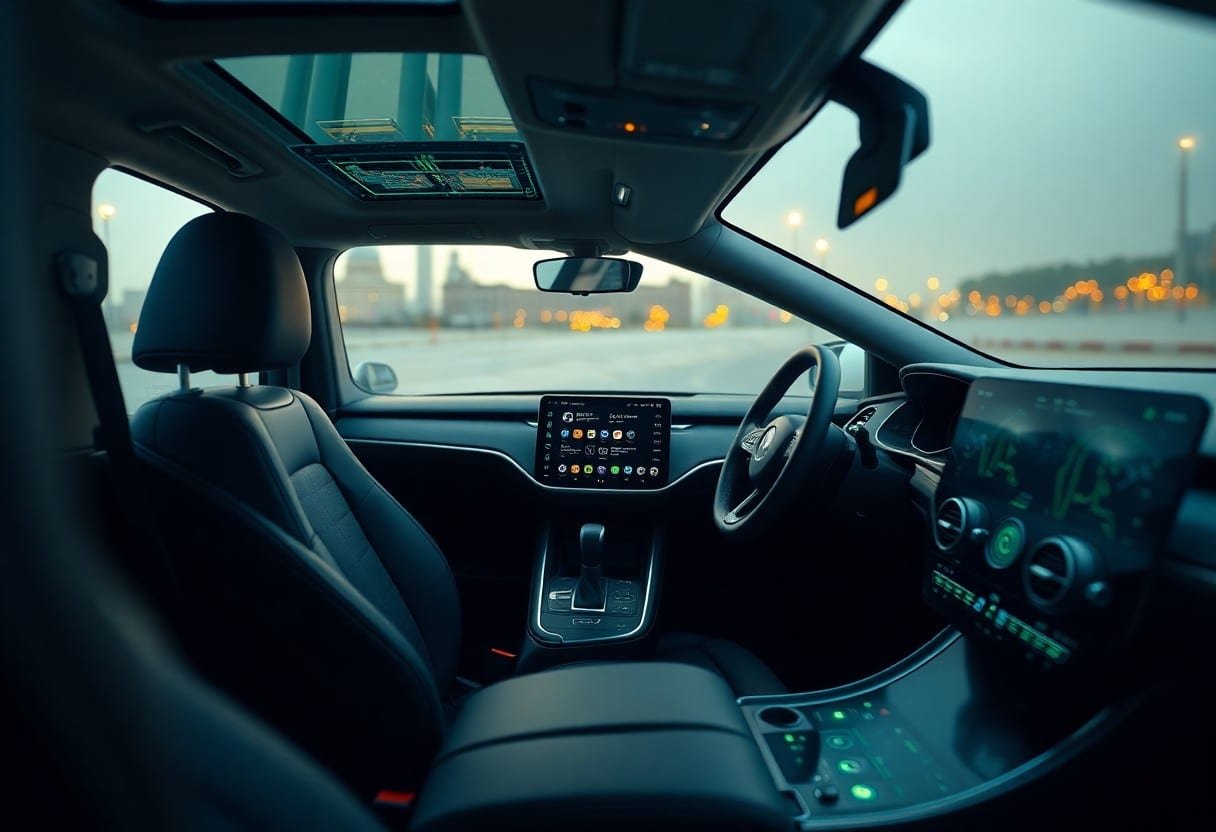
The Role of NVIDIA Drive in Connected Cars
Overview of NVIDIA Drive Architecture
You see NVIDIA Drive as a scalable hardware-software platform centered on the Drive AGX family (Xavier to Orin), which ranges from ~30 TOPS to up to 254 TOPS for high-end Orin configurations. It pairs safety-oriented middleware (DRIVE OS, DRIVE AV, DRIVE IX) with sensors and reference hardware like Drive Hyperion, and integrates simulation via DRIVE Sim and Omniverse so you can validate perception, planning, and safety across millions of virtual miles.
Key Features Enhancing Vehicle Experience
You benefit from low-latency AI perception, multi-sensor fusion, HD mapping, and real-time graphics for digital cockpits and AR HUDs; these are accelerated by CUDA, TensorRT and optimized neural libraries to deliver deterministic inference for ADAS and automated driving while supporting in-cabin AI for voice, gesture, and driver monitoring.
- High-performance SoCs: Xavier (~30 TOPS) to Orin (up to 254 TOPS) for scalable workloads.
- Software stack: DRIVE OS, DRIVE AV, DRIVE IX plus SDKs (TensorRT, CUDA) for optimized inference.
- Sensor fusion & perception: synchronized camera, radar, lidar pipelines with deterministic latency.
- Simulation & validation: DRIVE Sim integrated with Omniverse for virtual testing and scenario coverage.
- Safety & compliance: functional safety frameworks and tooling aligned to automotive standards.
- In-cabin experience: AI-driven voice, gesture, DMS, and advanced graphics for the cockpit.
- Connectivity & lifecycle: OTA update frameworks and secure vehicle management.
- Recognizing security demands, NVIDIA provides secure boot, encrypted OTA, and lifecycle cybersecurity tools.
You can leverage DRIVE Sim to close the loop between development and validation, running millions of virtual miles to find edge cases before road testing; deployment then benefits from hardware-accelerated stacks that reduce inference latency to the millisecond range, enabling features like 60+ fps perception pipelines and sub-100 ms end-to-end response for emergency interventions.
- Real-time perception: optimized CNNs and fusion reduce false positives in object detection and tracking.
- HD mapping & localization: tight integration with map providers for lane-accurate positioning.
- Adaptive HMI: AR HUD, customizable instrument clusters, and low-latency rendering for passenger UX.
- Developer ecosystem: DriveWorks, sample apps, and partner integrations accelerate time-to-market.
- Fleet management: telemetry, OTA, and cloud connectivity for continuous feature delivery and analytics.
- Simulation scale: scenario generation and synthetic sensors speed validation of rare events.
- Recognizing the full lifecycle, NVIDIA couples simulation, validation, deployment, and secure updating in one platform.
Qualcomm Snapdragon Digital Chassis Explained
The Snapdragon Digital Chassis bundles compute, connectivity and cloud services so you can run advanced ADAS, cockpit experiences and telematics on a single, modular architecture; Qualcomm combines Snapdragon Ride, Cockpit and Connectivity stacks and emphasizes 5G (mmWave and sub‑6 GHz) plus Wi‑Fi 6/6E support. You can read more about Qualcomm’s AI-in-car vision in AI on the road: Why AI-powered cars are the future.
Comprehensive Components of the Digital Chassis
The platform includes Snapdragon Ride for automated driving, Snapdragon Cockpit for IVI, display and voice, Snapdragon Connectivity for 5G/802.11ax/6E and a secure telematics/OTA layer for updates and vehicle data orchestration; you get modular SoCs, edge AI acceleration, hardware security enclaves and standardized APIs that let OEMs deploy domain controllers and scale from L2+ features to higher‑level autonomy pilots.
Impact on In-Car Connectivity and User Experience
By enabling high‑bandwidth 5G and low‑latency edge AI, the chassis lets you stream multi‑screen content, run cloud‑assisted navigation with live HD map updates, and support over‑the‑air software and security patches without dealership visits; the result is faster feature rollouts, personalized UIs and smoother voice/AR interactions that respond to driving context.
Drilling down, you can expect concrete benefits: simultaneous multi‑camera AI processing for DMS and ADAS, in‑car cloud gaming or streaming at multi‑gigabit rates on 5G, and zonal compute consolidation that reduces ECU count and wiring complexity. OEM pilots already report shorter validation cycles by centralizing updates, and you can integrate third‑party services (voice assistants, payment, music) via standardized SDKs while maintaining hardware root‑of‑trust protections for user data and OTA integrity.
Synergy Between NVIDIA and Qualcomm Technologies
Collaborative Efforts in Automotive Innovation
You see partnerships where NVIDIA’s DRIVE stacks (DRIVE Orin, 254 TOPS) pair with Qualcomm’s Snapdragon Digital Chassis-cockpit, telematics, and 5G/C‑V2X connectivity-so OEMs and Tier‑1s can partition workloads: heavy AI and sensor fusion on high‑performance GPUs, and secure, low‑power IVI and network functions on Snapdragon platforms; Mercedes‑Benz’s multi‑year collaboration with NVIDIA exemplifies how these alliances accelerate software‑defined vehicle deployments.
Potential for Enhanced Performance and Safety
You gain lower end‑to‑end risk when NVIDIA handles compute‑intensive perception and path planning while Qualcomm provides deterministic connectivity and over‑the‑air model/map delivery, enabling real‑time ADAS decisions, multisensor redundancy (cameras, radar, LiDAR) and failover strategies that tighten latency and improve situational awareness across the stack.
You can architect vehicles so Orin‑class compute (254 TOPS) processes sensor suites of roughly 6-12 cameras plus multiple radar/LiDAR streams, while Snapdragon connectivity keeps V2X and telematics loops in the sub‑50 ms range; in OEM pilots combining these elements, that split‑workload approach has yielded faster hazard propagation, measurable reductions in false positives for pedestrian detection, and clearer paths for functional safety because critical inference remains local while the cloud supplies map and model updates.
Impacts on Autonomous Driving Capabilities
You get far greater perception, planning and redundancy when platforms like NVIDIA Drive and Qualcomm Snapdragon Digital Chassis are combined with high-bandwidth sensors; Orin-class compute (~200 TOPS) and scalable Snapdragon configurations let you run multi-sensor fusion, map-based localization and real-time trajectory planning on the vehicle rather than in the cloud, cutting end-to-end latency and enabling higher-level ADAS functions across millions of test miles and pilot programs.
AI and Machine Learning Integration
You can deploy large neural nets for 360° perception and smaller, specialized models for prediction and trajectory planning on the same vehicle: NVIDIA Drive enables mixed-precision inferencing while Snapdragon Digital Chassis emphasizes modular models you can update OTA, supporting training on millions of labeled miles to reduce false positives and improve rare-event detection.
- Real-time perception: multi-sensor fusion for object detection and classification.
- Edge inferencing: sub-100 ms decision loops for collision avoidance.
- Continuous learning: OTA model updates propagated from cloud-trained datasets.
AI Integration Highlights
| Compute example | Orin-class ~200 TOPS and scalable Snapdragon nodes for parallel NN workloads |
| Latency impact | Edge inference reduces decision latency to under 100 ms in common stacks |
| Data scale | Training datasets often span millions of miles and billions of frames |
Safety Features Powered by Advanced Platforms
You benefit from sensor redundancy, synchronized camera/LiDAR/radar pipelines and deterministic scheduling that let you implement AEB, lane-keeping and automated parking with higher confidence; platforms reduce false alarms by combining rule-based logic with ML-based intent prediction and have been shown in pilot studies to lower intervention rates in urban scenarios.
You see direct safety gains when advanced platforms run multi-sensor fusion with sub-10 ms synchronization across channels, enabling faster brake-to-threshold times and better pedestrian detection at night; OEM pilots using these stacks report measurable reductions in nuisance alerts and improved human-machine handover quality during takeovers.
- Sensor redundancy: cross-checks between LiDAR, radar and cameras to avoid single-sensor failures.
- Predictive safety: trajectory prediction models that anticipate pedestrian and cyclist intent.
- Deterministic response: real-time OS scheduling to guarantee worst-case reaction times.
Safety Feature Details
| Feature | Example impact |
| Automated Emergency Braking (AEB) | Reduces front-to-rear collisions by roughly 40-50% in controlled evaluations |
| Occupant monitoring | ML-based cameras detect distraction or drowsiness and trigger alerts or interventions |
| Fail-operational design | Redundant compute paths and sensor fusion maintain function after single-component faults |
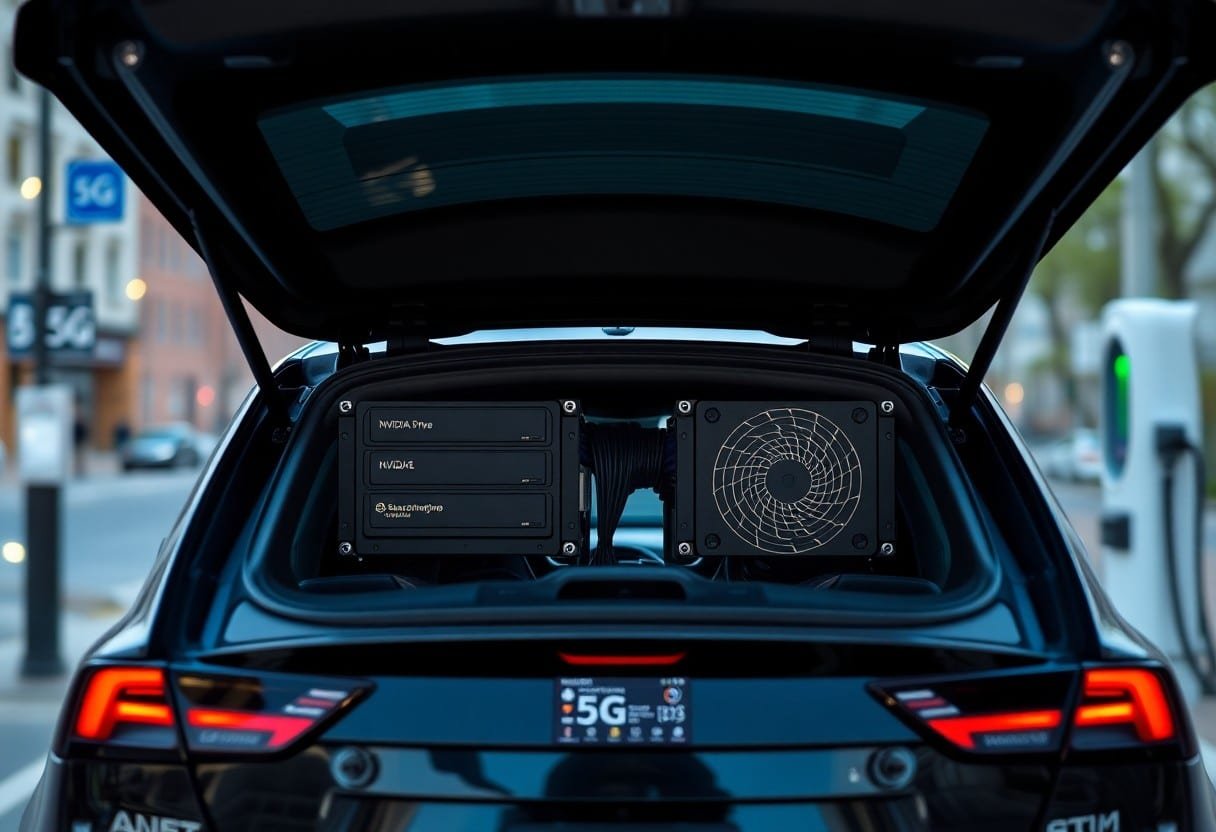
The Future of Connected Car Experiences
As you evaluate platform choices, note how NVIDIA Drive AGX Orin’s 200 TOPS for in-vehicle AI and the expanding Snapdragon Digital Chassis ecosystem (see Qualcomm adds to Snapdragon Digital Chassis momentum with new OEM applications) are enabling richer maps, predictive maintenance, and safer Level 3/4 functions; your next vehicle could run real-time sensor fusion, cloud-assisted routing, and on-device personalization without perceptible latency.
Emerging Trends in Automotive Technology
You’re seeing consolidation from ~100 ECUs to roughly 10 domain controllers, wider 5G/edge compute integration (latency often under 10 ms), and sensor stacks that can produce up to 4 TB of data per day; OEMs pair cheaper LiDAR and advanced radar with multi-modal AI, while over-the-air updates and edge inference let features evolve long after sale.
Consumer Expectations and Market Dynamics
Your buyers expect continuous improvements, instant connectivity, and privacy controls; brands like Tesla and BMW already sell OTA features and subscriptions, shifting purchase decisions toward software-forward value, and forcing dealers and suppliers to adapt revenue models and service experiences.
Digging deeper, you’ll find monetization increasingly driven by subscriptions, feature‑on‑demand, and remote diagnostics that boost lifetime value by hundreds to thousands of dollars per vehicle; regulatory pressures (GDPR/CCPA), data ownership debates, and competition from tech entrants mean you must balance personalization, security, and clear disclosure to keep adoption and retention high.
Challenges and Considerations for Adoption
You’ll face steep integration costs, fragmented standards, and regulatory demands that slow rollouts; platforms offering hundreds of TOPS of compute must be validated against functional safety and cybersecurity regimes, and you should weigh supplier lock‑in versus modular ecosystems – see the Top 10 Software-Defined Vehicle Giants Driving the Future … for how vendors are positioning themselves.
Technical and Regulatory Hurdles
You’ll need to meet ISO 26262 safety requirements up to ASIL‑D for drive-by-wire functions and comply with UNECE WP.29 R155 (cybersecurity) and R156 (OTA updates); latency targets for V2X can approach 1 ms for URLLC use cases, and you must architect redundancy, secure boot, and signed update chains while navigating data‑privacy laws like GDPR when telematics data leaves the vehicle.
Competition among Key Industry Players
You’re watching an ecosystem where OEMs choose between in‑house stacks and partners: some vendors emphasize vision‑first architectures, others offer multi‑sensor fusion and cloud ties, and platforms advertise performance from tens to hundreds of TOPS to support SAE Level 2-4 features, creating choices that affect your update cadence, validation overhead, and total cost of ownership.
You should consider business models: companies selling silicon plus middleware lock you into long validation cycles but can deliver optimized stacks, while modular software vendors let you swap components faster; in practice, integration time can range from months for IVI to multiple years for safety‑critical ADAS, so align procurement, validation resources, and over‑the‑air strategies to your product roadmap.
Final Words
From above you can infer that platforms like NVIDIA Drive and Qualcomm Snapdragon Digital Chassis can fundamentally reshape your connected-car experience by delivering high-performance compute, modular software stacks, AI-driven perception, and robust security; they let you benefit from advanced driver assistance, seamless infotainment, OTA updates, and flexible OEM customization, provided industry standards and partnerships align to scale deployment.