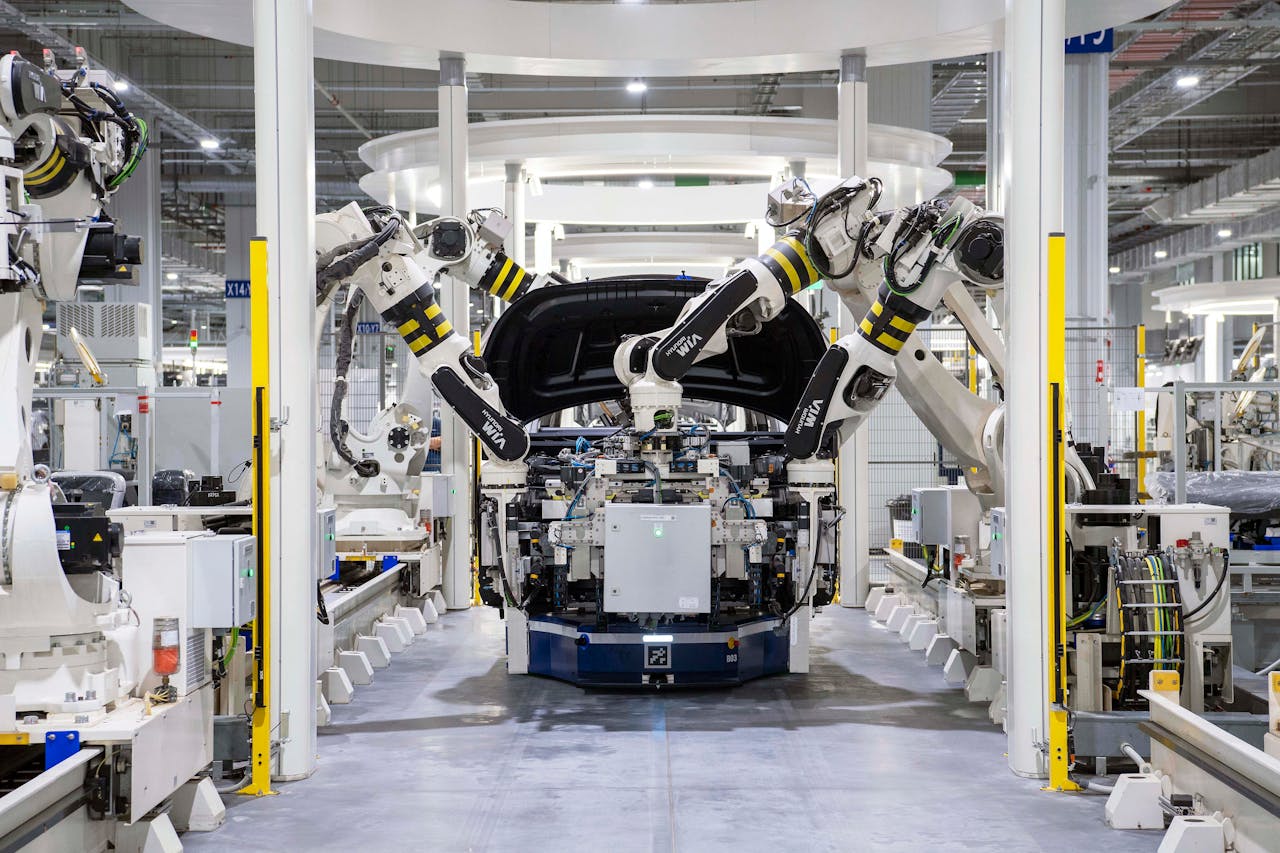


Predictive maintenance leverages AI to analyze sensor streams and operational data so you can detect emerging faults before they cause breakdowns, schedule targeted repairs, and optimize parts usage; by combining machine learning models, real-time telemetry, and fleet-wide analytics, it reduces downtime, extends vehicle lifespan, and delivers transparent performance insights that strengthen your confidence in vehicle reliability.
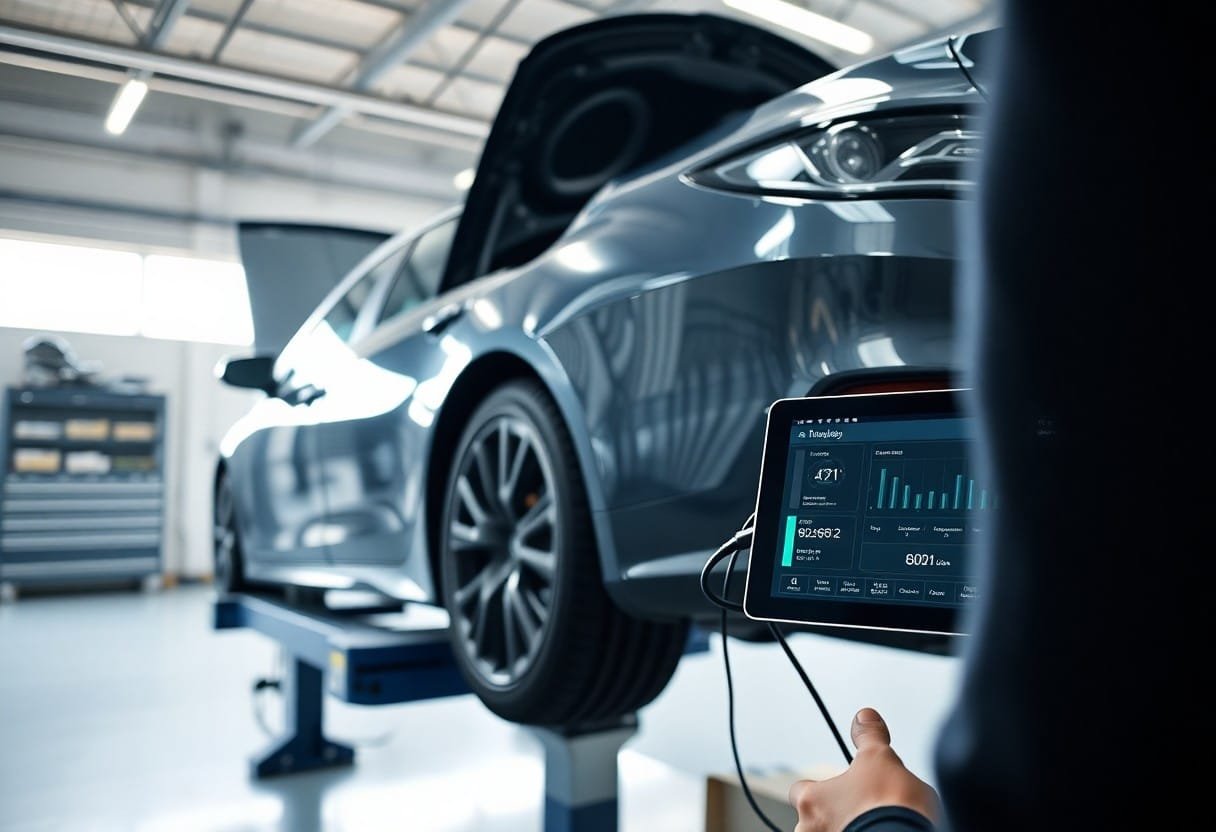
Key Takeaways:
- AI analyzes sensor telemetry and historical failure data to detect patterns of wear and predict component degradation before failures occur.
- Predictions enable targeted, scheduled interventions that reduce unplanned downtime, lower maintenance costs, and improve vehicle availability and convenience.
- Clear, data-backed alerts and explainable diagnostics build user confidence and support continuous improvement through model retraining and over‑the‑air updates.

Understanding Predictive Maintenance
In practice, predictive maintenance combines condition monitoring, telematics, and historical repair logs so you can schedule service before failures occur. Industry studies show predictive programs can cut maintenance costs 10-40% and reduce vehicle downtime 20-50%. You’ll see sensors on the engine, transmission, and braking systems stream CAN-bus and vibration data, enabling models to flag degrading parts days to months before a fault.
Definition and Importance
Predictive maintenance forecasts component failure using real-time signals and analytics instead of fixed intervals, so you shift to condition-based servicing. This approach reduces surprise breakdowns, extends part life, and improves safety and uptime for both fleets and individual owners. Many operators report smaller spare-part inventories and more predictable shop schedules, which directly boosts operational efficiency and user trust.
Role of AI in Predictive Maintenance
Machine learning and AI extract patterns from time-series telematics, vibration spectra, and OBD-II streams so you can detect subtle degradation signatures. Techniques like LSTM networks for RUL estimation, random forests for classification, and unsupervised clustering for anomaly detection process millions of data points per vehicle, turning raw sensor noise into actionable maintenance windows days or weeks ahead.
For wider adoption, you’ll integrate edge inference for low-latency alerts with cloud training for continuous model improvement; manufacturers often use federated learning to protect driver privacy while sharing learnings. Because labeled-failure data is sparse, transfer learning, synthetic fault injection, and digital twins help validate models-pilots commonly report 15-30% fewer unscheduled stops and payback within 12-24 months.
The Technology Behind Predictive Maintenance
You rely on a layered stack of sensors, edge compute, and cloud analytics to transform raw signals into actionable alerts; for deeper reading, consult Predictive Maintenance with AI Assistants | Fleet Reliability. Telematics, CAN-bus, vibration, and temperature sensors form high-frequency streams, while oil-analysis and maintenance logs add sparse but high-value labels-combining these lets you predict failures days or weeks ahead and reduce unplanned downtime by measurable margins.
Data Collection and Analysis
You aggregate streams at different rates-GPS and engine status at 1-10 Hz, accelerometers and vibration at 1-10 kHz, and periodic lab results or shop notes-to build multimodal records. Edge preprocessing (FFT, wavelet transforms, event-driven upload) cuts bandwidth by up to 80-90%, so you send only anomalies or compressed features. Time-series alignment, feature extraction (RMS, kurtosis, spectral peaks) and label harmonization from work orders are the steps that let you convert sensor noise into reliable predictors.
Machine Learning Algorithms
You use a mix of supervised and unsupervised models: random forests and gradient-boosted trees for engineered features, CNNs on vibration spectrograms, LSTM/Transformer models for sequential RUL forecasting, and autoencoders or isolation forests for anomaly detection. Ensembles often improve precision by 5-15% versus single models, and hybrid pipelines-classifiers feeding probabilistic RUL estimators-help you prioritize inspections and parts logistics.
In practice, you train with hundreds to thousands of failure cycles when available; otherwise you augment with physics-based simulations and domain adaptation. Typical architectures use sliding windows of 50-200 timesteps, batch sizes of 32-128, and learning rates tuned with time-series cross-validation. Evaluate models on MAE/RMSE for RUL and precision/recall or F1 for anomaly flags. For deployment, quantized models and on-device inference keep latency under 100 ms, while federation or periodic retraining on aggregated fleet data preserves model relevance across vehicle types and operating conditions.
Enhancing Vehicle Reliability
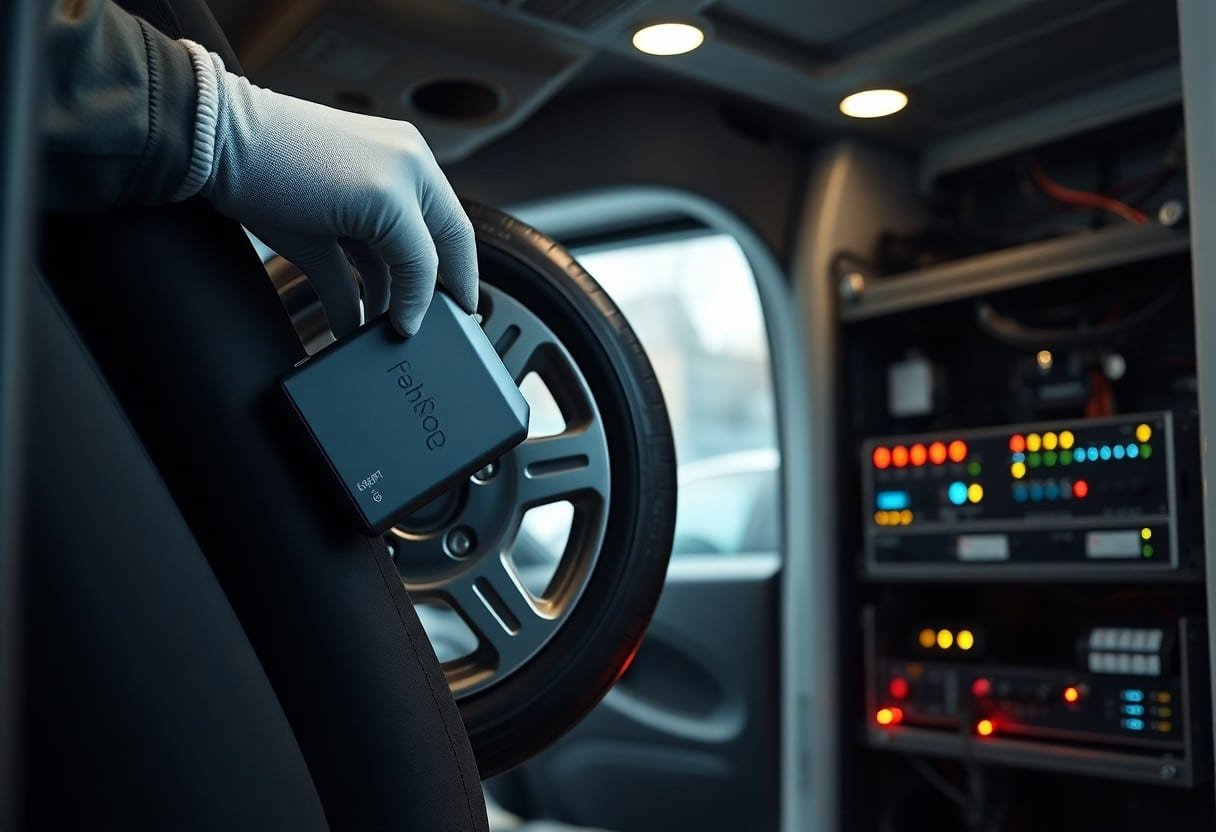
You can boost vehicle uptime by replacing fixed-interval servicing with models that spot degradation early; ML that fuses vibration, oil-particle counts and temperature trends often identifies faults weeks to months before failure. For concrete deployments and performance metrics, consult Predictive Maintenance in Automotive Industry, which documents implementations that cut unscheduled downtime by roughly 20-30%.
Predictive Analytics for Maintenance Scheduling
You apply survival analysis, Bayesian filters and gradient-boosted models to estimate remaining useful life (RUL) so you schedule service only when needed. Real-world pilots show optimized scheduling can extend service intervals 20-35%, reduce spare-part stocking by ~15%, and shift technicians from reactive repairs to planned overhauls-lowering labor spikes and improving overall fleet availability.
Real-time Monitoring and Feedback
You ingest streaming telemetry-CAN signals, vibration spectra, oil debris counts-into edge analytics that flag anomalies within seconds and route prioritized alerts to your maintenance crew. That rapid feedback shortens diagnostic cycles, letting you convert potential roadside failures into scheduled interventions and often cutting mean time to repair by a substantial margin.
You instrument vehicles with targeted sensors (accelerometers, temperature probes, oil particle sensors and pressure transducers) and tune sampling rates per signal-low-frequency health metrics at 0.1-1 Hz, high-frequency vibration at 1-100 Hz-so edge models can run lightweight inference. Telemetry funnels back to centralized models that retrain on labeled failures, improving precision over time; fleets of several hundred vehicles typically report 20-30% fewer breakdowns after six to twelve months of closed-loop monitoring.
Building User Trust
You reinforce trust by exposing the AI’s accuracy and outcomes: show model precision (for example, ~92% on common fault types), quantify benefits like up to 30% fewer unscheduled breakdowns in pilot fleets, and publish audit trails of sensor data and decisions; link to external studies such as The Power of Predictive Maintenance: Revolutionizing Vehicle Service to substantiate claims and give users verifiable context.
Transparency in Maintenance Processes
You increase transparency by surfacing timestamped fault logs, raw sensor readings, and model confidence scores (e.g., 0.92), plus a clear rationale for each recommendation; provide an immutable audit trail and exportable reports so you can verify steps, reconcile costs, and confirm that suggested actions match OEM guidelines and warranty constraints.
User Engagement and Education
You boost engagement with targeted in-app dashboards, prioritized push alerts, and microlearning modules (2-5 minute videos) that explain faults, expected repairs, and trade-offs; these tools help you interpret alerts faster and make informed decisions about scheduling and parts procurement.
You can deepen adoption by mapping role-specific journeys: send drivers concise, action-oriented notifications, equip technicians with step-by-step repair guides and parts lists, and give managers KPI dashboards. Pilot programs often track MTTR, Mean Distance Between Failures (MDBF), on-time service rate, and CSAT to quantify impact; use A/B testing on message wording and timing to raise response rates and measure changes in downtime and maintenance cost over 30-90 day windows.
Case Studies in AI and Predictive Maintenance
- 1) Major European bus operator (1,200 vehicles): deploying vibration sensors and telematics with an ensemble anomaly detector gave you a 23% reduction in on-route breakdowns, 18% lower maintenance spend, 12,000 fewer downtime hours annually and predictive alerts with 87% precision and ~72 hours average lead time.
- 2) North American logistics fleet (5,000 heavy trucks): real-time engine telemetry plus unsupervised anomaly detection cut unplanned roadside failures by 30%, produced $4.2M first-year savings, reduced maintenance labor by 20%, and lowered false positives from 22% to 8% after model calibration.
- 3) City taxi network (10,000 vehicles): battery-health models and HVAC fault prediction extended battery life by ~40%, reduced climate-control complaints by 25%, and lifted NPS by 12 points through fewer in-service interruptions.
- 4) Ride-hailing urban fleet (50,000 vehicles): image-based damage detection and predictive scheduling increased vehicle uptime by 15%, sped service rotations by 10%, and cut manual inspection time from 18 to 4 minutes per vehicle, enabling faster dispatch and higher utilization.
- 5) Railway freight operator (800 locomotives): wheelset and bearing condition monitoring using LSTM models predicted failures with 92% accuracy, decreased risk incidents by 60%, extended inspection intervals from 45 to 70 days on average, and saved approximately $6M annually.
Success Stories
You can see tangible ROI quickly when models feed operational workflows: many fleets report 20-40% drops in unplanned downtime within 6-12 months, $1-5M annual savings for mid-to-large operators, and measurable gains in user trust because repairs shift from reactive to planned, lowering on-route failures and improving customer experience.
Lessons Learned
Operators that scale successfully focus on data quality, targeted pilots and human-in-the-loop validation; you should expect an initial tuning phase where false-positive rates fall (for example, from ~22% to single digits) and predictive lead times stabilize as sensors, labels and workflows are refined.
More specifically, you should start pilots on 100-500 vehicles, instrument critical subsystems with synchronized telemetry, set retraining cadence (monthly or quarterly) to handle drift, track KPIs like precision/recall, MTTR and downtime hours, and plan stakeholder training-doing so typically shortens time-to-ROI to under a year and prevents common failure modes such as noisy sensors or misaligned maintenance processes.
Future Trends in Predictive Maintenance
You will see predictive maintenance converge with 5G, digital twins and edge AI to drive measurable gains: studies show maintenance costs can drop 10-40% and unscheduled downtime fall by up to 50%. As latency falls below 10 ms on 5G networks, your vehicle telemetry and real-time controls enable immediate interventions. Vendors are deploying digital twins that simulate individual powertrains, letting you test repair actions virtually before committing parts or labor, accelerating mean time to repair across fleets.
Advancements in AI Technology
You’ll rely increasingly on self-supervised and transformer-based time-series models that learn from millions of vehicle-hours to detect subtle anomalies. Federated learning lets thousands of vehicles share model improvements without exposing raw data, and edge inference under 50 ms supports on-vehicle fault mitigation. In pilots, fleets reported 20-30% fewer false alerts and faster model rollout, so your operations gain precision while reducing cloud costs and bandwidth.
The Evolving Landscape of Vehicle Maintenance
Your maintenance strategy will shift from calendar-based service to usage- and condition-based programs tied to uptime guarantees and subscription models. Predictive parts stocking and just-in-time logistics can cut spare inventory 20-30% and boost vehicle utilization by 5-10% for rental and logistics fleets. OEMs and fleet managers are already bundling analytics, remote diagnostics and OTA fixes to keep vehicles operational and reduce on-site repairs.
You should expect tighter integration between maintenance platforms, parts suppliers and logistics: predictive alerts will trigger automated orders and route parts from regional micro-fulfillment centers within 12-24 hours. Insurers and OEMs are offering incentives-contracts or premium adjustments up to about 10-15%-for fleets that demonstrate sustained downtime reductions, so your investment in predictive systems directly impacts operating expenses and risk profiles.
To wrap up
Following this, AI-driven predictive maintenance continuously analyzes vehicle sensor and usage data to detect patterns, forecast faults, and prioritize interventions so you face fewer unexpected breakdowns, enjoy improved reliability, and benefit from proactive, transparent service recommendations that build confidence in your vehicle’s performance and the brands that support it.