
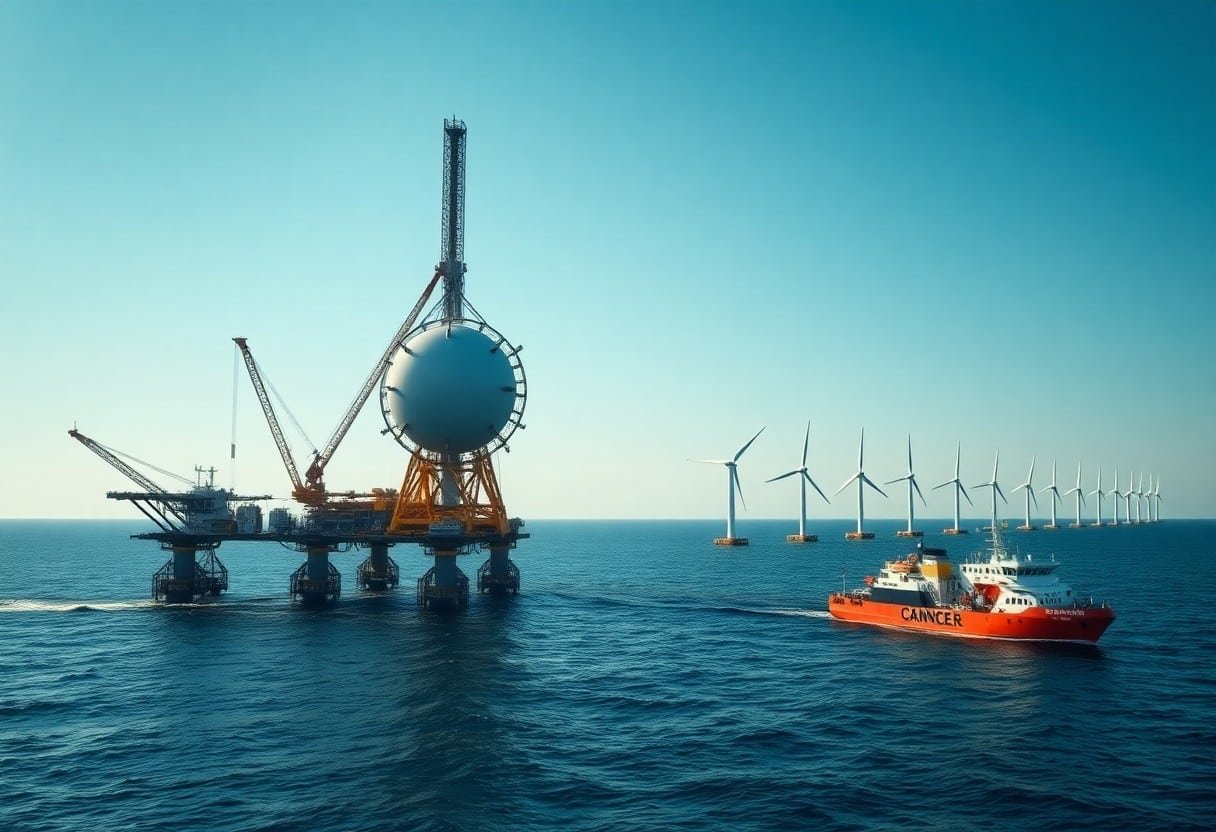
Most people overlook how quickly modern wind technology can be incorporated into local energy plans; you can assess wind resources with accessible data, select turbines matched to your needs, optimize placement and grid connection, pursue financing and incentives, and implement monitoring to ensure reliable, cost-effective renewable power for your home or business.
Key Takeaways:
- Assess site and wind resource with mapping and micro‑siting to match turbine scale, secure permits, and optimize location for maximum yield.
- Choose modern turbines and digital controls-variable‑speed, high‑efficiency rotors plus sensors and predictive maintenance to boost performance and uptime.
- Integrate with storage and grid solutions, and align financing and policy incentives to improve reliability, dispatchability, and project return on investment.
Understanding Renewable Energy
Definition and Importance
Renewable energy comes from naturally replenished sources-wind, solar, hydro, geothermal, and biomass-and you rely on these to decarbonize power and cut lifecycle CO2 by up to 90% compared with coal-fired generation. Examples like Hornsea One (1.2 GW offshore) that supply roughly 1 million UK homes show how utility-scale projects scale emissions reductions while boosting grid resilience and reducing dependence on imported fuels.
Benefits of Renewable Energy Sources
Adopting renewables gives you lower operating costs because wind and solar have zero fuel expense, greater price stability, and public-health gains from reduced NOx, SOx, and particulates; globally, renewables support roughly 12 million jobs across manufacturing, installation, and O&M, and auctions plus incentives drive investment and local economic activity.
For deeper context, Denmark now gets over 50% of its electricity from wind, spurring turbine exports and local employment; pairing renewables with battery storage, demand response, and grid upgrades lets you push penetration higher, while long-term contracts and merchant revenue streams make projects bankable and scalable.
Overview of Wind Energy
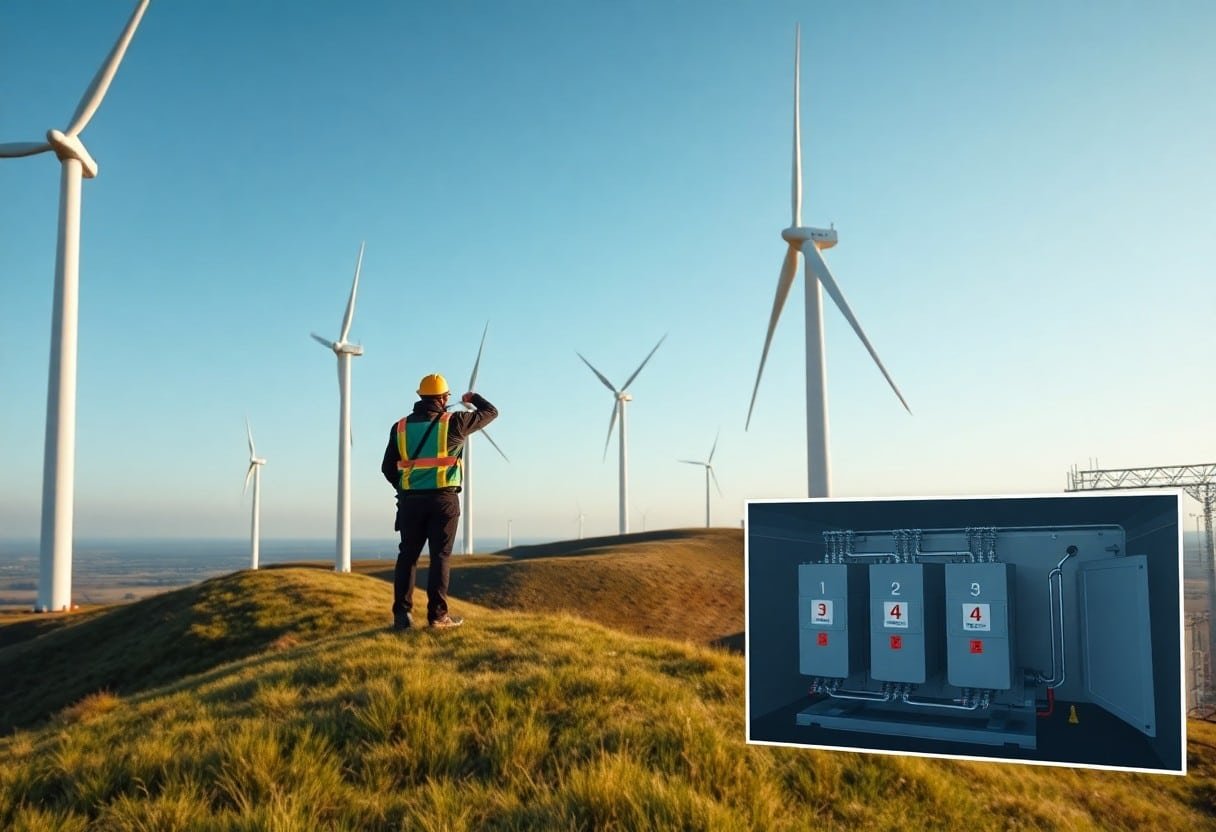
You see wind convert kinetic energy into power via blades, gearboxes and generators; utility turbines now exceed 10 MW offshore and global installed capacity tops over 800 GW, reshaping generation mixes and grid planning. For a practical primer on deployment and community impacts consult Your Guide to Renewable Energy Part – 1: Wind Energy.
History of Wind Technology
You can trace mechanical wind use to medieval Persian and Chinese mills and European post mills from the 12th century; by 1888 Charles F. Brush built one of the first electricity-generating turbines, and the 1970s oil shocks triggered the modern era of industrial-scale wind led by Danish and U.S. manufacturers.
Current Trends in Wind Energy
You’re seeing rapid scaling: onshore machines commonly reach 2-5 MW while offshore models now span 8-14 MW, which raises capacity factors into the 35-55% range and reduces levelized costs; developers prioritize large offshore farms, repowering older sites, and hybrid wind-plus-storage bids in auction rounds.
For operational detail you should factor in digitalization-SCADA analytics, blade sensors and predictive maintenance that lift availability by percentage points-plus floating foundations (Equinor’s Hywind demonstration) unlocking deepwater leases. Projects like Hornsea (~1.2 GW) demonstrate scale economies, and coupling wind with batteries or electrolysis for green hydrogen creates firming options and new revenue streams, though grid interconnection, supply-chain lead times and local content rules will affect timelines and costs.

Modern Wind Technology
You see modern wind tech pushing boundaries: turbines now reach 12-15 MW with rotor diameters around 200-220 m, boosting energy capture and offshore capacity factors toward 45-55%. For deeper context and case studies, read Harnessing the Power of the Wind: A Sustainable Future …, which highlights deployments like Hornsea One (1.2 GW) and the move to larger, grid-ready machines you’ll encounter in upcoming projects.
Turbine Design Innovations
You’ll notice blade lengths have jumped-onshore commonly 40-60 m, offshore 70-107 m-using carbon-fiber skins and segmented molds to cut weight and transport costs; doubling rotor diameter quadruples swept area, so manufacturers focus on 100+ m blades and direct-drive generators to reduce gearbox failures, while smart sensors and individual blade pitch control improve yield and lower downtime on fleets you manage.
Offshore vs. Onshore Wind Farms
You’ll weigh capacity and cost: offshore offers higher, steadier wind with capacity factors often 40-55% versus 25-35% onshore, but you face 20-50% higher CAPEX and complex logistics; projects like Hornsea One (1.2 GW) show scale advantages, while nearer-shore farms reduce cable costs and maintenance travel you must budget for.
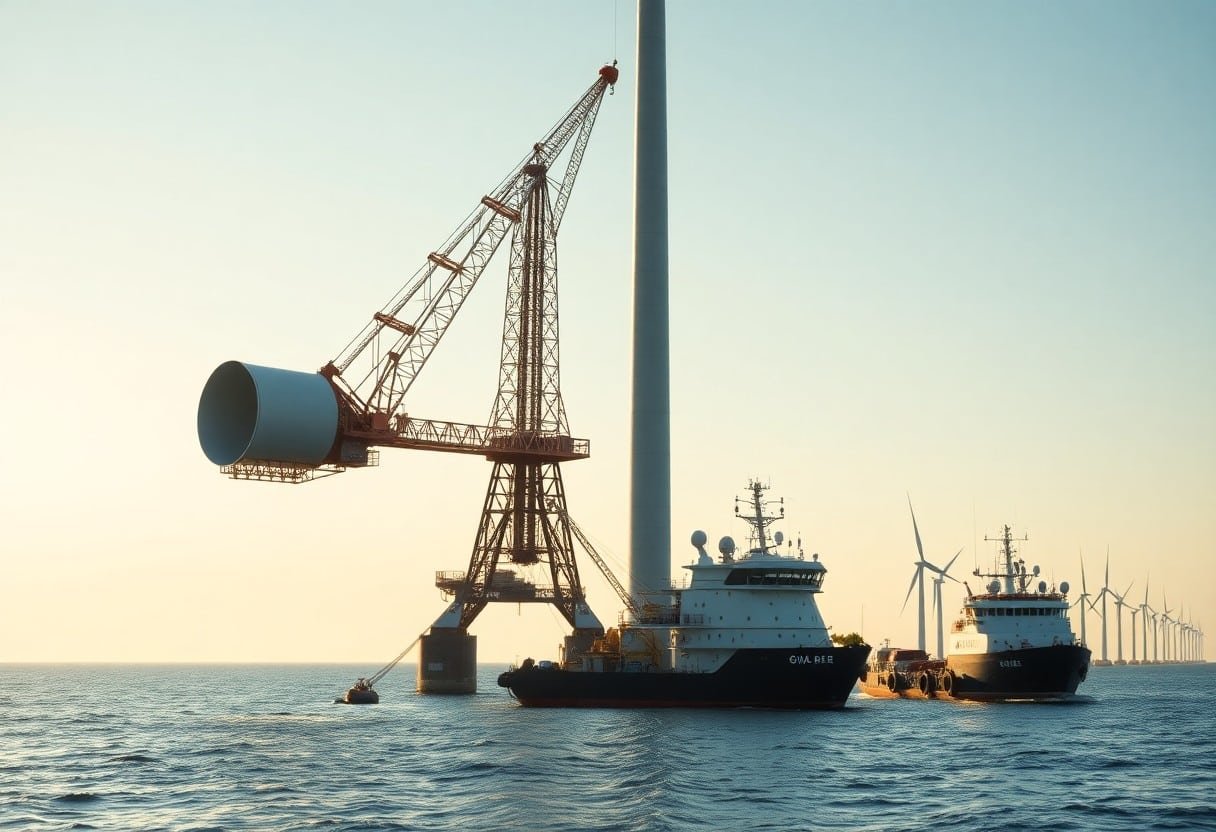
You should factor siting and technology: fixed foundations suit depths to ~60 m while floating turbines open deep sites, proven by Hywind Scotland’s 30 MW pilot; export uses HVAC for short runs and HVDC for long distances, and you’ll balance higher per-MW installation costs against stronger winds and larger turbines that improve LCOE over a project’s lifetime.
Harnessing Wind Energy
Modern turbines you deploy now routinely exceed 3-5 MW onshore and 12-14 MW offshore (GE Haliade‑X, Siemens Gamesa SG 14‑222), with rotors >200 m and hub heights above 150 m to access steadier winds; that translates to onshore capacity factors around 25-45% and offshore 45-60%. You’ll manage power curves, variable-speed controls, and wake losses (5-15%) through SCADA-driven curtailment and micrositing to maximize annual energy production and grid stability.
Site Assessment and Selection
You must collect at least 12 months of met‑mast or LiDAR data at hub height and run micrositing with WAsP or WindPRO to model shear, turbulence intensity and wake interactions; target mean annual wind speeds >7 m/s for high yield and expect turbine spacing of ~7-10D alongwind, 3-5D crosswind. You also evaluate grid connection distance, environmental constraints, and IEC class to size turbines and predict capacity factor and wake losses precisely.
Energy Storage Solutions
You’ll pair turbines with Li‑ion BESS for fast frequency response and short‑duration firming-Li‑ion systems offer ~85-95% round‑trip efficiency and millisecond response; a notable case is Hornsdale Power Reserve (150 MW/194 MWh) which proved revenue from grid services. For bulk or seasonal buffering you consider pumped hydro, flow batteries, or green hydrogen electrolysis to smooth longer intermittency.
You size storage based on service: 1-4 hours of Li‑ion is common for peak shifting, flow batteries cover 6-100+ hours for multi‑day events, and pumped hydro or hydrogen addresses seasonal gaps. You’ll budget around current pack price trends (BNEF reported ~132 USD/kWh in 2023) and factor cycle life (Li‑ion typically 3,000-8,000 cycles) plus round‑trip losses when selecting tech for system economics and reliability.
Integration with the Grid
You balance wind’s variability through forecasting, storage and grid services; short-term forecasting can cut imbalance costs by up to 30%. Large batteries like Hornsdale (150 MW/193.5 MWh) demonstrate fast response, while transmission upgrades and flexible dispatch reduce curtailment. For practical examples and system-level strategies, consult Modern Ways To Harness Renewable Energy Sources …
Challenges of Grid Integration
You face intermittency and sudden ramps when wind shifts; Denmark has exceeded 40% instantaneous wind penetration, forcing faster balancing and storage. Reduced synchronous inertia raises frequency-control needs, and transmission bottlenecks create curtailment that can reach double-digit percentages in constrained zones. Policy lag and interconnection queues also delay capacity you need to maintain reliability.
Smart Grid Technology
You leverage smart grid tech like advanced inverters, VPPs and demand response to smooth variability; utility-scale batteries and the Hornsdale 150 MW/193.5 MWh unit cut system costs and provide subsecond frequency response. Grid-forming inverters and DERMS let you island microgrids and coordinate resources in real time.
You implement PMUs for synchrophasor data (30-120 samples/sec) to detect fast events, and deploy IEC-61850-enabled substations with subsecond telemetry. Aggregating DERs into VPPs lets you bid MW-scale capacity; Tesla and Fluence projects show VPP and battery combinations can deliver grid services and peak shaving. Combined with machine-learning wind forecasts that cut error under 10%, these tools give you operational visibility and fast controls.
Policy and Incentives
Government Support for Wind Energy
You can tap into tax incentives, grants and permitting fast-tracks that lower upfront costs and shorten timelines; for example, the US Production Tax Credit (PTC) and Investment Tax Credit (ITC) have driven decades of project finance, while Germany’s feed‑in tariff under the EEG scaled onshore wind rapidly. Strong state programs often combine low‑interest loans, community ownership schemes and grid connection guarantees to de‑risk projects and attract private capital.
Global Wind Energy Policies
Global policy landscapes vary, but overall momentum is clear: global installed wind capacity exceeded 800 GW in the early 2020s, and markets like China supplied over half of annual additions recently while the UK set a 50 GW offshore target by 2030. You’ll find auctions, contracts‑for‑difference and renewable portfolio standards dominating mature markets, shaping price signals and deployment speed.
Digging deeper, you should watch policy design: long‑term revenue stability (CfDs), clear grid connection priority, local content rules, and decommissioning funds all affect project bankability. Countries that pair auctions with grid upgrade funds and storage incentives-then offer transparent timelines-reduce your permitting risk and improve financeability for both developers and corporate buyers pursuing PPAs.
Conclusion
Hence you can adopt modern wind technology through straightforward steps: assess your site, choose efficient turbines, integrate smart controls and storage, secure financing and incentives, and plan maintenance to maximize output and longevity; by taking these actions you will reduce emissions, lower energy costs, and position your home or business at the forefront of the renewable energy transition.