
Most of your energy plans can gain resilience by systematically integrating wind power; this guide shows you seven practical steps to boost reliability, diversify supply, optimize grid integration, and manage cost and storage. You’ll learn how to assess resources, align policy and investment, deploy technologies, and measure performance so your system becomes more secure and resilient.
Key Takeaways:
- Scale deployment and diversify wind sites (onshore, offshore, distributed) to reduce supply risk and increase domestic generation.
- Invest in grid integration, energy storage, and flexible operations (demand response, hybrid systems) to manage variability and maintain reliability.
- Secure stable policy, targeted financing, and resilient local supply chains and workforce to speed deployment and improve long‑term resilience.
Understanding Energy Security
You view energy security as the practical ability to keep supply reliable, affordable and resilient against shocks. You measure it using metrics like loss-of-load expectation (LOLE), reserve margin and import dependence; for example, several EU countries relied on Russian gas for over 50-60% of imports before 2022. You monitor spare capacity, fuel stocks and grid flexibility to assess vulnerability and plan mitigation.
Definition and Importance
You define it operationally: reliability (targets such as LOLE ≈ 3 hours/year), affordability (exposure to wholesale price swings) and resilience (speed of recovery after outages). Grid operators commonly aim for reserve margins of 15-20% to reduce blackout risk. When those thresholds fail during heatwaves or fuel shocks, your economy and critical services face cascading impacts.
Current Energy Security Challenges
You confront converging challenges: supply-chain delays with wind turbine lead times often 12-24 months, declining system inertia as synchronous plants retire, and geopolitical shocks-Russia’s 2022 gas disruptions being a stark case. Increasing extreme weather events raise peak demand and outage frequency, making short-term balancing and long-term adequacy planning harder for your operators.
For example, Germany’s rapid renewables expansion reduced thermal baseload and created seasonal balancing issues, while the 2021 Texas freeze left millions without power and highlighted weather-related fragility. You therefore need seasonal storage, diversified import routes, onshore wind paired with firming resources, and reinforced interconnectors to lower single-point failure risk.
The Role of Wind Power
You should treat wind as a rapidly expanding pillar of energy security: global installed wind capacity tops 800 GW, turbine ratings now reach 15 MW offshore, and project lead times can be measured in months rather than years. In practice, that means you can scale local generation to reduce exposure to fuel-price volatility, diversify supply across regions, and create exportable surplus during high-wind periods to stabilize neighboring grids.
Overview of Wind Energy
You’ll encounter two main streams: onshore wind-cost-effective with capacity factors typically 25-45%-and offshore wind, where capacity factors commonly fall between 40-60% thanks to stronger, steadier winds. Modern turbines (3-15 MW) and improved siting, paired with grid upgrades and forecasting, let you integrate larger shares of variable output without compromising reliability.
Benefits of Wind Power for Energy Security
You gain fuel-independent generation that lowers imported fuel needs and softens price shocks; for example, Denmark and other Northern European grids have seen wind exceed 40-50% of instantaneous demand on windy days, while regions like Texas regularly reach very high hourly wind shares. Additionally, levelized costs have fallen roughly two-thirds since 2010, making wind an economical hedge in your generation mix.
You can further bolster reliability by combining wind with storage, demand response, and geographic diversity: the Hornsdale Power Reserve (150 MW/194 MWh) demonstrated rapid frequency response and drove large reductions in ancillary service costs, and interregional transmission reduces variability by smoothing output across sites. That means you can convert intermittent production into dependable supply through portfolio design and targeted investments.
Step 1: Assessing Local Wind Resources
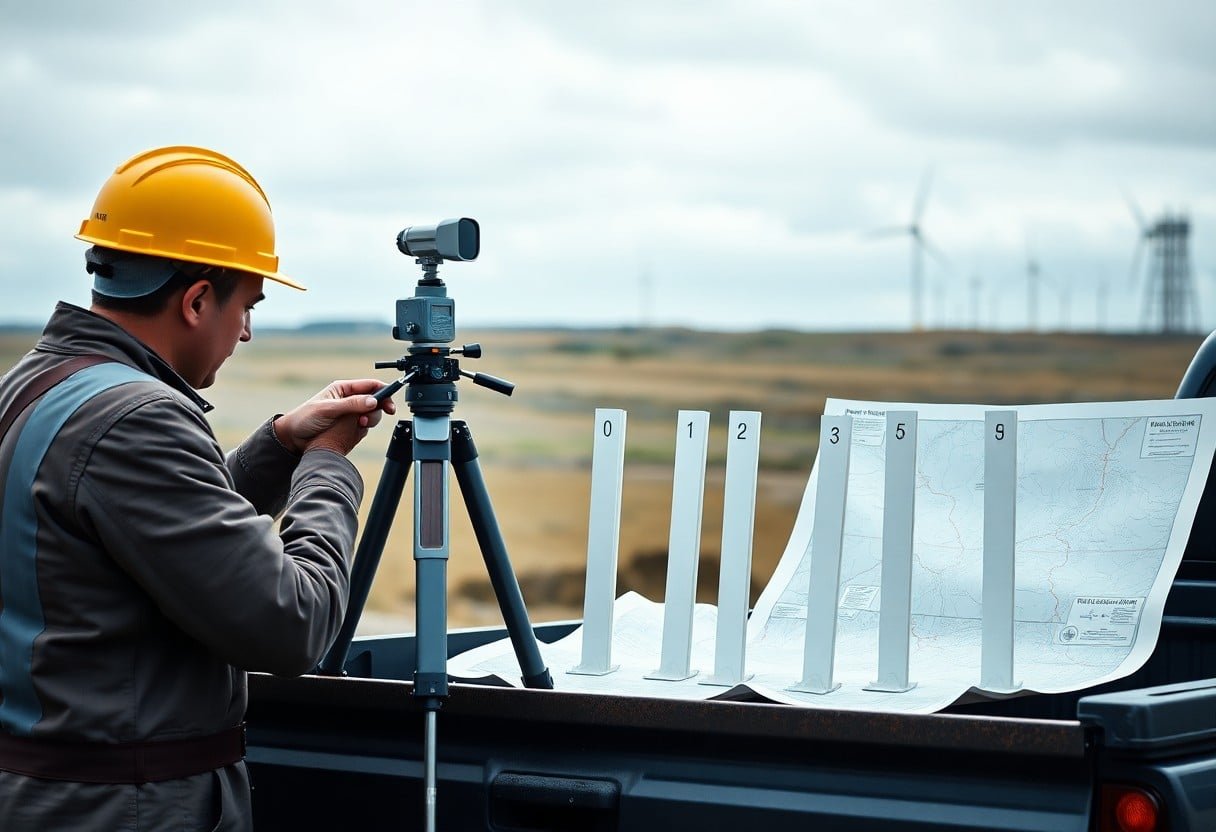
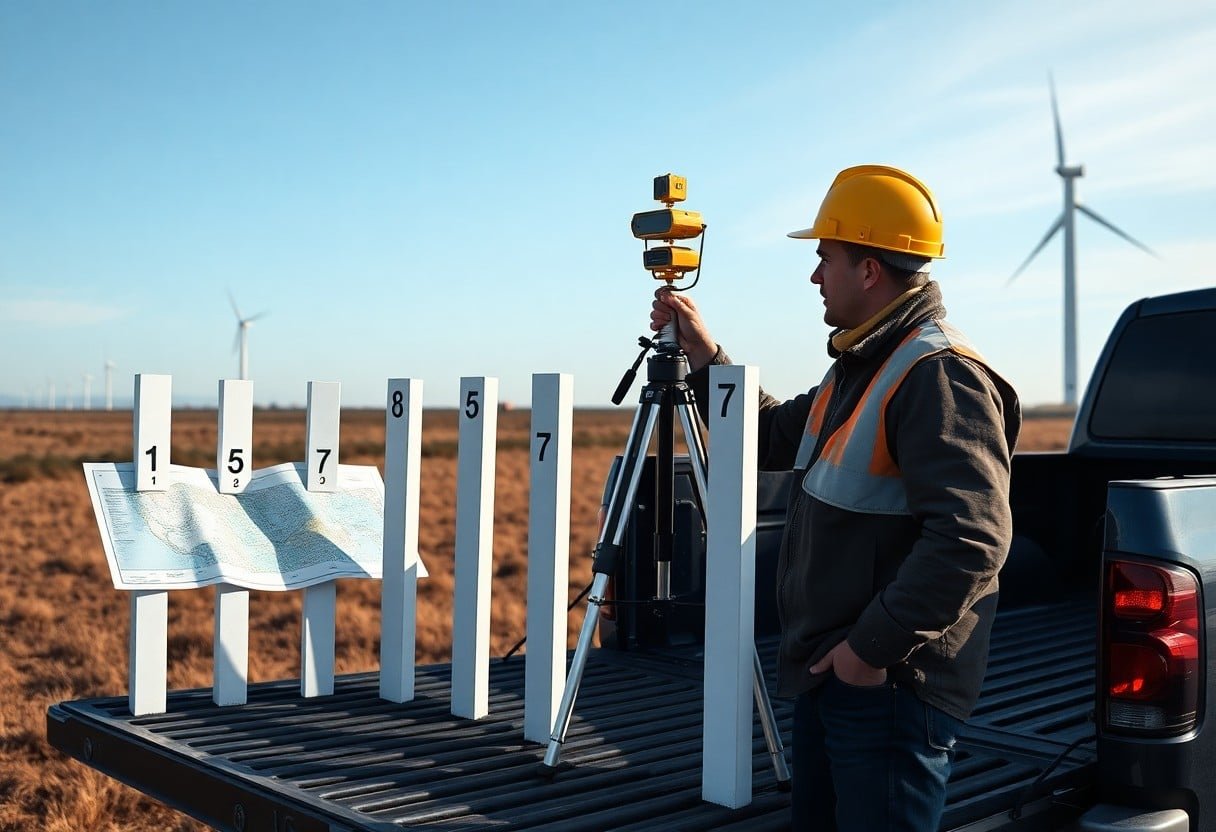
You should quantify mesoscale winds using 10-20 years of reanalysis and local measurements, model hub‑height flows with CFD or WAsP, and benchmark expected capacity factors (onshore typically 25-45%). For practical site screening and permitting guidance consult 7 Steps to Securing a Wind Farm Development Site.
Conducting Wind Resource Assessments
You should deploy met masts or sodar/LiDAR at proposed hub heights (80-150 m) for 12-24 months, record 10‑minute averages, fit Weibull distributions, and produce AEP estimates with ±10-15% uncertainty; then validate with mesoscale models and nearby reference stations to refine turbine choice and layout.
Identifying Potential Wind Farm Sites
You should screen sites with GIS for transmission access (ideally within 10-30 km), road logistics, slope under 10%, environmental constraints, and setbacks-typical residential buffers are 500-1,000 m-while targeting mean wind speeds above ~7.5 m/s at 100 m for strong returns.
For example, locating within 15 km of a 110-220 kV substation can reduce grid connection costs by 20-40%; you should assess construction access (roads 6-8 m wide, laydown areas of several hectares), overlay bird and bat migration corridors, and run wake-loss and micro‑siting analyses-reducing wake losses by 3-6% can raise AEP materially and improve project bankability.
Step 2: Enhancing Grid Infrastructure
You should prioritize smart inverters, grid-scale storage, strengthened transmission corridors and flexible demand to handle variable wind output. Deploy advanced forecasting and market design changes alongside physical upgrades; NordLink’s 1.4 GW HVDC link between Norway and Germany shows how targeted transmission unlocks cross-border wind value. For operational tips on demand-side measures see 7 Strategies for Efficient and Sustainable Energy Use.
Integrating Wind Power into the Grid
You can smooth variability with 15-minute to hourly forecasting, synthetic inertia from modern inverters, and 100-300 MW battery clusters colocated at wind hubs. Short-term forecasting often reduces reserve needs by up to 30% and cuts curtailment. Adopt grid-forming inverter controls and updated dispatch rules so your system maintains voltage and frequency when wind supplies 30-50% of instantaneous demand.
Upgrading Transmission Systems
You should target long-distance HVDC links, reconductoring congested corridors, and dynamic line ratings that can increase capacity by 10-40% under favorable conditions. Targeted transmission investment converts stranded wind into usable capacity and lowers seasonal curtailment, as seen in several Northern European and North American upgrade programs.
Project timelines commonly span 3-7 years because of permitting and right-of-way work, so you must start planning, stakeholder engagement and modular construction early. Also evaluate converter station siting, tower uprating and pilot dynamic rating trials-these steps incur upfront cost but can unlock tens to hundreds of megawatts of additional wind output and reduce balancing expenses.
Step 3: Policy and Regulatory Support
When you target policy levers, wind moves from project-by-project to system-scale. The Inflation Reduction Act in the US and auction/CFD frameworks in Europe show how stable revenue streams and clear grid rules unlock capital and local manufacturing. You should prioritize predictable targets, transparent interconnection rules and incentives that favor domestic supply chains to cut reliance on volatile fuel imports and lower the sector’s cost of capital.
Government Incentives for Wind Energy
You can deploy a mix of tax credits, direct grants, concessional loans and performance-based contracts to close upfront financing gaps. The US IRA expanded PTC/ITC pathways and added bonus credits for domestic content and energy-community siting, improving bankability. Meanwhile, auctions and long-term contracts in Europe have stabilized revenues, attracted private investment and driven rapid scale-up of both onshore and offshore capacity.
Streamlining Permitting Processes
Permitting frequently adds 2-5 years to development timelines, so you should implement single‑window permitting, binding review deadlines and pre-approved mitigation bundles. Those measures reduce uncertainty for investors, speed site selection and prevent costly redesigns that push projects past financial closing.
Put into practice you can harmonize EIA scopes, require concurrent agency reviews, and launch digital permitting portals that share geospatial and environmental data. BOEM’s milestone-driven offshore leasing and regional permitting pilots demonstrate how coordinated timelines, template easements and standard mitigation agreements cut transactional delays and often halve pre-construction lead times.
Step 4: Investing in Technology and Innovation
You should prioritize funding for larger, more efficient turbines, digitalization, and paired storage to raise reliability and lower system costs; turbines now exceed 12 MW offshore and digital twins help optimize maintenance and output. Pilot projects combining wind with batteries or hydrogen address intermittency and market value, and large farms like Hornsea One illustrate scale effects. For strategic context and technology comparisons see Top 7 Most Promising Energy Sources of the Future.
Advancements in Wind Turbine Technology
You should adopt technologies like direct-drive generators, modular blades, and larger rotors-some offshore rotors exceed 200 meters-to increase capacity per foundation and lower LCOE. Advanced composites reduce fatigue and weight, while turbine manufacturers and fleet operators use SCADA analytics and condition-based maintenance to cut unplanned downtime by roughly a third and squeeze extra energy from existing sites.
Energy Storage Solutions for Wind Power
You should pair wind with a portfolio of storage: lithium‑ion batteries for sub‑hour to multi‑hour services, pumped hydro or flow batteries for longer durations, and green hydrogen for seasonal shifting. Grid-scale examples like Hornsdale Power Reserve (150 MW / 194 MWh) show how fast-response storage provides frequency control and reduces curtailment, letting you bid firmer capacity into markets.
You can size and deploy storage to match operational needs: lithium‑ion batteries, with about 85-90% round‑trip efficiency, are cost‑effective for 1-6 hour applications and support frequency response, ramping, and 4‑hour firming (typically ~4 MWh per MW of power). Pumped hydro and flow batteries deliver longer duration at 70-80% efficiency for multi‑day use; green hydrogen, despite lower round‑trip efficiency (~30-40%), offers true seasonal storage and industrial offtake. You should structure projects to stack revenue streams-ancillary services, energy arbitrage, capacity payments-and use co‑located storage to reduce curtailment and improve project IRR.
Final Words
Hence you can secure your energy future by applying the seven smart steps-prioritize robust policy and financing, diversify sites and technologies, upgrade grids and storage, streamline permitting, invest in workforce and maintenance, engage communities, and use data-driven planning and monitoring; by combining these measures you strengthen system resilience, lower costs, and ensure wind power reliably supports your long-term energy security.